


With just over two months remaining before the Hungarian parliamentary elections, the campaign has entered a new phase with both sides intensifying their pledges.
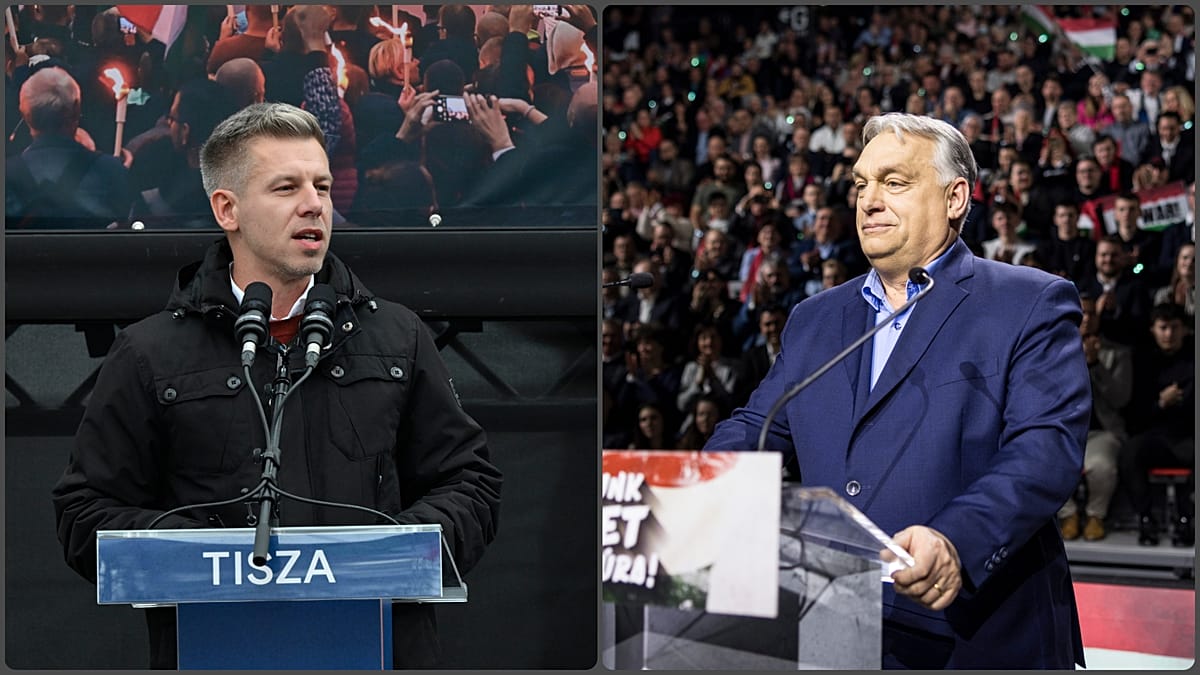
Viktor Orbán’s Fidesz, in office with an absolute majority for almost 16 years, faces a serious challenge from Péter Magyar’s Tisza Party, in the lead in most opinion polls.
The vote’s implications extend well beyond Hungary. Budapest sits at the core of numerous issues: it is the only country sanctioned for systemic corruption in the EU and has become a stumbling block for European unity from sanctions to Ukraine.
“The question is whether the country that used to be the largest obstacle to strategic decision-making in the European Union over the past 15 years can be turned into a constructive partner in the European Union,” Dániel Hegedűs, deputy director at the Institute for European Politics, told Euronews in an interview.
Over the weekend, both parties intensified their campaign efforts.
Magyar released a 240-page election manifesto, promising measures to address the cost-of-living crisis and better relations with the EU, where Orbán has placed his country outside consensus with few allies beyond populist Slovakia and the Czech Republic.
Meanwhile, Orbán intensified his anti-Ukraine campaign, portraying the country as an “enemy” of Hungary. Orbán is also counting on US President Donald Trump’s support after receiving his endorsement last week.
Orbán targets Ukraine, opposition and von der Leyen
The Hungarian prime minister reiterated he opposes Ukraine joining the EU and vowed to continue blocking the process – which requires unanimity from all member states – arguing that Ukraine’s membership would bring war and economic strife to the EU.
“Hungarians do not want military or economic cooperation with Ukrainians, because they are dragging us into war,” Orbán said on Saturday at a campaign rally in Szombathely.
He also lashed out at Ukraine for demanding Budapest gives up exports of Russian energy, which the Hungarian government says it needs to keep prices down even as most EU countries vow to unplug from the Kremlin’s gas and oil.
“Anyone who says this is an enemy of Hungary, so Ukraine is our enemy,” Orbán said.
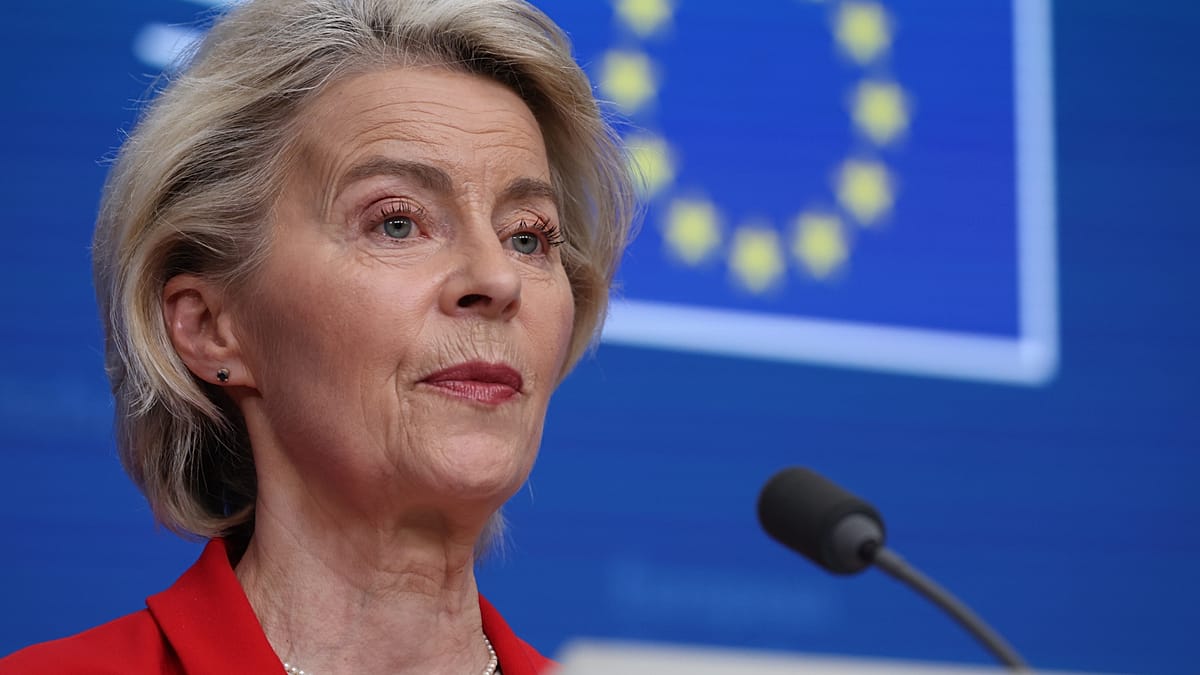
He also mocked Magyar, accusing him of taking orders from Ukrainian President Volodymyr Zelenskyy alongside EU Commission President Ursula von der Leyen.
Orbán frequently attacks the Commission chief for “ruining” Europe through climate action and illegal migration, caricaturing her as a puppet for nemesis George Soros.
“This is in their DNA, and they know that this strategy might work,” Hegedűs said, adding that Fidesz has a long history of mobilising foreign leaders to create fear.
“What we see here is also qualitatively different, due to the absolute immorality. They are using a country that was attacked by its neighbour and is fighting for its independence and survival” for political points, Hegedűs added in reference to Ukraine.
Orbán often portrays Zelenskyy as a warmonger and Ukraine as a country “without any sovereignty” begging for cash from Europe. The Hungarian prime minister has also been critical of EU financing for Kyiv, arguing that the funding will never be repaid.
Still, he has not blocked the implementation of sanctions.
The Trump factor
Over the weekend, Orbán also announced he will visit Washington at the end of February to attend a Board of Peace event for the second time in six months.
Hungary is one of the few European countries to have joined the private Trump-led “Board of Peace”, which is considered by most EU countries to be incompatible with the United Nations Charter.
Last week, Trump rewarded Orbán with his endorsement, extending a history of support for right-wing, conservative allies such as Japan’s Sanae Takaichi and Argentina’s Javier Milei. Both emerged as winners in their respective campaigns.
Trump granted Hungary an exemption to keep importing Russian energy for one more year after a meeting in Mar-a-Lago in 2025. The US president has repeatedly referred to Orbán as a “great leader” for his tough line on migration, calling him both a patriot and a friend.
Hosting the US leader in Budapest would give Orbán a red-carpet moment and attract global attention. Still, the promised visit has not materialised and no date has been set.
Opposition manifesto concentrates on cost of living
Also over the weekend, Péter Magyar released his party’s 240-page election manifesto.
The document, titled “The foundations of a functioning and humane Hungary”, lays out policy plans to rescue a country that Magyar says has been kidnapped by Orbán, his family and the business elite close to the government.
The document promises to cut taxes for low-income earners and pitches a wealth tax for Hungarians with a fortune exceeding than 1 billion forint, or €2.6 billion.
Magyar’s Tisza Party also said it would raise below-average pensions if elected.
The opposition leader also vowed to tap unlock billions in EU funding currently upheld by the Commission over clashes with the Hungarian government over rul-of-law. In order to do so, Magyar promises to align Hungary with the European Public Prosecutors’ Office.
The manifesto also states that Hungary must be prepared to join the euro, an idea Orbán has historically rejected, arguing that it would diminish both sovereignty and competitiveness.
Magyar argues that should he win April’s ballot, the adoption of the single currency would be set for “a foreseeable and achievable target date”.
Russian energy and Ukraine accession
Despite its pro-European overtures, Tisza’s manifesto shows that when it comes to decoupling from Russian energy and fast-tracking Ukraine’s EU accession process, Hungary’s position would not change dramatically overnight under a new government.
The document says the phase-out of Russian energy would only happen in 2035, eight years after the EU’s set deadline for the bloc. The manifesto also signals Tisza would oppose any “fast-track” to Ukraine’s accession to the European Union.
The careful line drawn by Magyar underscores his party’s balancing act: positioning itself as less radical and constructive than Orbán without getting too close to the Brussels establishment – an association that could be a liability at the polls.
Read the full article here