



People in the EU took 8.7 billion rail trips in 2024, amounting to a total of 444.5 billion passenger-kilometres, marking the highest level in years, according to the latest Eurostat figures.
ADVERTISEMENT

ADVERTISEMENT
Germany and France were the largest overall contributors to rail passenger transport performance, with 109.1 and 107.3 billion passenger-kilometres, respectively.
They were followed by Italy with 55.9 billion passenger-kilometres.
In contrast, six EU countries recorded fewer than 1 billion passenger-kilometres in 2024, with Lithuania and Estonia having the lowest numbers, each at 0.4 billion passenger-kilometres.
National train travel within a country is dominant in all member states, accounting for more than 90% of the total rail passenger transport across 25 EU countries in 2024.
The only exceptions were Luxembourg and Czechia, whose national transport represented 63.5% and 82.1%, respectively.
How well-connected are rail networks in Europe?
The EU has one of the densest railway networks in the world, according to the European Council.
However, Eurostat data shows that the total length of the railway network in the EU between 1990 and 2024 shrank by 7.9%.
In contrast, Spain saw the biggest increase in the length of its railway network by 12.2%, mainly due to the construction of dedicated high-speed lines.
The countries with the highest railway network density can be found in the centre of northern Europe, reflecting both their high population density and relatively high freight transport volumes.
On the other hand, lower densities are reported on the outskirts of the EU, with Greece, with its many islands, having the lowest railway network density.
Low values were also recorded in the Nordic countries, the Baltic countries, the Iberian Peninsula, and Ireland.
Simplify rail travel across borders
These stats come as the European Commission launches a scheme to simplify cross-border rail travel around the bloc.
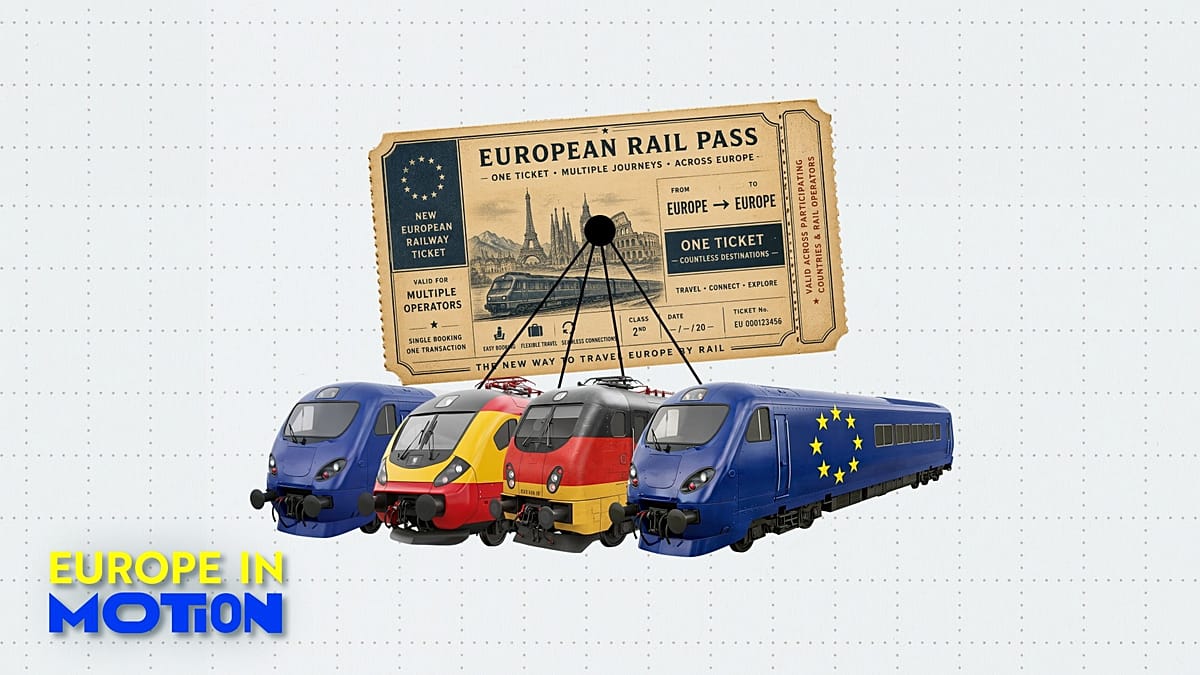
The newly announced passenger package will allow travellers to make single-ticket bookings across multiple rail operators in one transaction.
This initiative will also increase passenger rights, ensuring protection if a connection is missed, even if different railway companies operate the services.
“With digital tools and integrated mobility services, Europeans will be able at the click of one button to plan, compare and purchase multimodal journeys across borders, while benefiting from stronger rail passenger rights, greater transparency and better protection every step of the way,” Apostolos Tzitzikostas, commissioner for sustainable transport and tourism, said in a statement.
Read the full article here