



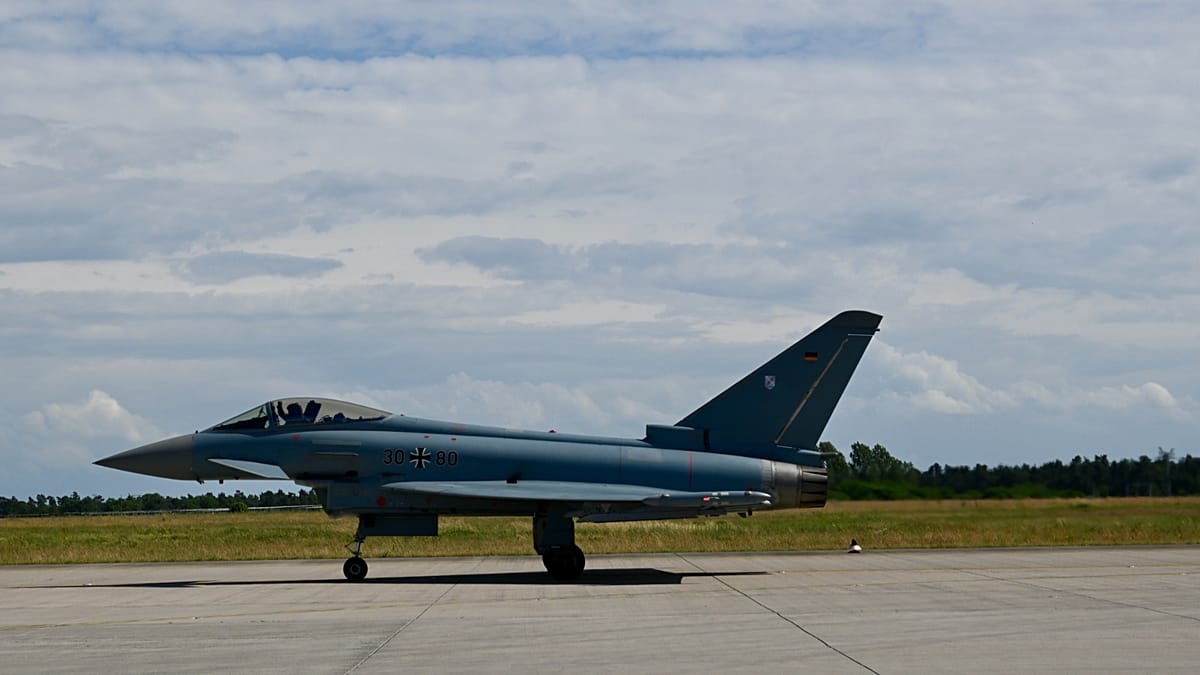
After three days dedicated to industry professionals, the International Aerospace Exhibition (ILA) in Berlin opened to the public over the weekend. Fighter jets, transport aircraft and helicopters drew crowds of visitors, with the Bundeswehr dominating large parts of the site as the exhibition’s largest single exhibitor.
ADVERTISEMENT

ADVERTISEMENT
Beyond the flying displays and aircraft on static show, recruitment was a prominent theme throughout the event. Careers advisers and serving personnel were on hand to discuss military careers, while visitors were given the opportunity to explore cockpits, speak with pilots and learn more about the armed forces’ expanding range of responsibilities.
Colonel Kristof Conrath, who oversaw the Bundeswehr’s presence at this year’s ILA, spoke to Euronews about the decision to showcase capabilities ranging from drones and the P-8 Poseidon maritime patrol aircraft to air defence systems.
He also discussed the role fighter jets are expected to play in an era increasingly shaped by unmanned technologies, and reflected on the significance of the German Air Force marking its 70th anniversary at this year’s exhibition.
Euronews: You are responsible for the Bundeswehr’s presence at ILA, one of Germany’s biggest aerospace and defence exhibitions. How did you end up in that role, and what considerations guide your decisions on which aircraft, systems and capabilities to put on display?
Colonel Conrath: In fact, the role comes with my position. I serve at the Air Force Troops Command, where leading the project team responsible for the ILA is part of my remit.
I was responsible for the exhibition in 2022, again in 2024, and now for a third time. And I have to say, it has become much more than just a duty – it is a genuine pleasure, largely thanks to the fantastic team we have assembled.
When deciding what to showcase, we consult all branches of the Bundeswehr – the Army, the Navy, the Cyber and Information Domain Service, and the Air Force – and ask them which capabilities best represent their most modern equipment. We didn’t want to display aircraft and systems that people have already seen countless times.
Instead, we aimed to present our newest capabilities. That is why, for example, we chose to bring the Navy’s new P-8A Poseidon maritime patrol aircraft. We are also displaying the Sea Lion helicopter. The Sea Tiger was originally planned to attend as well, but operational commitments ultimately prevented its participation.
We have also embraced the theme of the Air Force’s 70th anniversary. To mark the occasion, we brought four aircraft featuring special commemorative liveries: the A400M, the CH-53, the Tornado and the Eurofighter.
At the same time, we wanted to reflect the lessons emerging from the war in Ukraine, where drones have become a defining feature of modern warfare. We therefore decided to showcase some of the drone capabilities already available to the Bundeswehr. Visitors can see a range of unmanned systems in the Defence Park.
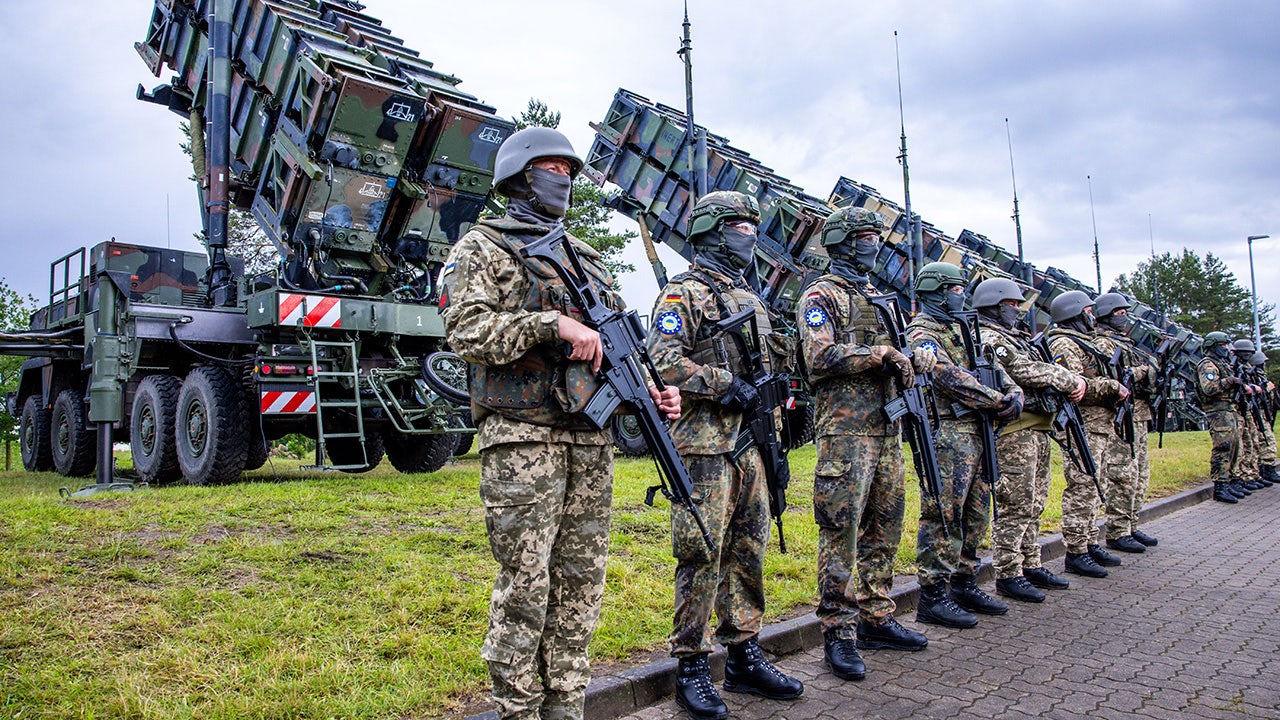
We are also exhibiting air defence missile systems, which have become increasingly relevant in today’s security environment. Given their importance, it was essential for us to include them at this year’s ILA.
Euronews: You first oversaw the Bundeswehr’s presence at ILA in 2022, just months after Russia launched its full-scale invasion of Ukraine. Looking back over the past four years, how has the exhibition changed? Have you noticed a shift in the technologies on display or in the conversations taking place across the industry?
Colonel Conrath: The ILA has changed in the sense that we are now able to present our capabilities much more openly. We no longer feel the need to keep them in the background.
There is a broader public understanding today that a country must be capable of defending itself and, if necessary, fighting a war. That capability cannot be built on ordinary vehicles alone; it requires modern military equipment and weapons systems.
We can now put these weapons systems on display, and we can do so with a sense of pride because we have something meaningful to contribute to NATO. I think that was different in the past. For a long time, we lived in what was often described as a situation of being surrounded by friends.
That has now changed fundamentally, and you can see it reflected in public attitudes as well. There is a reason people speak of a Zeitenwende – a historic turning point – and of the special defence fund. The effects are visible here too. Visitors can see for themselves what public investment in defence is being spent on.
Euronews: Is there anything you are particularly proud of?
Colonel Conrath: We can certainly be proud of the response we have received. Of course, this is not something we achieve alone. While the Bundeswehr may be the largest single exhibitor at the ILA, the event itself is organised by the exhibition company together with the Federation of German Industries (BDI).
If we succeed in generating this level of interest among visitors, that is definitely something to be proud of. The public days, on Saturday and Sunday, are particularly important for us. That is when we make a major effort in public engagement and recruitment. Attracting the next generation of personnel is one of the key objectives of our presence here.
We want to bring the Bundeswehr closer to the public and present it as an attractive employer. One of our aims is to encourage people to ask themselves what kinds of careers the armed forces actually offer. Events like the ILA allow us to showcase the breadth of opportunities available and, hopefully, spark people’s interest.
Once that interest has been sparked, we have the right people on hand to provide more detailed guidance. How can I build a career in the Bundeswehr? What different pathways are available? That is why our youth officers and careers advisers are here. For the Bundeswehr, the ILA offers a comprehensive platform. It allows us not only to present our capabilities, but also to engage directly with potential recruits and achieve precisely those outreach and recruitment goals.
Euronews: This year marks the 70th anniversary of the German Air Force. How significant is that milestone for the Bundeswehr’s presence at the ILA, and how are you using the exhibition to reflect on the Air Force’s history as well as its future?
Colonel Conrath: Yes, absolutely. It is a birthday we are marking throughout the year, not just today. Looking back over the past 70 years, it is a story we can be proud of.
What makes the Air Force special is its people. At the end of the day, it is all about the team. You can see that here as well, not only within the Air Force but across the different branches of the Bundeswehr. Achievements like this are only possible through teamwork. Everyone works hand in hand, and that spirit of cooperation is what makes it all come together.
Euronews: Drones have become one of the defining technologies of modern warfare. Some experts now question whether fighter jets will remain indispensable in the long term. Do we still need fighter aircraft in the age of drones?
Colonel Conrath: I am firmly convinced that we still need fighter jets. Even if we have highly advanced drone capabilities based on GPS, cloud technology and digital networks, those systems can be disrupted. GPS can be jammed, communications can be interrupted and cloud-based services may not always be available.
We need a human being in the system making the decisions. We certainly do not want AI-based systems autonomously deciding what to attack.
That is why I am convinced that fighter aircraft will remain essential. In the future, they may increasingly act as command platforms, coordinating and directing swarms of other systems, but they will still need to have a human being on board who can make decisions in real time.
After all, what happens if communications are disrupted or the flow of information between operators and decision-makers is cut off? In those situations, someone has to be able to assess the situation and make decisions on the spot.
Euronews: This week, Quantum Systems presented its new Pulse P19 platform, which can be flown either by a pilot or operated remotely. Do systems like this point towards the future of military aviation, and how do you see them complementing established platforms such as the Eurofighter and the F-35?
Colonel Conrath: I think there are several possible approaches, and this is certainly an interesting one. Depending on the situation, you can operate the system either with a pilot or remotely. There are many different variants and concepts out there. The market is developing at tremendous speed.
In Ukraine, new threats are emerging all the time, and systems are constantly being adapted to meet them. In the end, you always respond to the threat landscape as it exists at that moment. So yes, this is one of several options that could play a role in the future.
Euronews: The flying displays are one of the biggest attractions at the ILA. When putting together the programme, how do you decide which aircraft should demonstrate their capabilities in the air and which are better showcased on the ground?
Colonel Conrath: We basically went all in. We brought every type of fighter jet we operate and every helicopter model that was available, apart from those that could not take part for operational reasons.
We have the A400M here, as well as the helicopters I mentioned earlier. We also have an aerial parade, including a tanker aircraft carrying out air-to-air refuelling with fighter jets. Everything we were able to bring, we brought.
Of course, we are not the only ones flying here. There are several industrial helicopter demonstrations, drone flights, the Italian contribution and the Airbus Racer. We also had an A350 perform a fly-past.
You also have to remember that we are operating at the capital’s airport, which continues to run its normal flight schedule throughout the summer. Everything therefore has to be coordinated around regular air traffic. We cannot simply decide to put on a large-scale airshow whenever we like.
I think we have found a good balance. Visitors can explore the exhibits on the ground and watch the flying displays in the air. Our aim was to provide a broad overview of the Bundeswehr’s capabilities, and I believe we have succeeded in doing that.
Read the full article here