




EU redistributes Western Balkans funding: First this morning, a scoop by my colleague Luca Bertuzzi. The European Commission is set to redistribute funding it has allocated to Western Balkan candidate countries, with frontrunners Montenegro, Albania and North Macedonia poised to receive cash at the expense of other countries in the region, two EU officials told Euronews.
ADVERTISEMENT

ADVERTISEMENT
The Reform and Growth Facility for the Western Balkans, set up in 2024, provides €6 billion in financial incentives for EU candidate countries in the region to implement the reforms needed to advance in their bids to join the bloc. The tool covers the 2024-2027 period, with the ambition of doubling the size of Western Balkan economies within the next decade.
However, according to the Commission’s own data, only around €673 million has been released under the facility. Almost all of that funding has gone to just three of the six candidate countries widely seen to be consistently hitting their reform targets – Montenegro, Albania and North Macedonia. Those frontrunners are now set to receive more funds to avoid the money from going to waste.
The biggest loser looks set to be Bosnia and Herzegovina, which has not received any funding under the facility so far, having failed to deliver any of the required reforms — largely because of its complex institutional set-up. Kosovo and Serbia are also set to lose out. Luca has more details.
Bosnian envoy controversy: Coincidentally, EU foreign policy chief Kaja Kallas is in Bosnia and Herzegovina today, where talks among foreign diplomats on Wednesday failed to yield a deal on the permanent appointment of a High Representative responsible for upholding the 1995 Dayton peace accords. A US diplomat has been named acting envoy to bridge the gap.
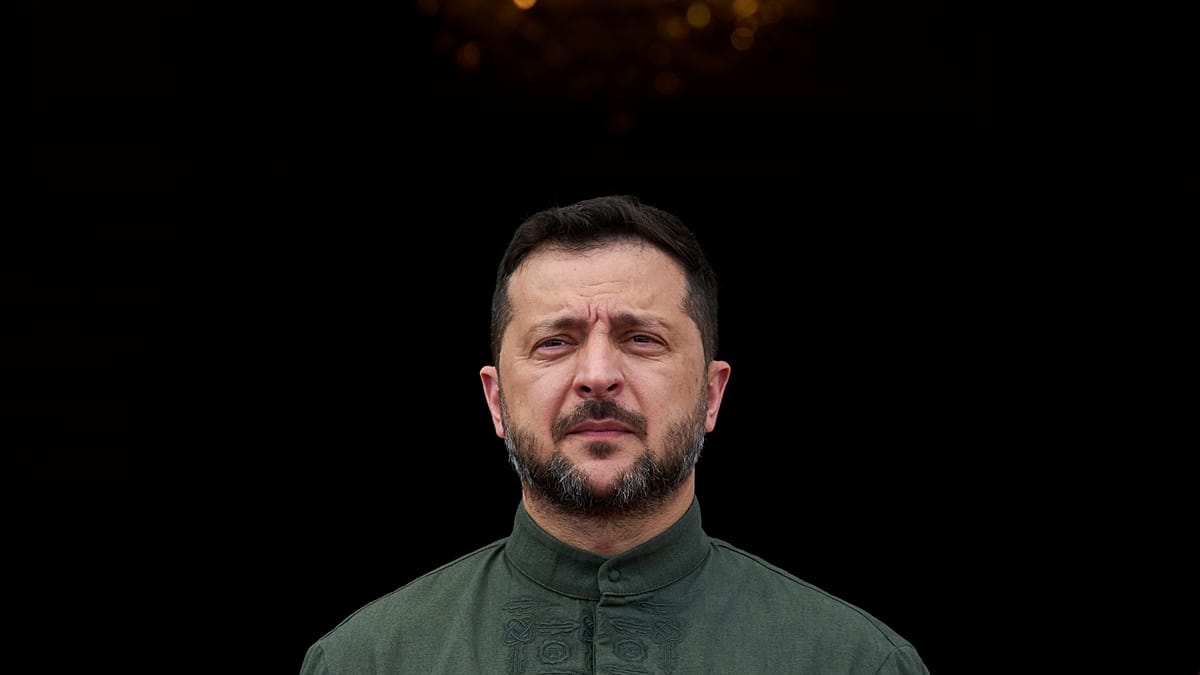
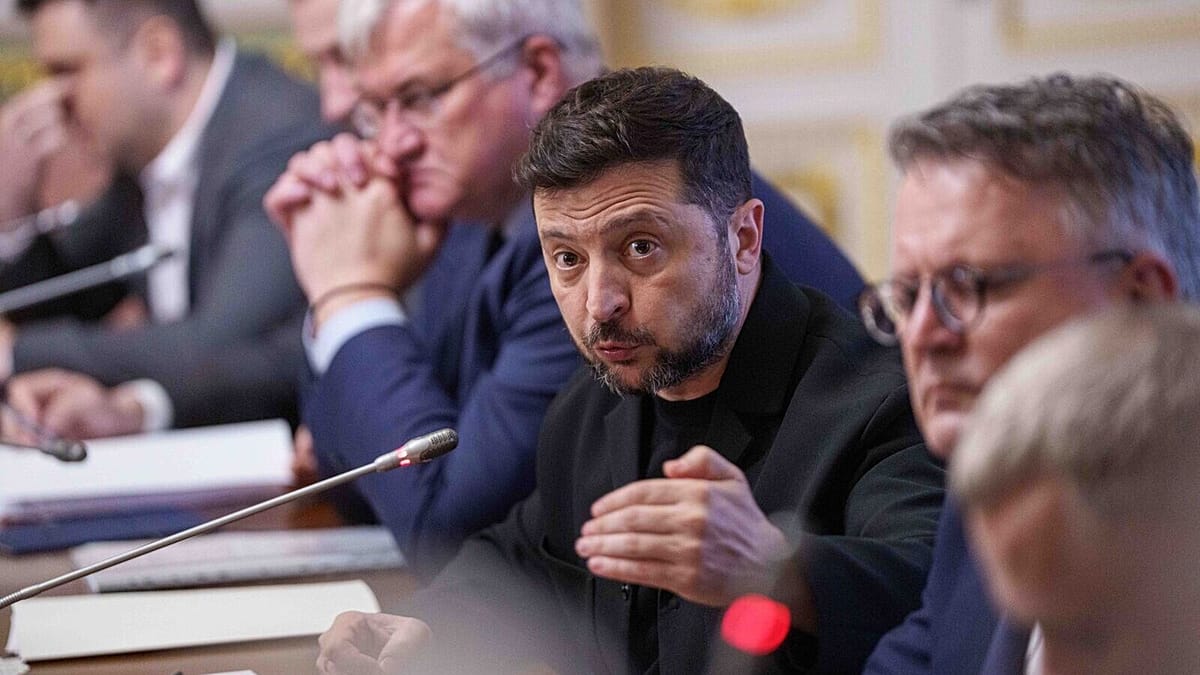
Growing bigger: Enlargement also dominated the start of Ireland’s six-month presidency of the EU Council, my colleague Jorge Liboreiro reports from the ground. President Volodymyr Zelenskyy flew to Dublin to attend the opening ceremony and make the case for opening the five remaining clusters of negotiations “as soon as possible”.
But Zelenskyy is facing a double-whammy: fresh reservations from Hungary and a bitter dispute with Poland, both of which threaten the pace of the accession process. In the press conference, Jorge asked Zelenskyy how he plans to handle the open fronts to avoid a new blockage.
“It’s in the interest of all the countries to have Ukraine in the EU as quickly as possible,” Zelenskyy said. “I think it’s important (that) when we all have rules, it’s not just political emotions.”
Ukraine, he added, is “ready to find answers”, a remark that suggests an increasing willingness to resolve the spiralling feud with Poland.
Awkward presser: Taoiseach Micheál Martin was asked to address the scandal over Ireland’s alumina sales to Russia. Martin said an investigation to “get the full facts” was nearing completion and promised to share the findings with the European Commission to discuss next steps.
Zelenskyy, Jorge tells me, didn’t seem fully convinced.
“Every ton of raw materials that ends up in Russia is used against us in this war,” he said. “We very much hope for a positive result in this investigation. And we hope that we will not have to wait for it for months.”
Later today: the full college of European Commissioners is set to arrive in Cork to mark the start of the Irish presidency. Stay tuned for Jorge’s reporting.
Russia attacks again: Zelenskyy was also forced to cut short his visit to Ireland after an intelligence warning indicated Russia was preparing another mass strike on Ukraine, our correspondent Sasha Vakulina reports.
“Once or twice a week, there are large-scale air strikes. Today (on Wednesday), there is worrying news about preparations for yet another such mass Russian air strike. We have relevant intelligence data,” Zelenskyy said in the press conference in Dublin, urging Ukrainian citizens to “be careful and look after themselves.”
Overnight, the warnings manifested with at least ten people killed and at least 56 others injured, including two children, as Russia launched dozens of cruise and ballistic missiles at Kyiv during an assault which also involved mass drone strikes across multiple regions.
The attack destroyed residential buildings, damaged a hotel in central Kyiv, and left multistory buildings in flames. As of 7:00 a.m. local time, damage and destruction had been recorded at more than 30 locations across all districts of Kyiv as a result of the attack. More.
Also on our radar today: European Commissioner for the Economy, Valdis Dombrovskis, will become the fourth member of Ursula von der Leyen’s college of Commissioners to visit Turkey in the space of a few days. He’s expected to join the High-Level Economic Dialogue on Thursday and Friday, and to hold talks with Finance Minister Mehmet Şimşek, who yesterday said his country was interested in the EU’s SEPA payments system.
The economic dialogue was restored last year, following a suspension initiated in 2019 due to Türkiye’s unauthorised drilling activities in the Eastern Mediterranean. For the same reason, the European Investment Bank froze its operations in the country, which are now returning to normal, my colleague Luca Bertuzzi writes.
The forum was scheduled months in advance, before the power trio visit was even in the cards, a Commission official told Euronews. Taking centre stage will be the impact of the latest geopolitical developments on the EU and Turkish economies, as well as how to boost investment ties.
Russian gas imports rise despite EU phase-out
Gas imports from Russia into the European Union increased during the first months of 2026, a new report has revealed, even as the bloc formally begins a historic withdrawal from Russian natural gas.
The EU banned Russian liquefied natural gas (LNG) from entering the bloc by the beginning of 2027 and mid-2027, albeit with exceptions for Hungary and Slovakia, which were allowed to tap Moscow’s gas in case of supply disruption given their landlocked position.
Yet according to the report from the EU’s agency of energy regulators (ACER), which was published on Wednesday, Russian gas imports have increased rather than declined during the reporting period, with pipeline imports rising 7 percent year-on-year compared to 2025 and LNG imports growing by 11 percent.
LNG imports accelerated further after the ban took effect in March, rising 17 percent against the same period in 2025.
Marta Pacheco has the details.
EU budget talks heat up as six-month countdown begins
Brussels will host a major EU budget conference today, amid intense negotiations among member states on the next long-term budget (with our very own chief anchor, Méabh Mc Mahon, moderating the discussions).
The European Commission first tabled a nearly €2-trillion budget a year ago, prioritising economic competitiveness and defence, while scaling back funding for agriculture and regional programs.
But discussions have since been torpedoed by a faultline separating two opposing camps of EU countries: one advocating for increased agricultural funding, and another pushing to reduce the overall size of the budget. A further key issue has now taken centre stage — how the budget will be financed. Member states are working to advance discussions on potential revenue sources.
There is political pressure to strike a deal before 2027, when several crunch elections are due to take place in the bloc – negotiators believe a shift in government in major EU economies could disrupt any ongoing budget negotiations. It means the pressure is on to close a deal by the end of 2026.
Speaking to my colleague Angela Skujins on Wednesday, the President of the German Bundesrat Andreas Bovenschulte said a “compromise” must be reached, as Berlin pushes for a smaller pot.
What is clear is that there are torrid discussions between the member states ahead of solidifying the deal, but whether or not they will be “exciting” — as per Merz’ characterisation at a recent summit in the Belgian capital — is to be seen.
More from our newsrooms
Ukraine launches ‘transparent mechanism’ allowing partner countries to buy weapons, Kyiv says. Ukraine approved a state mechanism to export its weaponry on Wednesday, seeking to raise funds in a fifth year of fighting Russia, while saying its own defence needs will remain a priority. Gavin Blackburn hasthe details.
Albania NATO summit hangs in balance as US slams security ‘free riders’. Tirana’s position as host of next year’s NATO summit is in doubt thanks to the country’s failure to meet key spending milestones – with draft conclusions for next week’s NATO summit in Ankara omitting any mention of holding the next gathering in Albania, despite the summit’s location being previously announced. Shona Murray hasthe story.
European Parliament to start procedure to ban Alternative for Germany’s EU party. The European Parliament is set to trigger a procedure against the Europe of Sovereign Nations (ESN) party, home to Alternative for Germany and other far-right political forces across Europe. ESN could be stripped of its right to be a political party and lose its funding, due to its failure to uphold EU values. The vote will be held next Tuesday. Vincenzo Genovese has more.
We’re also keeping an eye on
- European Commission President Ursula von der Leyen is in Armenia. Meets Prime Minister Nikol Pashinyan.
- EU foreign policy chief Kaja Kallas is in Bosnia & Herzegovina. Meets with the Chairwoman of the Council of Ministers, Borjana Krišto, and the EU’s Operation Althea military mission.
- European Commissioner for the Economy Valdis Dombrovskis is in Turkey. Meets Finance Minister Mehmet Şimşek.
- A delegation of constitutional experts from the Venice Commission is set to arrive in Hungary to investigate Péter Magyar’s push to remove Hungary’s President. The European Parliament has rejected a request from the Patriots of Europe (home to Viktor Orbán’s Fidesz party) for the issue to be debated in plenary.
That’s it for today..Jorge Liboreiro, Sasha Vakulina, Luca Bertuzzi, Eleonora Vasques, Marta Pacheco, Angela Skujins, Sandor Zsiros and Shona Murray contributed to this newsletter.
Read the full article here