


Published on
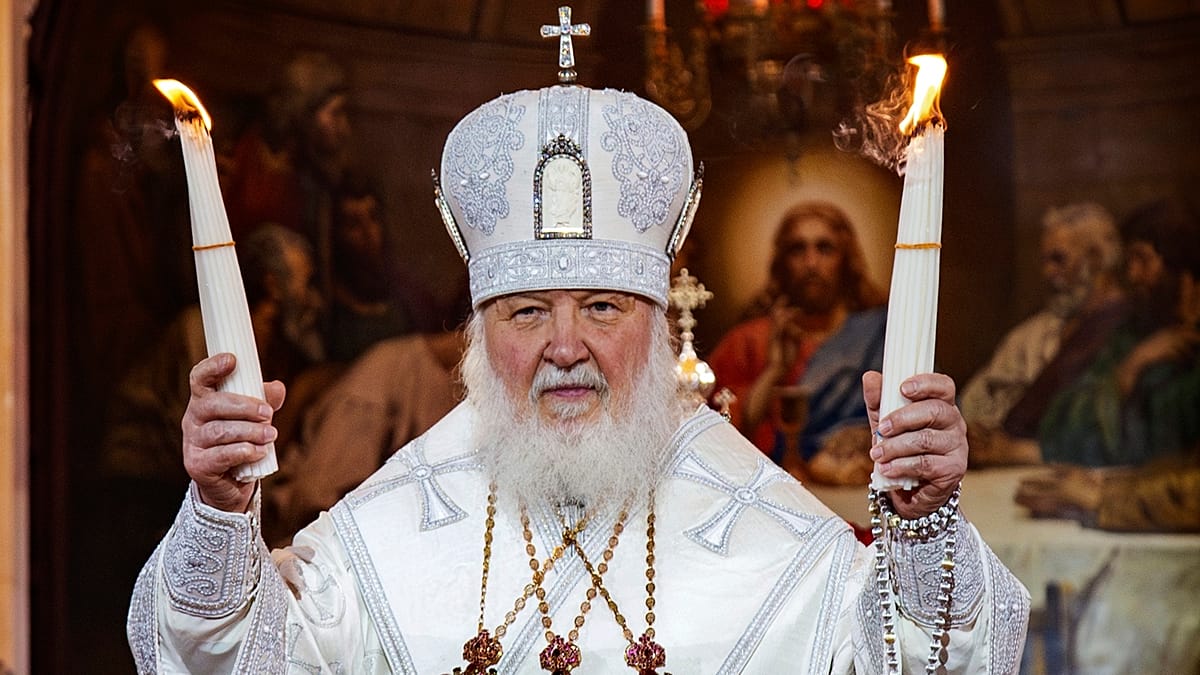
The European Union was unable to secure sanctions against Patriarch Kirill, the head of Russia’s Orthodox Church, after Bulgaria vetoed the proposal during closed-door negotiations, citing religious and cultural reasons.
ADVERTISEMENT

ADVERTISEMENT
Bulgaria also opposed blacklisting Vagit Alekperov, a Russian billionaire with links to the Kremlin and Lukoil, a major oil company.
The two names were definitely removed from a draft sanctions package during an extraordinary meeting of ambassadors on Sunday aimed at reaching a final deal, several diplomats confirmed to Euronews. The deal on the package as a whole did not materialise, but progress was made towards a conclusion this week.
The removal was widely expected given Bulgaria’s firm commitment to veto the measure, a position that Prime Minister Rumen Radev publicly confirmed last month. It is unusual for a sitting leader to comment publicly on details that are still under negotiation.
“What message are we sending when we extend sanctions and war into the sphere of religion? Do we realise where this leads?” Radev said.
Kirill, a highly controversial figure with both religious and political influence, has been accused of spreading revisionist propaganda to justify the war in Ukraine.
Under his leadership, the Russian Orthodox Church approved a document that called for the annihilation of Ukrainian independence and described the invasion as a “Holy War”.
The EU first tried to blacklist Kirill in 2022. But Hungary, under then-prime minister Viktor Orbán, blocked the move, calling it an issue of religious freedom.
The veto made headlines and caused outrage among other member states.
The matter lay dormant until this spring, when the new Hungarian government of Péter Magyar signalled readiness to shift the position. EU officials seized on the U-turn and added Kirill’s name to a draft list of individuals to be sanctioned.
But the plan soon bumped into Bulgaria’s wall of opposition.
The Bulgarian Orthodox Church and the Russian Orthodox Church are administratively independent, with different patriarchs, but both belong to the Eastern Orthodox Church, share the same faith and dogma, and are bound by cultural and historical ties.
The Eastern Orthodox Church is the primary confession in many Eastern European countries, including Russia, Bulgaria and Ukraine.
“The era of the Crusades is over. I am not interested in the Russian Patriarch as an individual. I am interested in the fact that he is the head of the Russian Orthodox Church, which is Eastern Orthodox, just like our church,” Radev said.
“I am concerned about the millions of people who belong to that church.”
Another name that Radev pushed to spare was Vagit Alekperov, the Russian oligarch who founded Lukoil. Alekperov stepped down as president in 2022 amid mounting international pressure but retained shares in the energy firm.
Radev argued that blacklisting Alekperov would amount to “shooting ourselves in the foot” because of a €3 billion compensation claim that Lukoil has launched against the state takeover of the Neftohim Burgas refinery, the largest in the region.
Sofia appointed a special administrator to the sprawling plant in November 2025 after the US administration imposed crippling sanctions on Lukoil and forced the multinational to put its international operations up for sale.
The refinery, which generates billions in annual turnover, no longer uses Russian oil.
Read the full article here