





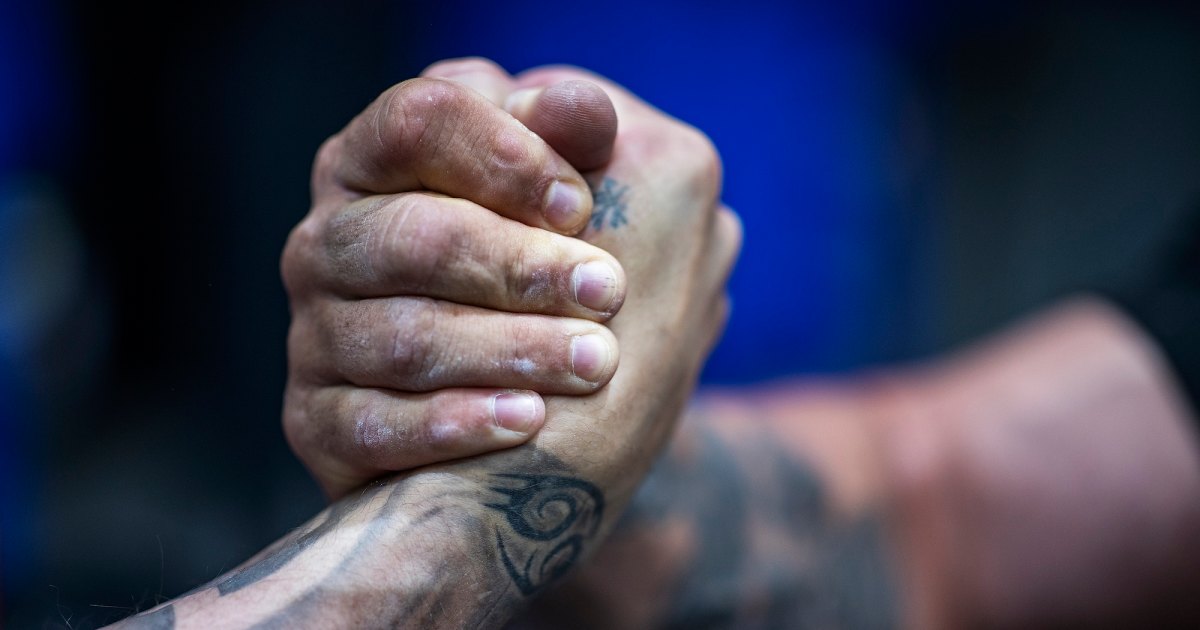
A simple squeeze of your hand may reveal more about your future health than your blood pressure. A wave of new and reinforcing research, from a UK Biobank analysis of half a million adults to a fresh JAMA study tracking older women for nearly a decade, is pushing grip strength toward mainstream use as a low-cost predictor of mortality. Expect the exam-room handshake to start counting.
What’s Happening With Grip Strength and Longevity Markers
Researchers at the University at Buffalo, publishing in JAMA, followed more than 5,000 women ages 63 to 99 over an eight-year period. Every 7 kg (15 pound) increase in grip strength was tied to a 12 percent drop in overall mortality risk. Faster times on a five-repetition sit-to-stand chair test cut death risk by another 4 percent.
The findings held after researchers adjusted for physical activity, heart health and body inflammation. Even women who did not meet standard weekly cardiovascular exercise guidelines lived significantly longer if they maintained strong muscles.
The Buffalo work lands atop a decade of converging evidence. A UK Biobank analysis of 502,628 participants ages 40 to 69, measured on a Jamar hydraulic dynamometer, found lower grip strength strongly associated with cardiovascular disease, respiratory disease, several cancers and all-cause mortality. A 2015 Lancet study of 139,691 adults across 17 countries reported that each 5-kilogram drop in grip strength raised all-cause mortality risk by 16 percent.
Why It’s Happening
Three forces are driving grip strength from niche gerontology metric to broader clinical interest.
The measurement is cheap and reproducible. The UK Biobank authors argued directly that grip strength, “in comparison with other physical measures, specifically cardiorespiratory fitness and physical activity, is easily measured, cheap, and highly reproducible in clinical practice.” In their data, grip strength predicted all-cause and cardiovascular mortality more strongly than systolic blood pressure.
The biological signal is getting clearer. A 2022 study in the Journal of Cachexia, Sarcopenia and Muscle compared handgrip strength against DNA methylation “epigenetic clocks” — chemical markers that reveal biological rather than chronological age. Adults with weaker grip showed accelerated biological aging across multiple clocks, and losing strength over eight to 10 years tracked with faster cellular aging.
Demographics are forcing the issue. U.S. women 80 and older are the fastest-growing age group in the country, according to Michael LaMonte, the Buffalo study’s lead author. That population needs mortality and function screens that don’t require a treadmill or a lab.
“Because women ages 80 and older are the fastest growing U.S. age group, the importance of monitoring and maintaining muscular strength will have huge public health implications in the coming decades.”
— Michael LaMonte, PhD, research professor of epidemiology and environmental health, University at Buffalo School of Public Health and Health Professions
What Could Be Next for Longevity
Grip strength is unlikely to replace blood pressure or cholesterol screening. But the evidence base is now deep enough that three near-term shifts look plausible.
Primary care adoption will accelerate. Dynamometers cost less than a stethoscope stand and take under a minute to use per hand. The UK Biobank authors already framed grip strength as a tool for “identifying people with muscle weakness who are at high risk of a wide range of diseases.” Expect it to appear alongside the Medicare Annual Wellness Visit’s existing functional assessments first, then in routine geriatric checkups. Reader action: If you’re over 60, ask your primary care provider whether they measure grip strength or a sit-to-stand time at your next visit. If they don’t, request it — a baseline reading now gives you something to compare against in two years.
At-home strength testing will become a consumer category. Wearables have saturated the aerobic side of fitness tracking. Muscle strength has been the missing metric. Given the mortality data now attached to a single number in kilograms, low-cost home dynamometers and app-linked sit-to-stand timers are a logical next product wave. Reader action: Before buying a consumer device, learn the clinical protocol — sitting, elbow at 90 degrees, three-second maximum squeeze on each hand, averaged. A device that doesn’t match that setup won’t give you a number comparable to the research.
Strength guidance for older adults will get more specific — and lower the bar. LaMonte was blunt about what building protective strength actually requires. “Even using soup cans or books as a form of resistance provides stimulus to skeletal muscles and could be used by individuals for whom other options are not feasible,” he said. Expect public health messaging to explicitly separate muscle-strengthening activity from cardiovascular exercise guidelines, and to feature household-object resistance for adults who can’t or won’t join a gym. Reader action: Start twice-weekly resistance work now, even if it’s soup cans and sit-to-stands from a kitchen chair. The Buffalo data suggests strength protects independent of aerobic activity — meaning you don’t have to become a walker first to benefit.
The takeaway is direct: grip strength has moved from interesting correlation to actionable metric. Measure it, track it, and train it — because “when we no longer can get out of the chair and move around, we are in trouble,” as LaMonte put it.
THREE SIGNALS TO WATCH
1. Whether the U.S. Preventive Services Task Force opens a review of muscle strength screening for adults 65 and older.
2. FDA clearance filings for consumer-grade digital dynamometers with clinical-comparability claims.
3. Updates to the federal Physical Activity Guidelines for Americans that add specific grip strength or sit-to-stand benchmarks alongside aerobic minutes.
Read the full article here