


For Brussels, this week’s agreement on a new sanctions package against Russia marks another milestone in the collective effort to undermine the economic engine sustaining Moscow’s full-scale invasion of Ukraine.
ADVERTISEMENT

ADVERTISEMENT
“At a time when Ukraine has built military momentum, our sanctions continue to weaken the economic foundations of Russia’s war effort,” European Commission President Ursula von der Leyen said.
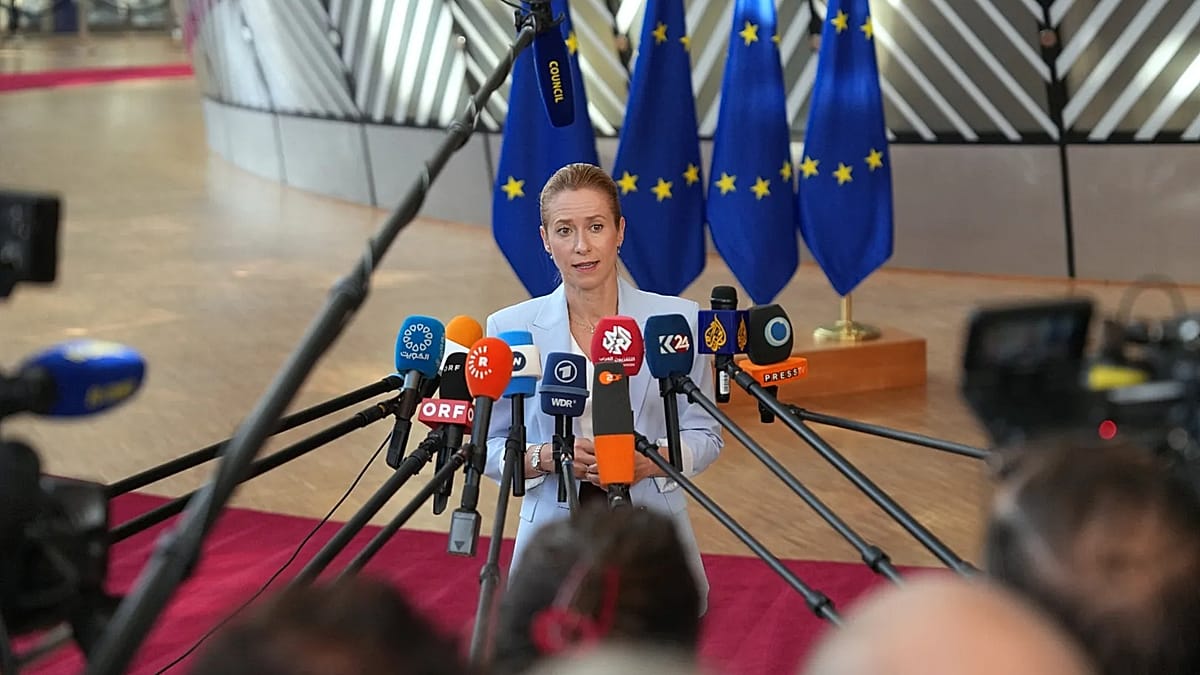
“We are hitting Putin where it hurts most: cutting off the financial lifelines he relies on to sustain his war,” High Representative Kaja Kallas added.
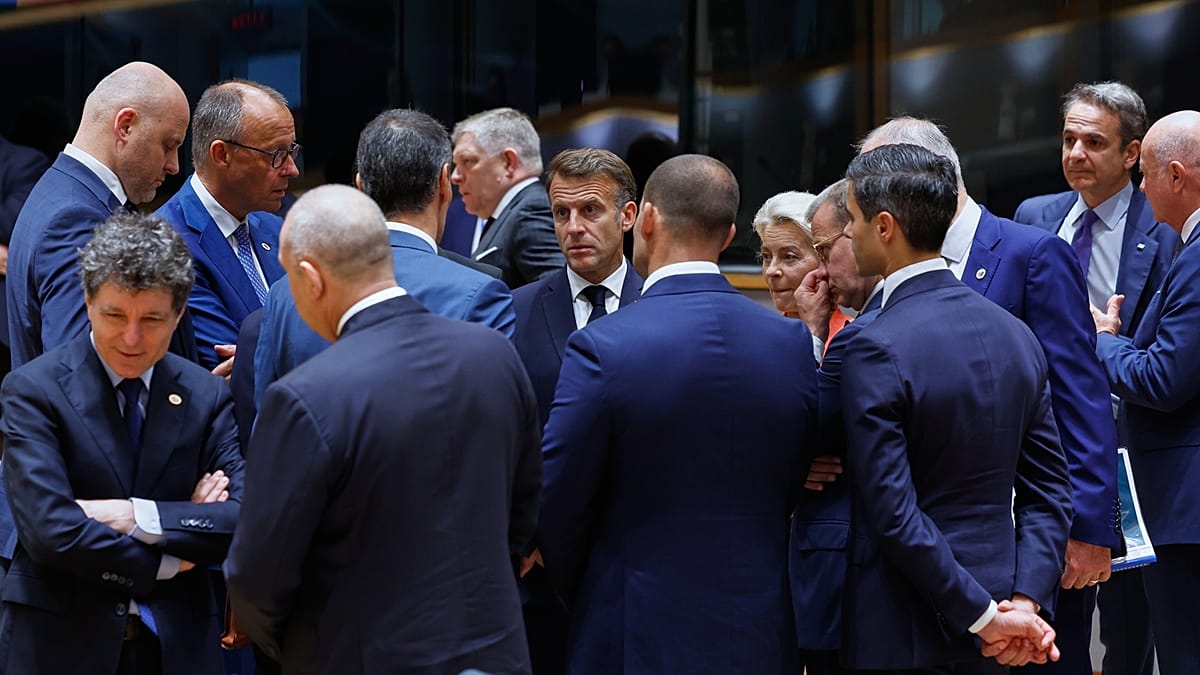
But the agreement – and, perhaps more revealingly, the fraught negotiations behind it – has exposed growing cracks in the political unity underpinning the most ambitious sanctions regime in EU history.
It has also raised broader questions about how much pain member states, now in the fourth year of the war, are prepared to absorb to keep pressure on the Kremlin.
For Greece, that threshold appears to be maritime transport.
Home to the world’s largest merchant fleet, Greece used its veto to press fellow member states into rewriting a full ban on Russian LNG, allowing shipping services outside the EU market to continue beyond the 1 January 2027 cut-off.
Ambassadors initially resisted reopening legislation that had already been unanimously agreed. Some saw the move as driven by commercial interests, pointing to the prominent role of Dynagas, a major Greek shipping company involved in transporting Russian LNG.
The fact that both the Greek government and Dynagas lobbied for the exemption using near-identical arguments did not go unnoticed.
Despite the backlash, Athens held its ground and kept its veto firmly in place until the other member states, faced with an intractable deadlock, reluctantly agreed to grant a derogation. As a result, transport of Russian LNG to non-EU clients will be permitted for the foreseeable future – under certain conditions.
Swedish Foreign Minister Maria Malmer Stenergard vented her frustration.
“Energy revenues are at the heart of Russia’s financing of the war, and the costs to Europe pale in comparison to the price the Ukrainian people are paying every day,” she told local media in a not-so-subtle rebuke.
But Greece was not alone in flexing its influence.
Bulgaria, under the new government of Prime Minister Rumen Radev, publicly threatened to veto the entire package unless Patriarch Kirill, the head of the Russian Orthodox Church, and Lukoil founder Vagit Alekperov were removed from the proposed blacklist. Both names were eventually dropped.
Portugal and Germany also pushed back against restrictions on Russian cod and pollock, warning of potential disruption to their domestic industries. After several rounds of consultations, the fisheries measures were removed.
France and Italy opposed a proposal to restrict Russian soldiers’ access to the Schengen Area. The entry ban was watered down repeatedly, eventually becoming a “legal basis” with little practical impact.
Meanwhile, Austria notched a political victory after member states agreed to consider its contentious request to lift sanctions on Rasperia, a blacklisted company, to help offset a €2.1 billion loss incurred by Raiffeisen Bank International in Russia.
Unlike last year, when the petition was outright dismissed, this time EU ambassadors, sensing yet another veto, promised Austria to find a solution at a later stage.
Scrambling for common ground
This is not the first time – and certainly will not be the last – that a sanctions package is held hostage by a veto. Hungary, under former prime minister Viktor Orbán, made the filibuster a fixture in Brussels, much to the vexationof his fellow leaders.
With Orbán gone, member states have lost a convenient cover, bringing national interests to the fore in a way rarely seen among countries that publicly reaffirm their support for Ukraine. While that support remains broadly intact, they vie for concessions.
The negotiations on the latest sanctions package were dominated by vetoes from other countries, notably Greece’s. Hungary, by contrast, was nowhere to be seen, a stark reflection of how much Orbán’s departure has shifted the political constellation.
“This is, of course, not what we would have ideally wanted, but it’s still limited to Russian exports to third countries,” a senior EU official said about the LNG exemption.
“This is the 21st time that we have achieved unanimity on sanctions against Russia. Russia is the most sanctioned country in the world, even more than Iran. So I honestly think this is a great sign of unity.”
Diplomats acknowledge that, despite internal tensions, the EU has continued to approve successive rounds of sanctions against Russia, dismantling decades of trade and investment ties with its largest neighbour.
Every new sanction carries real-world consequences, prompting ministries to assess the economic impact. In the early stages of the war, the pain threshold was high enough to make compromise relatively straightforward. More than four years on, with no end in sight, national interests are becoming harder to reconcile.
“It’s getting more and more difficult to find common ground. We saw that this week,” a diplomat told Euronews, speaking on condition of anonymity.
The European Commission, expected to gauge the political mood before tabling proposals, is also facing growing scrutiny.
It began by targeting the most obvious sectors, notably banking and energy. But after a record number of sanctions packages, fresh ideas are becoming increasingly scarce.
One example was the proposed ban on Russian fisheries, a sector that had so far escaped sanctions, included in the initial draft of the 21st package. Several governments were caught off guard, with some diplomats describing the proposal as poorly prepared.
“The Commission is running out of options for what to include,” a second diplomat said. “It has to become more creative, and every package is more complex and takes longer to negotiate.”
To avoid increasingly fraught negotiations, some officials and diplomats favour adopting measures on a rolling basis rather than bundling them into large sanctions packages. The approach is already being used to blacklist vessels linked to Russia’s shadow fleet.
Even so, unanimity remains the ultimate hurdle, leaving national interests to dictate the outcome.
Read the full article here