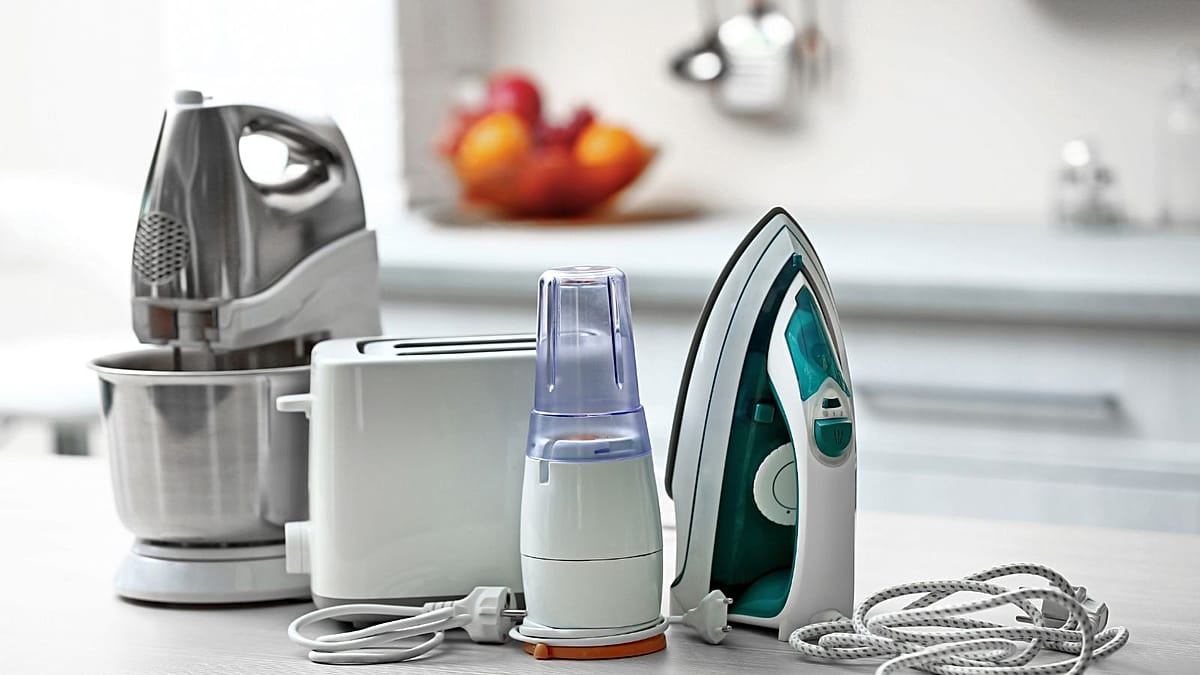


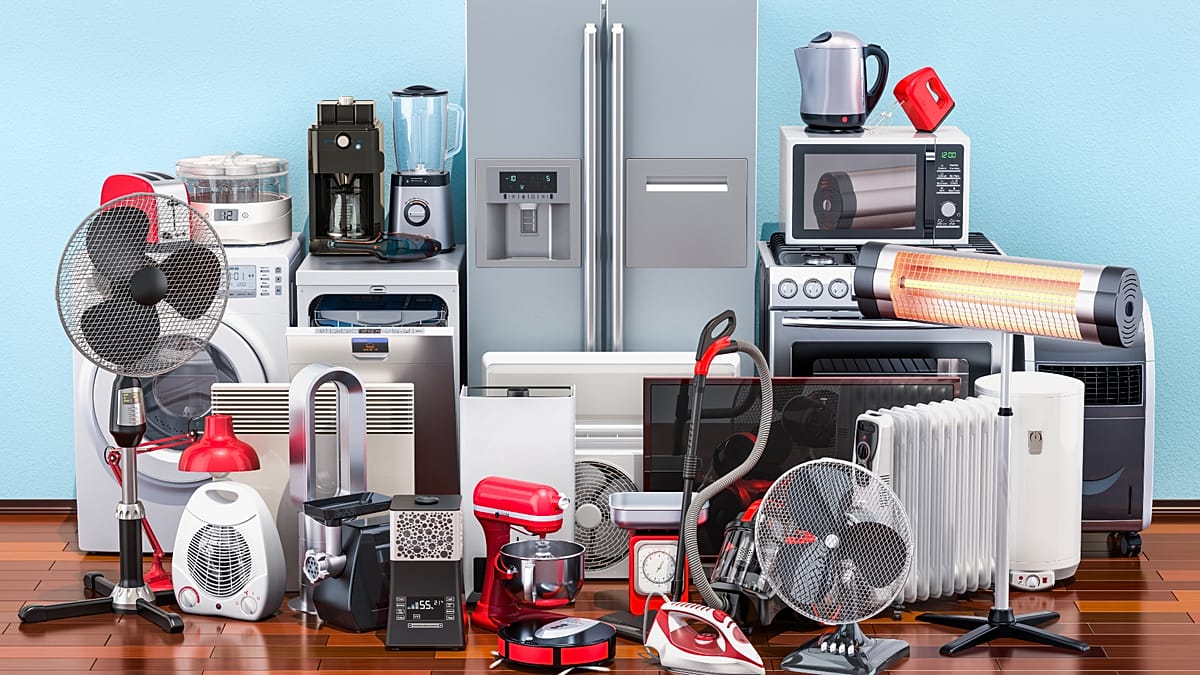


Europeans create 35 million tonnes of waste each year by throwing away broken appliances. France and Belgium have repair rates of 18% and 15%, respectively. Of roughly 28 million household breakdowns a year, only 5 million result in a technician fixing the device.
ADVERTISEMENT

ADVERTISEMENT
Some 77% of citizens would rather repair products than replace them. Yet only 5% of washing machines and 33% of vacuum cleaners are priced at a point where professional repair makes economic sense. Most fall into a “borderline” or “unviable” zone, where a new machine is cheaper than the spare parts.
“Access to repair is not the main bottleneck. The price is,” said Alex Bunodiere, a PhD researcher in KU Leuven’s Life Cycle Engineering research group.
The European Union wants to change this through new “Right to Repair” laws, forcing manufacturers to provide affordable spare parts, tools and manuals while banning software blocks. The aim is to give Europeans transparent quotes and independent local repair options, making it easier to fix rather than buy new.
Built to be replaced
When a small component fails, households often replace the entire 60–80 kg device. A €280 washing machine repair can mean buying a new one for the same price.
“When you buy a new product, you get a two-year warranty. But when you have a repair done, they typically only guarantee the part they’re replacing,” said Bunodiere. Convenience is another factor: a replacement can arrive within 24 hours, while repairs can take weeks.
The European Commission estimates these scenarios cost citizens €12 billion annually.
Data shows manufacturers restrict independent repair by locking supply chains. Up to 80% of independent technicians report being blocked by manufacturers restricting diagnostic software and parts or digitally pairing components.
Brands also structure manufacturing around cost-cutting and fast supply chains to meet demand for lower retail prices. Subtle design choices can force early disposal. Instead of modular components, manufacturers often solder cheap wear-and-tear parts onto major control boards, turning a €50 fix into a €250 replacement assembly.
“They can make money from repair, but I think they typically make more money from the sale than they do from a repair,” said Bunodiere, adding that companies are therefore incentivised to sell new products rather than repair existing ones.
A waste management crisis
According to consumer rights organisation Euroconsumers, smartphones and tablets are discarded, on average, after less than three years. Televisions are quickly replaced as software evolves and streaming apps become incompatible. Consumers also discard washing machines and dishwashers after major mechanical failures, and replace cordless vacuums after an average of just 4.5 years, largely because of their lithium batteries.
That shortened lifespan has an environmental cost. “Generally, I would say repair is almost always the more environmentally efficient option,” Bunodiere said, although replacing very old appliances can sometimes make sense when newer models consume less energy.
Discarded appliances generate 261 million tonnes of greenhouse gas emissions annually. Under the European Green Deal, the EU has legally binding targets to reach net zero and a fully circular economy by 2050.
Lawmakers recognised they could not meet these climate targets without reducing the more than 30 million tonnes of raw resources used each year to manufacture replacement products. After years of campaigning by the Right to Repair Europe coalition and rising inflation pressures, the Commission proposed the legislation in 2023. It was approved by the European Parliament and Council in early 2024 and took effect on July 1, 2026.
Everything included in the new directive
The Right to Repair Directive is a “full harmonisation” directive, meaning all EU states must align with it. It covers two main areas: pre-market design requirements and post-sale consumer rights. To improve retail transparency, the EU is also rolling out harmonised labels, including official repairability scores and digital product passports assessing durability.
The rules will be enforced nationally by market authorities and consumer protection agencies, with financial penalties for breaches set by each country.
The Directive’s new measures focus on consumer protection. If a product breaks during the seller’s legal liability period, consumers can choose repair or replacement. Choosing repair extends that period once by 12 months, while Member States may allow further extensions for repeat repairs. For certain products that fail later, consumers may still request a manufacturer repair where EU repairability rules apply.
This matters because repairs can otherwise offer less protection than replacement. Bunodiere noted that a new product comes with a two-year warranty, while a repair typically covers only the replaced part, leaving consumers exposed if something else fails soon afterwards.
The Directive also introduces a European Repair Information Form to make offers easier to compare. It can include the repairer’s identity, repair and diagnostic costs, expected duration, handover location, transport costs and whether a temporary replacement is available. If used, the quoted terms must normally remain valid for at least 30 days.
Consumers can receive a temporary replacement during repairs and remain free to use independent repairers rather than the manufacturer.
They should also receive clearer information about their repair rights. Producers must provide details of repair services and available options, while Member States must make these rights easily accessible, including through national websites.
Obligations for manufacturers
The new laws require manufacturers to provide repairs unless genuinely impossible. They cannot refuse because a repair is expensive or an independent repairer previously worked on the product. They must make spare parts, tools and repair information available so independent repairers can compete and consumers have more choice. Software locks, hardware restrictions and contract terms cannot be used to block independent repairs.
Manufacturers must allow original, used, compatible or safe and legal 3D-printed parts. They must publish indicative prices for common repairs online, helping consumers decide whether repair is financially worthwhile. Where required, information must be free, while spare parts and tools must be priced so as not to discourage repair.
Where manufacturers must provide repairs, they must do so within a reasonable timeframe and either free of charge or at a reasonable price.
But Bunodiere argues the key question is how “reasonable” is defined. Manufacturers may consider a price reasonable given storage, labour and logistics costs, while consumers may still find it too high to justify repair. “What is a reasonable time? … What is a reasonable price? The question is, how do you determine that?” he asked.
The rollout
The directive took effect on 31 July 2026. By that date, member states had to transpose it into national law, inform Brussels of their national contact points and set penalties for infringements, yet countries lag behind. The EU Commission reports that only 10 member states have respected the deadline. These are Denmark, Germany, Ireland, Croatia, Greece, Finland, Lithuania, Hungary, Austria, and Slovakia.
Uneven implementation creates fragmentation. “Consumers will have different qualities of rights depending on which country they live in and cannot rely on the directive directly against private parties”, said MEP René Repasi of the Group of the Progressive Alliance of Socialists and Democrats and rapporteur of the file in the European Parliament.
For Repasi, the biggest issue comes with Article 5 on the manufacturer’s obligation to repair. “As long as the directive, and specifically Article 5, is not implemented, manufacturers can, under the previous laws, simply reject repairs […] and either not repair, impede it or push the consumer towards buying a new good”.
In these cases, consumers can shift the liability and the damages they have incurred onto the member state. “Consumers can claim to repair damages against the member state because of wrong or not at all implementation. So, if consumers have the right to repair but cannot repair and have to buy a new good, then the damages they have can be pushed through to the member states”, the rapporteur explained.
Implementation speed varies depending on existing national laws. Member states with strong consumer protection measures will need to make less adjustments to national rules.
“The guarantee period of a product in the Netherlands is much longer than, for example, in Germany; hence, the question of extending the guarantee period for repair doesn’t pose itself in the Netherlands as compared to Germany. The same is true for Finland”, Repasi explained.
In Sweden, citizens already enjoy a tax benefit, with half of the labour cost for repairs deducted from the invoice. In France, reparability scores for products became mandatory in 2021 in webshops and physical stores.
Some key tools aren’t ready yet. The European Repair Platform will be operational only from 1 January 2028, with an EU-wide online interface ready in July 2027. It will include national sections to help consumers find, for free, local repair shops, sellers of refurbished goods, buyers of defective items, or community-led repair initiatives. Countries that prefer having their own national site must have it ready by the same deadline.
Read the full article here