




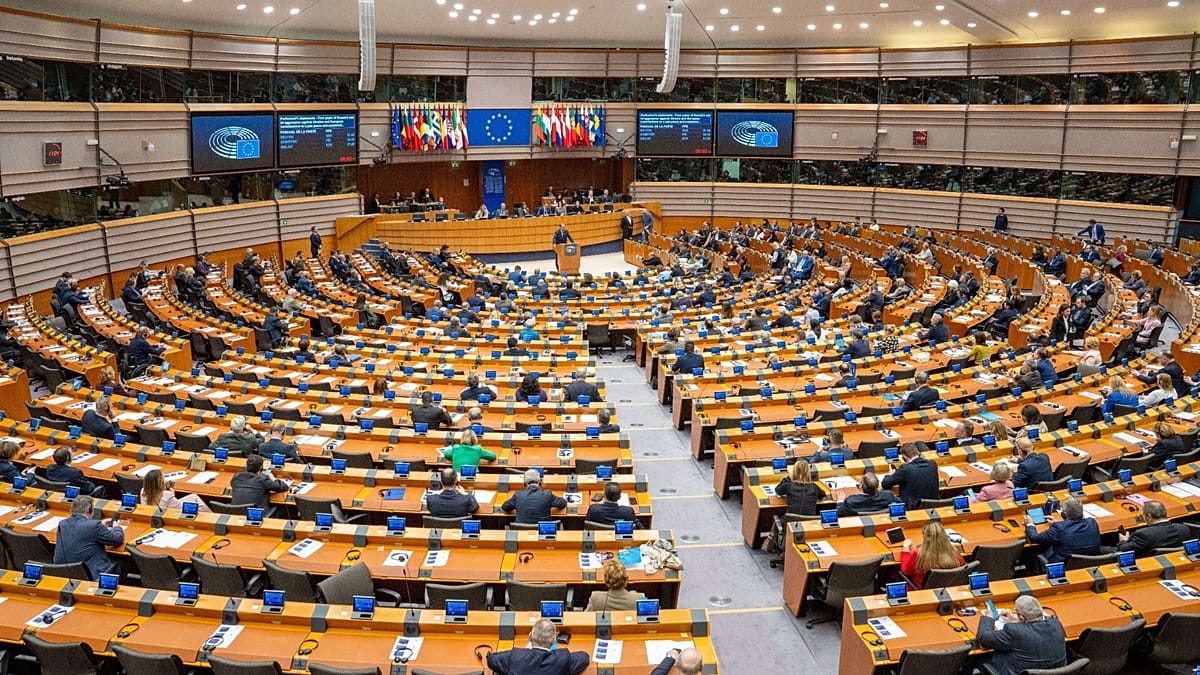
The European Parliament has approved a new category of companies, small mid-cap enterprises (SMCs), which will benefit from a simpler legal framework, including exemptions that were previously available only to small and medium-sized enterprises (SMEs).
ADVERTISEMENT

ADVERTISEMENT
Voted through on Wednesday in a joint session of three parliamentary committees, the move gives these companies the benefit of simplified rules in the fields of data protection, access to capital markets, batteries, and critical infrastructures.
SMEs represent 99% of businesses in Europe, and are defined as such when they have fewer than 250 employees and an annual turnover not exceeding €50 million or a balance sheet total of no more than €43 million. This category includes both micro-enterprises (fewer than 10 employees) and small enterprises (fewer than 50 employees).
SMCs, according to the European Parliament proposal, are defined as companies with fewer than 1,000 employees and either up to €200 million in turnover or up to €172 million in total assets. The Commission, however, has put forward different thresholds: up to 750 employees, €150 million in turnover and/or €129 million in total assets.
The simplification agenda is a key priority of the European Commission’s current mandate, which has proposed multiple “omnibuses” meant to review and streamline EU legislation to cut red tape in a wide range of sectors.
The Commission’s objective is to ensure that the EU is an environment in which businesses can flourish, generate prosperity, and strengthen the bloc’s position in the global economy relative to other major powers, such as China and the US.
To achieve that, the Commission is aiming to reduce administrative burdens for business by 25 percent and by 35 percent for SMEs by the end of this mandate. The 25 percent reduction is estimated to correspond to €37.5 billion in savings.
This agenda is strongly supported by key member states, such as Germany, whose prioritisation of the “simplification and competitiveness” agenda is consistently raised at relevant political events in Brussels.
The proposal
The proposal passed by Wednesday’s vote would allow SMCs to benefit from the same GDPR record-keeping exemptions currently available to SMEs, but only when handling low-risk data. These exemptions do not cover sensitive data, including biometrics, ethnic origin, political opinions, religion, health information, or criminal records.
It would be also easier for SMCs to raise money on the capital markets: they would be able to tap into SME “growth markets” and take advantage of simplified prospectus disclosure rules.
SME growth markets are specialised multilateral trading platforms designed to help SMEs to access public funding, with rules tailored to the needs of smaller companies.
On batteries, the proposal allows SMCs to review, update, and publish their due diligence policies only every five years, or sooner if significant changes occur, instead of every three years as originally proposed, thus aligning them more closely with existing SMEs exemptions. And for fluorinated gases (F-gases), registration in the EU F-gas Portal would be required only for imports and exports that meet certain thresholds.
The package also addresses critical infrastructure and trade. EU countries would support SMCs in meeting resilience obligations, and access to trade defence instruments would be simplified for SMCs alongside SMEs.
“With the new category of small mid-caps, we recognise that many growing companies have outgrown the SME definition but still face disproportionate regulatory burdens”, the European People’s Party coordinator on economic affairs Markus Ferber wrote in a statement.
“By extending targeted simplifications to these firms, we give them more room to invest, innovate and create jobs.”
The European Parliament will vote on final approval of the package at its plenary gathering in March.
Afterwards, the Parliament is expected to start interinstitutional negotiations with the Council, where EU countries are represented, and the European Commission.
Read the full article here