





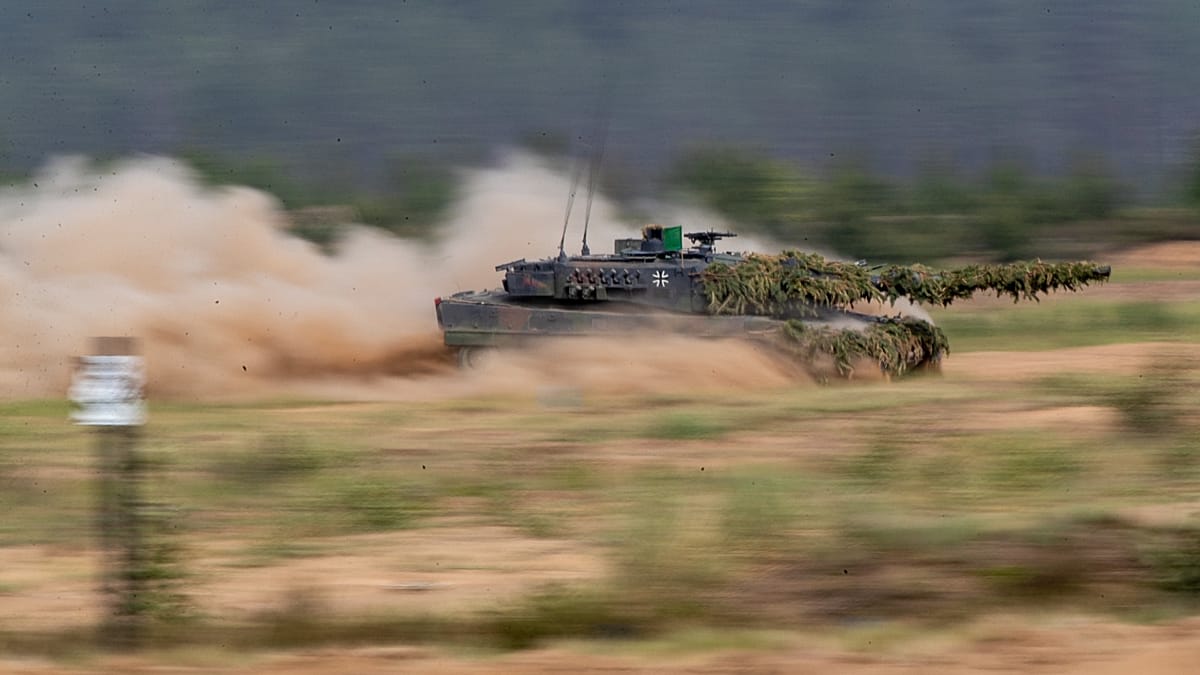
The European Parliament will push for the EU’s planned improvements to military mobility across the bloc to include a European preference to remove the risk of foreign actors using “kill switches” to slow down the movement of troops and weapons, according to the file’s shadow rapporteur.
“Today, everything is digitised. I don’t want our digitalised (railway) signalling points to be stopped remotely because there are Huawei chips inside them,”François Kalfon (S&D, France), the European Parliament’s shadow rapporteur on military mobility, told Euronews this week.
Kalfon is broadly positive about a package unveiled by the Commission in November which aims to harmonise military mobility rules across the 27 member states to significantly cut the amount of time it takes for troops and military equipment to travel across the bloc.
At the moment, some member states take up to 45 days to answer a request from another EU country to travel across their border with military equipment. The EU executive wants to see that figure cut to three days in peacetime and to a maximum of six hours in times of crisis under a new emergency framework, the European Military Mobility Enhanced Response System (EMERS).
The package also includes plans to upgrade 500 infrastructure hotspots – roads, tunnels, bridges, and railways – along four main corridors that crisscross the EU’s territory to ensure they can withstand the weight and width of military equipment.
“What is not in the text is the European preference,” Kalfon said. “It is prudent that our investments in infrastructure and rolling stock give preference to Europe.”
Threat alert
Russia’s full-scale invasion of Ukraine in February 2022 and years of suspected acts of sabotage on critical infrastructure elsewhere have forced European countries to start looking at their vulnerabilities and dependencies.
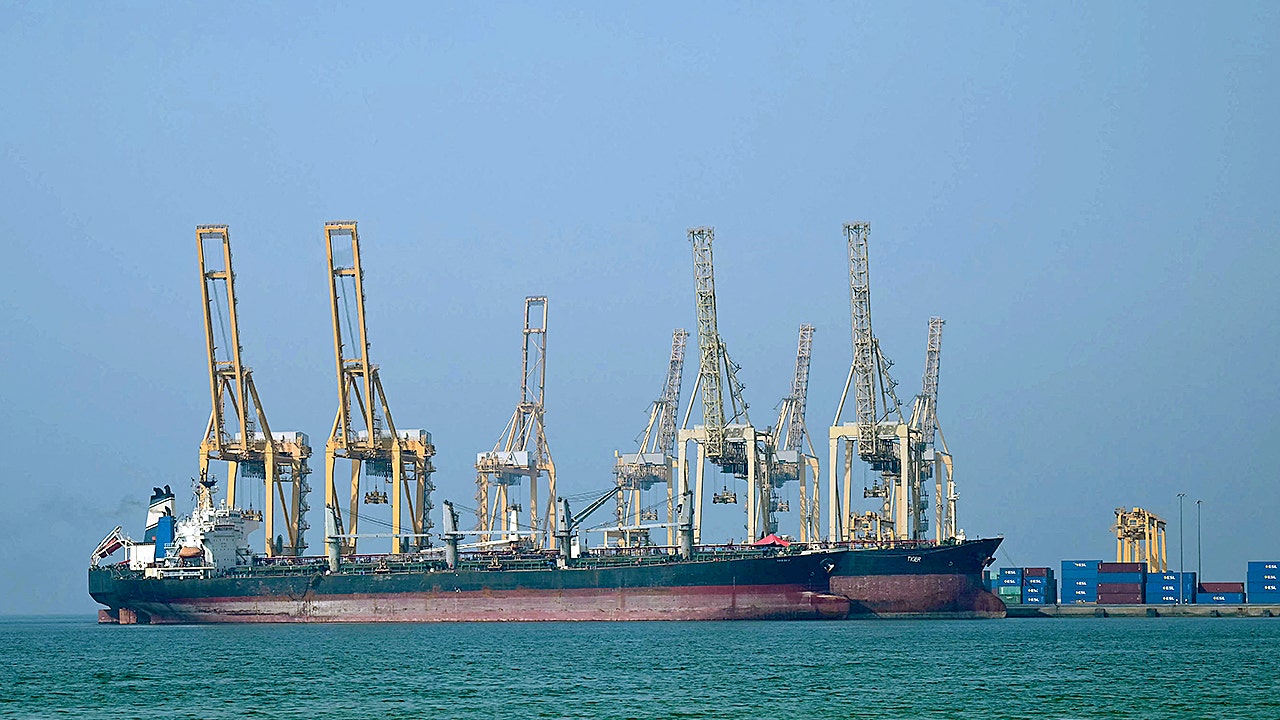
Also raising concerns is Chinese ownership of ports, airports, electrical companies and telecommunications infrastructure. The fear is that Chinese investments in Europe could see companies gather and share strategic data with Beijing, or even install hidden “kill switches” that could be remotely triggered to shut down key European infrastructure.
Late last year, the EU reached a deal to tighten rules governing foreign direct investments in critical infrastructure and key strategic sectors. Meanwhile, the Commission called last month to limit the purchase of components and equipment from foreign “high-risk” suppliers in critical sectors including telecom networks, data centres, cloud services, and connected devices.
But Kalfon highlighted that “there is nothing today that obliges any transport operator to use European equipment”.
“I will give an example that does not concern military mobility, relating to fighter jets,” he said. “If Greenland is potentially attacked by the United States and they only have F-35s, and in order to authorise the flight plan, they are obliged to send their flight plan to (American manufacturer) Lockheed Martin, you have a problem.”
“It is less visually striking than fighter jets, but on trains and aeroplanes it poses the same problem in practice. So we are going to fight to achieve this.”
A strategic reserve
The EU has already included a “Made in Europe” preference in a number of defence initiatives, including the €150 billion SAFE loan for defence scheme and the €1.5 billion European Defence Industry Programme, under which at least 65% of the components of the funded projects must originate from either the EU or an associated country such as Norway and Ukraine.
And there is a second aspect of the military mobility package that Kalfon wants to amend: the Commission’s proposal for a “military solidarity pool”, under which member states would voluntarily provide some of their assets for others to use if needed.
That doesn’t go far enough for the French MEP, who instead wants the bloc to set up a “strategic reserve of European rolling stock”. He envisions this to be similar to rescEU, a crisis response plan under which 12 fire-fighting planes are being procured with EU funds.
“What is a strategic reserve? It means that if a high-intensity war breaks out in Europe, say Poland is attacked, all your wagons and locomotives are mobilised to take equipment to the front. That’s what high-intensity warfare is all about. We don’t have enough locomotives and freight wagons to do that,” Kalfon told Euronews.
Locomotives, freight and hospital train carriages, jumbo jets and jumbo helicopters are among the assets Kalfon says should be jointly procured with direct EU financing.
“And in particular dual-use locomotives, running on fuel and electricity, for reasons of resilience,” he said. “Your locomotive has to be able to run if the power station is bombed, so it also has to be diesel-powered. We don’t have this kind of equipment, or very little of it.”
This equipment, which is dual-use by nature, could also be used for rescEU as well, Kalfon said.
The rapporteurs’ report on military mobility is expected to be presented to the Committee on Transport and Tourism in early April, with a first trilogue with the Council and the Commission tabled for July.
Read the full article here