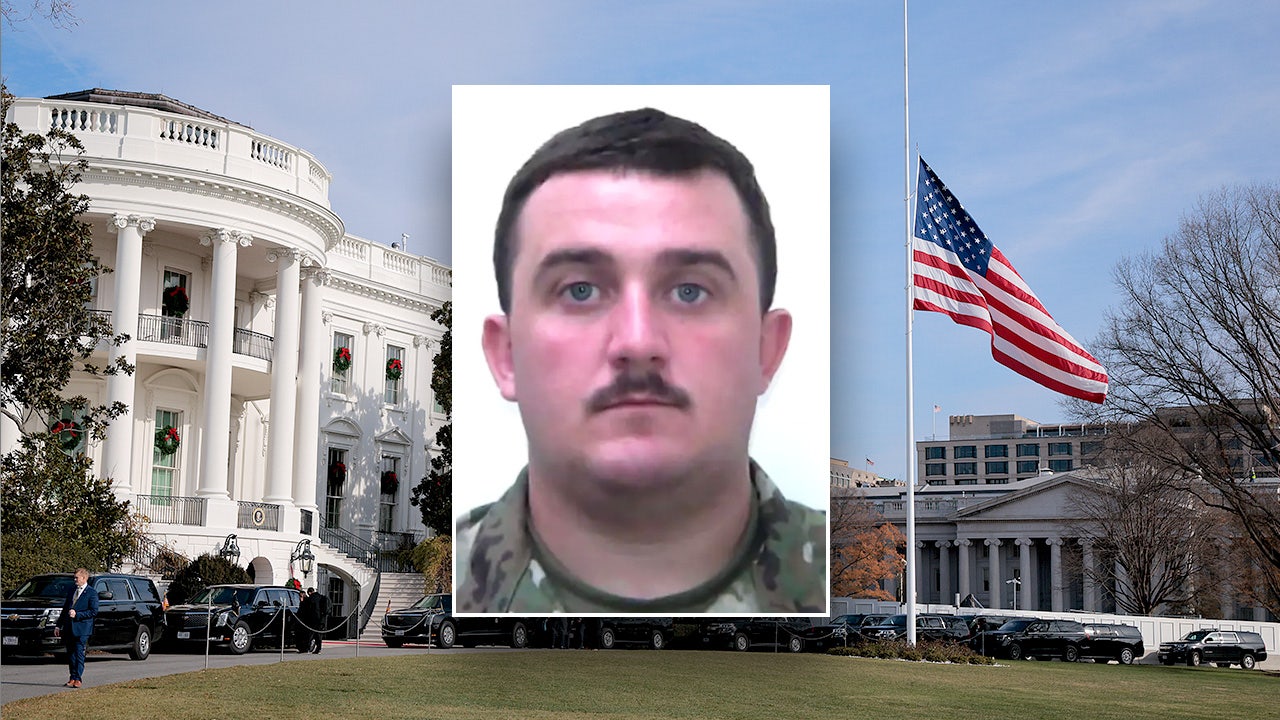


The Afghan man accused of shooting two National Guard members in DC shares a close military connection to a countryman who was busted a day earlier in Texas and accused of making bomb threats, The Post has learned.
The two arrests brought a sudden national focus to lapses in vetting and monitoring of migrants from Afghanistan – including many who assisted American forces in the war there – following the chaotic US troop withdrawal under the Biden Administration.
In a concerning tie, both men served at the same counterterrorism base in Kandahar during the Afghan war, sources said.
Senior Trump administration members disclosed details about Rahmanullah Lakanwal immediately after he allegedly shot two National Guard members in DC last Wednesday, killing West Virginia Guard Specialist Sarah Beckstrom. CIA Director John Ratcliffe confirmed he had worked to support the US at an Afghan Army special operations base.
Yet the charging document for a second Afghan man, Mohammad Dawood Alokozay, 30, who is accused of making terroristic threats during a Nov. 23 call, said nothing about what he did in Afghanistan or how he made it to the US.
Alokozay worked at the very same base, serving as a security guard at Strike Force 03. Both men overlapped during their time there, although they had different roles, a senior former Afghan military official told The Post.
It was not immediately known if they had met or interacted while stationed at the base.
“Alokozay used to be in this unit for six years. He was guarding the towers inside the base,” said General Haibatullah Alizai, the last chief of staff for the Afghan Army before the fall of Kabul.
The facility, set up in the former compound of one-eyed Taliban leader Mullah Omar, housed about 1,900 soldiers and was home to the QSF – the Kandahar Strike Force of special operators.
Alizai, who himself used to command Afghan special forces, spoke to sources including Alokozay’s former commander following his arrest. He said he was able to gain information about Alokozay’s service, plus additional details about his background and family.
“They were saying that he was a polite person. And this back goes back to the Afghan National Police,” another government institution he served for years. Both positions could have provided targets of opportunity if he had wanted to carry out an attack – suggesting he may have been radicalized after migrating to the US around the same time as Lakanwal, Alizai said.
“He was in the war for almost 20 years and only six years he was with QSF, and we need to interrogate and investigate more about this guy – like how he became radical,” he said.
“This is the guy that I believe needs more investigation, even more than Lakanwal,” he added.
Federal authorities charged Alokozay with threatening two other Afghan men on a group chat that got posted on TikTok and other platforms. He allegedly threatened to build a bomb to carry out a suicide attack to take them out along with “infidels,” according to the federal charges unsealed Tuesday.
“Alozokay stated the Taliban were dear to him and that he came to the United States to kill those on the call. He also claimed he wanted to conduct a suicide attack on Americans,” according to the federal complaint.
“He claimed he would build a bomb in his vehicle and talked about a particular yellow cooking oil container favored by the Taliban in building improvised explosive devices (IEDs) in Afghanistan,” according to the Justice Department.
An informant who viewed the videotape told The Post Alokozay threatened to carry out “terrorist” threats, and “was repeatedly issuing violent threats.” The informant flagged the video threat to police in Fort Worth and to the FBI, he claimed.
According to a translation of the video chat obtained by The Post, Alokozay boasted to the group about a suicide attack. “Then you will suicide the infidels?” the one of the men asked him. “I will suicide on you, on your infidels, anyone who disagrees … I will suicide bomb on on him.”
After group members repeatedly asked him how and when he would carry out the attack, he said he would make the bomb at his home or his car. DOJ says he referenced a specific type of bomb using a yellow cooking oil container. “I will make the yellow barrel here, will do suicide on you, on you are infidels, there is no problem, I am Afghan, I am Muslim … there is no God except the God.”
Follow the latest on the National Guard shooting in Washington, DC:
On Dec. 4, the feds announced the arrest of a third Afghan man, Jaan Shah Safi, accused of having provided support to the Islamic State of Iraq and Syria-Khorasan (ISIS-K), a group that is fighting the Taliban and that claimed responsibility for the August 2021 attack at Hamid Karzai International Airport during the chaotic US withdrawal.
“This incident happened right here in our own community,” said Rep. Ben Cline, who represents the district where ICE agents carried out the arrest. He said it “underscores the real-world consequences of the Biden Administration’s failure to properly vet the nearly 190,000 Afghan nationals released into the United States under Operation Allies Welcome.”
All three men came into the country in 2021 under the operation.
“We now have three Afghan nationals who came here after the failed Biden withdrawal who were arrested for violent or extremist activity within weeks,” said Rep. Jeff Van Drew (R-NJ). “There is a clear responsibility to investigate whether these individuals shared any connections and to take every step to prevent another threat from slipping through the cracks,” he added.
The Post reached out to the Department of Homeland Security, the Pentagon, and the CIA seeking confirmation on any past government work or connections of the two arrested Afghans.
Shawn VanDiver, president of #AfghanEvac, accused the administration of twisting information in the wake of the Guard shooting. “It seems like they’re trying to cherry pick these stories that they can take out of context and manufacture outrage about Afghans,” he said.
The urgent need to identify Afghans who may have become radicalized could harm other Afghans who are trying to identify countrymen who may veer into extremism, Alizai warned.
“All of these threats are tied to us, and everybody is just trying to survive in this complicated and difficult situation,” he said.
Read the full article here