



Good morning from Brussels. I’m Maïa de La Baume.
ADVERTISEMENT

ADVERTISEMENT
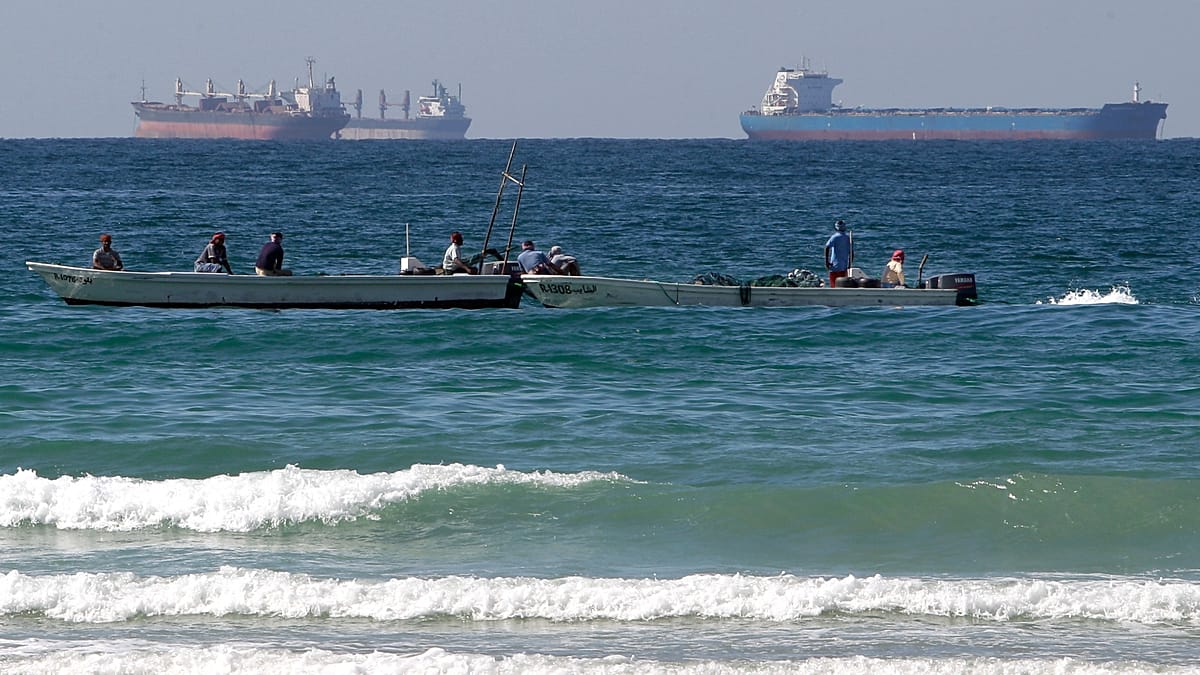
While you were asleep, US President Donald Trump said the war with Iran could end “very soon,” but warned that fighting could escalate if global oil supplies are disrupted.
“If Iran does anything that stops the flow of Oil within the Strait of Hormuz, they will be hit by the United States of America TWENTY TIMES HARDER than they have been hit thus far.,” wrote Trump hours later in a post on Truth Social.
Reminder : Oil prices briefly surged to their highest level since 2022, a day after Iran named Mojtaba Khamenei as the country’s new supreme leader following the death of his father, Ali Khamenei. But prices later fell and US stocks rose on hopes that the war with Iran may not last much longer.
Major economies have so far signalled calm. On Monday, the G7 decided against using strategic reserves for now to counter the impact on oil prices from the Iran war.
Speaking of energy, Slovakian prime minister Robert Fico is due to meet commission president Ursula von der Leyen today on the sidelines of the Nuclear Energy Summit in Paris.
The Slovak prime minister has warned that Slovakia could block the European Union’s €90 billion loan package for Ukraine after April if Viktor Orbán loses Hungary’s election and Kyiv fails to restart oil flows through the Druzhba pipeline.
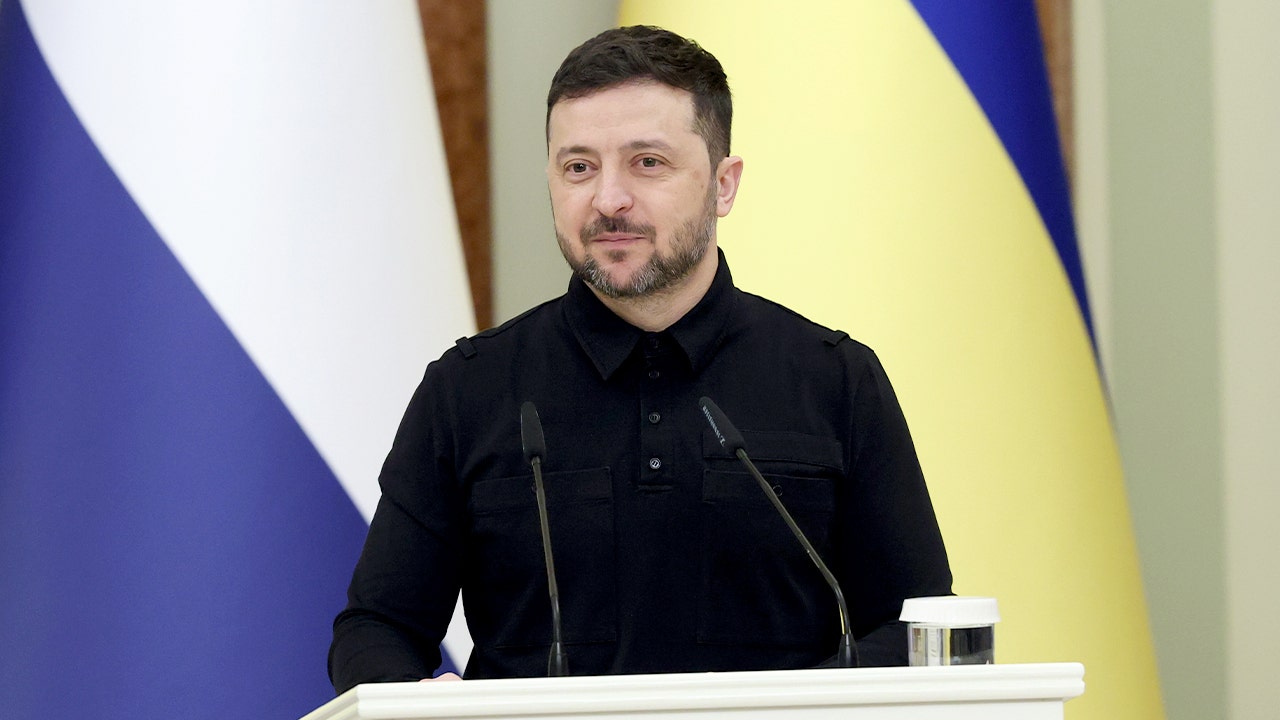
Fico said he will urge von der Leyen to pressure Ukrainian President Volodymyr Zelenskyy to allow the pipeline to be inspected, adding that Slovakia has satellite evidence suggesting Druzhba remains operational.
Meanwhile, Orbán called on the European Union to suspend sanctions on Russian energy imports, citing rising energy prices across Europe.
Reminder: Hungary and Slovakia are the last EU member states importing large amounts of pipeline oil from Russia through the Druzhba pipeline running across Ukrainian territory. The pipeline was damaged in a Russian drone attack at the end of January and has not been repaired since.
Against that backdrop, the European Commission will present a new plan today to lower energy costs and tackle energy poverty across the EU, amid soaring energy prices due to the conflict in the Middle East, according to an internal document seen by Euronews.
Executive Vice President Teresa Ribera and Energy Commissioner Dan Jørgensen are set to propose measures aimed at lowering electricity costs. The plan includes reducing electricity taxes, making it easier for consumers to switch energy suppliers, and promoting “energy communities” in which citizens generate and share renewable power.
The push to expand energy communities comes after an audit by the European Court of Auditors found earlier this week that the European Commission had failed to deliver on its pledge to empower local communities to produce and share clean energy.
According to the Commission, the package could cut household electricity bills by around 14% and help millions of Europeans gain access to more affordable energy.
Fico warns Slovakia may block EU’s Ukraine loan if Orbán loses election
Slovakia is prepared to block the EU’s €90 billion loan package for Ukraine after April if oil flows through the Druzhba pipeline are not restored and Viktor Orbán loses Hungary’s election.
Slovak Prime Minister Robert Fico made the announcement in a video message posted on social media on Sunday evening.
“The Ukrainian president has recently been talking about resuming supplies in a month, which means after the Hungarian elections, where he is counting on the victory of the opposition,” Fico said.
“The most important message will be that Slovakia is ready to take over the baton from Hungary, if necessary.”
Hungary is currently blocking the loan to Ukraine over the Druzhba pipeline, a key route for Russian oil supplies to Hungary that was damaged in a Russian drone strike in January.
Orbán is struggling in the polls ahead of the 12 April election, with the opposition Tisza Party, led by Péter Magyar, holding a substantial lead. Both Orbán and Fico have accused Ukraine of refusing to repair the pipeline in order to exert political pressure on Budapest and Bratislava.
Fico is expected to raise the issue at a meeting with Ursula von der Leyen in Paris on Tuesday on the sidelines of the Nuclear Energy Summit. He has warned against what he describes as the Commission prioritising Ukraine’s interests over those of EU member states such as Slovakia and Hungary.
Hungary and Slovakia are the last EU countries still importing significant volumes of Russian pipeline oil through the Druzhba pipeline, which runs across Ukrainian territory.
While Fico and Orbán accuse Volodymyr Zelenskyy of political blackmail, the Ukrainian president says repairs would only be possible in the event of a ceasefire and could take up to 1.5 months due to the dangers posed by continued Russian attacks.
More here
Von der Leyen and Kallas call on Europe to adapt to chaotic, coercive world order
A speech by Ursula von der Leyen to EU ambassadors on Monday was widely seen by commentators as signalling a shift in the European Union’s traditional foreign policy approach.
The Commission president argued that recent developments — particularly events in Iran — show the EU can no longer rely on a rules-based international order and must adapt to what she described as a new era marked by instability and coercion.
“Europe can no longer be a custodian for the old world order, for a world that has gone and will not return,” von der Leyen said.
Speaking afterwards, the EU’s foreign policy chief Kaja Kallas pointed to Russia’s full-scale invasion of Ukraine four years ago as the turning point that accelerated what she called the erosion of international law and the return of “coercive power politics.”
“That invasion did not go unnoticed,” Kallas told ambassadors. “Instead, it sent a signal around the world that there is no more accountability for one’s actions — the rulebook has been thrown out of the window.”
“Without restoring international law, together with accountability, we are doomed to see repeated violations of the law, disruption and chaos,” she added.
Notably, neither von der Leyen nor Kallas explicitly condemned the recent US-Israeli strikes on Iran as a breach of international law. Instead, von der Leyen said the EU should move beyond analysis and confront “the reality of the situation” and “the world as it actually is”.
The conflict has also raised questions in Brussels about whether von der Leyen’s increasingly active diplomatic outreach risks overlapping with the responsibilities of the EU’s foreign policy chief.
More from our newsrooms
Hungary demands EU lift sanctions on Russian energy as prices spike amid Iran war. Hungarian Prime Minister Viktor Orbán has called on the European Union to suspend sanctions on Russian energy imports, citing rising energy prices across Europe.
‘An almost invisible fighter’: The stealth jet striking Iran. Since the US-Israeli strikes on Iran began last Saturday, one aircraft has played a critical and lethal role: the F-35 Lightning II, otherwise known as the F-35. The “F” stands for “Fighter” and the 35 signifies its place in the US military’s aircraft designation.
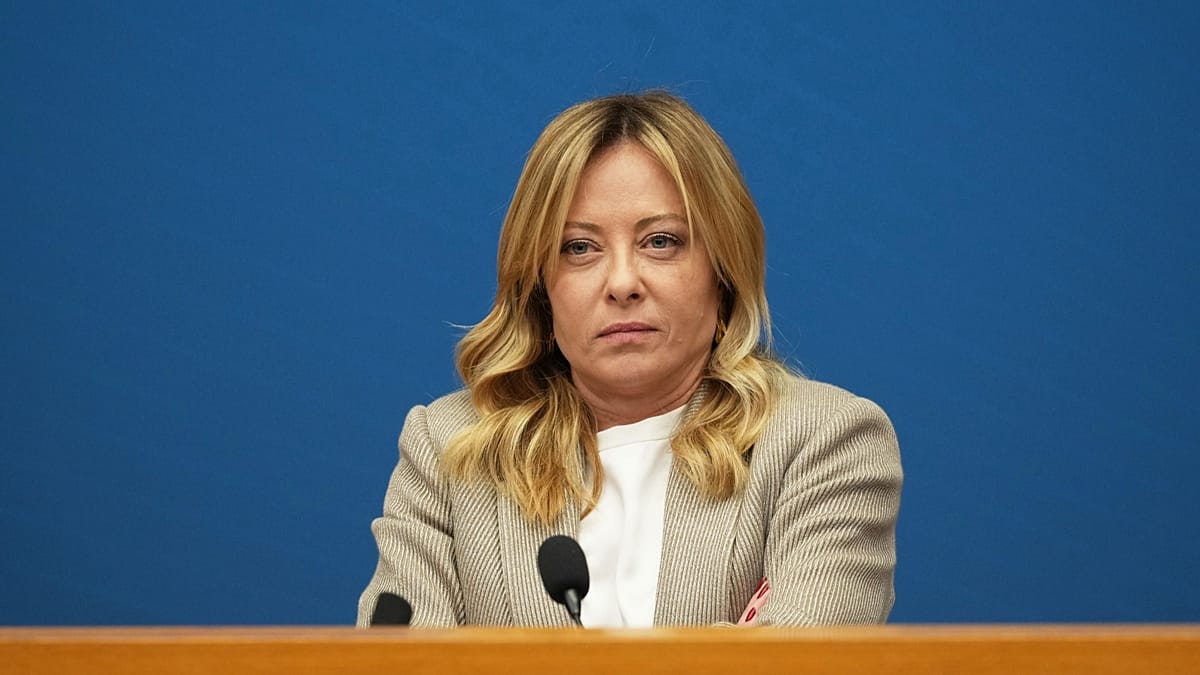
Italy’s electoral law: Is Giorgia Meloni reshaping the system to secure re-election? Italy’s Prime Minister Giorgia Meloni has been accused of trying to manipulate Italy’s next general election in 2027 through a controversial overhaul of the electoral system.
We’re also keeping an eye on
- European Council President Antonio Costa will deliver a speech at the Annual Ambassadors Conference
- Finance ministers gather in Brussels for ECOFIN council.
That’s it for today. Jorge Liboreiro and Marta Pacheco contributed to this newsletter. Remember to sign up to receive Europe Today in your inbox every weekday morning at 08.30.
Read the full article here