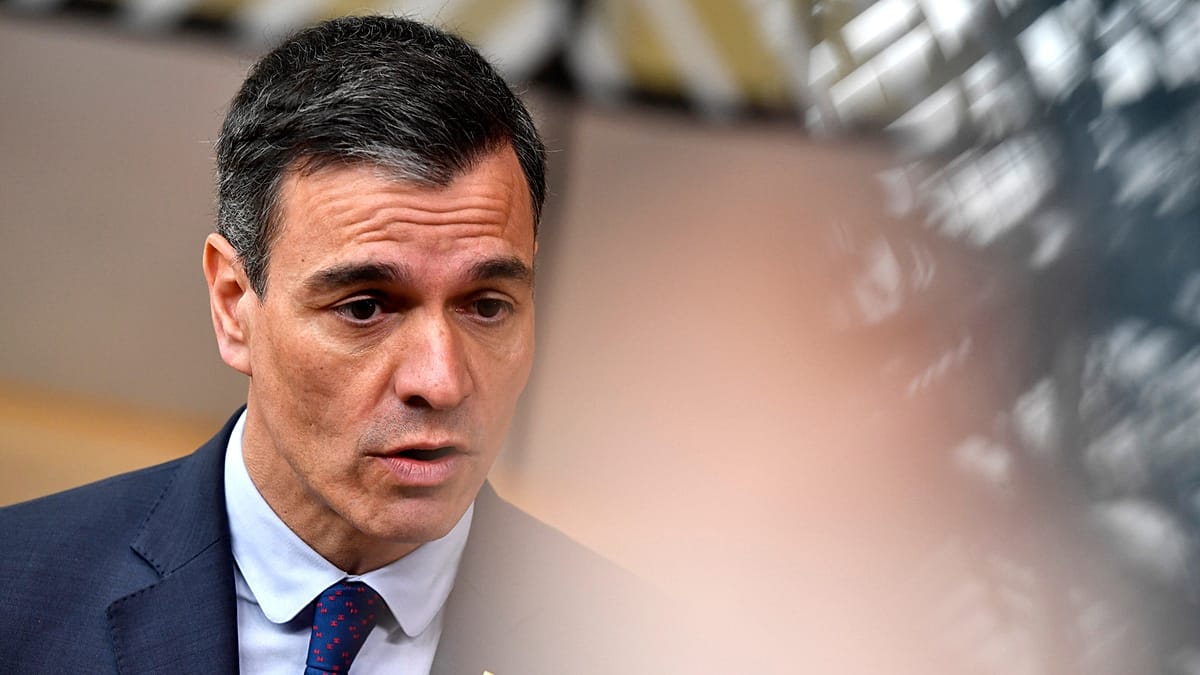



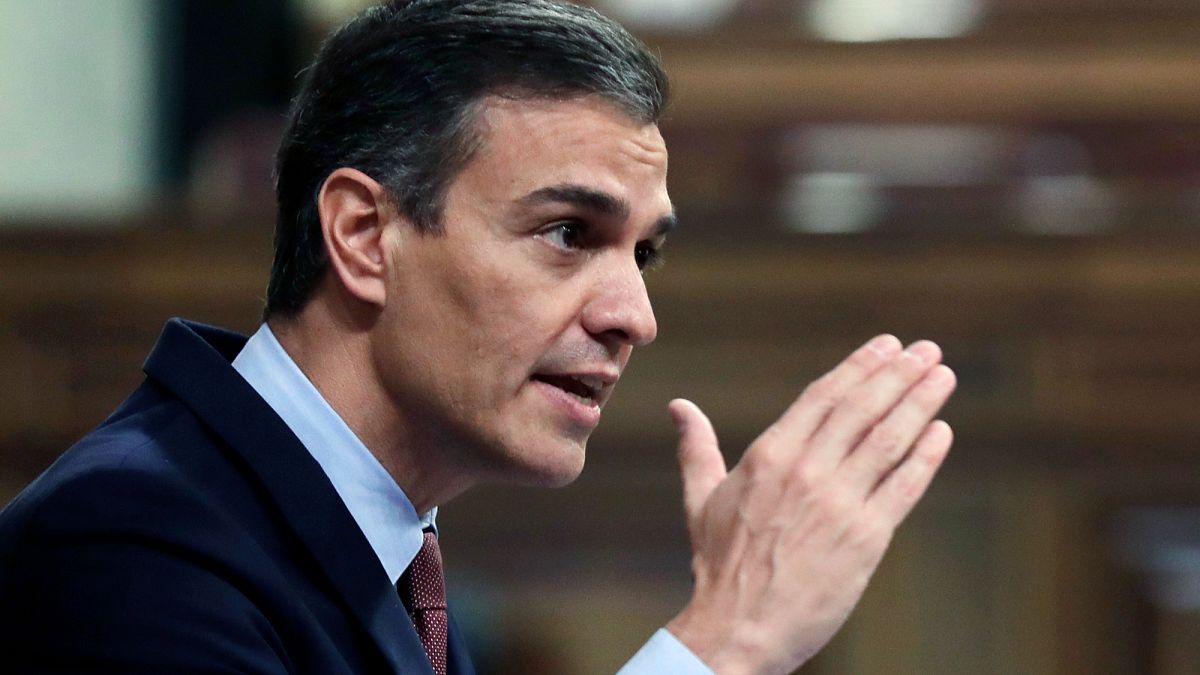
Pedro Sánchez knows exactly what he is doing.
ADVERTISEMENT


ADVERTISEMENT
By defying Donald Trump and doubling down on his bras de fer with the US president, the Spanish prime minister consolidates a two-fold strategy.
On the one hand, he seeks to mobilize his progressive electorate domestically, resuscitating a “no to war” movement which resonated strongly with Spanish voters during the US-led war against Iraq in 2003. Sánchez is also hoping for a moment akin to that of Dominique de Villepin: a Cassandra warning against an unjustified war that will bring disastrous consequences.
Only now it’s Iran.
In doing so, he aims to consolidate his image as one of the last strongly progressive, socialist leaders in a global political environment shifting rightward under the influence of MAGA-aligned politics, at a time when left-wing parties across Europe are losing electoral ground and struggling to project a unified international voice.
His strategy, while bold, is also risky as it could leave Spain diplomatically isolated from the European consensus and trigger a trade war that could impact Spanish companies in the US. It also risks inflaming tensions within NATO where Madrid has pursued a somewhat independent strategic line. Intelligence-sharing is also crucial and may be compromised with national security ramifications if the US decides to weaponise it.
Still, far from looking for a ramp-off, Sánchez is double down on his bet.
“In 2003, a few irresponsible leaders dragged us into an illegal war into an illegal war in the Middle East that brought nothing but insecurity and pain,” Sánchez said Wednesday.
“No to violations of international law. No to the illusion that we can solve the world’s problems with bombs. No to repeating the mistakes of the past. No to war.”
A clash choreographed to perfection
His campaign against the US-Israeli intervention in Iran comes after Trump threatened to impose a trade embargo on Spain in response to Madrid’s refusal to allow Washington to use its military bases to strike Iran from its territory.
Spain insisted any operation handled from the two bases it hosts in Rota and Moron should be limited to humanitarian assistance rather than offensive strikes, and that all activities must comply with international law. The move led to the withdrawal of U.S. aircraft from the bases according to radar information.
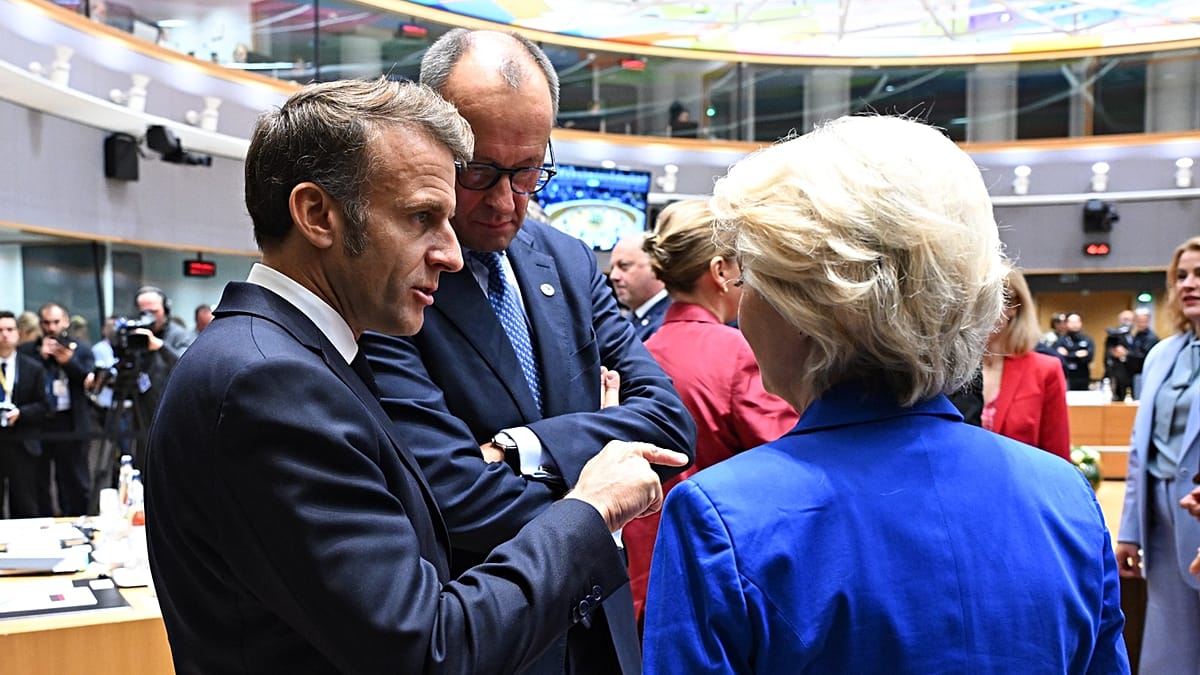
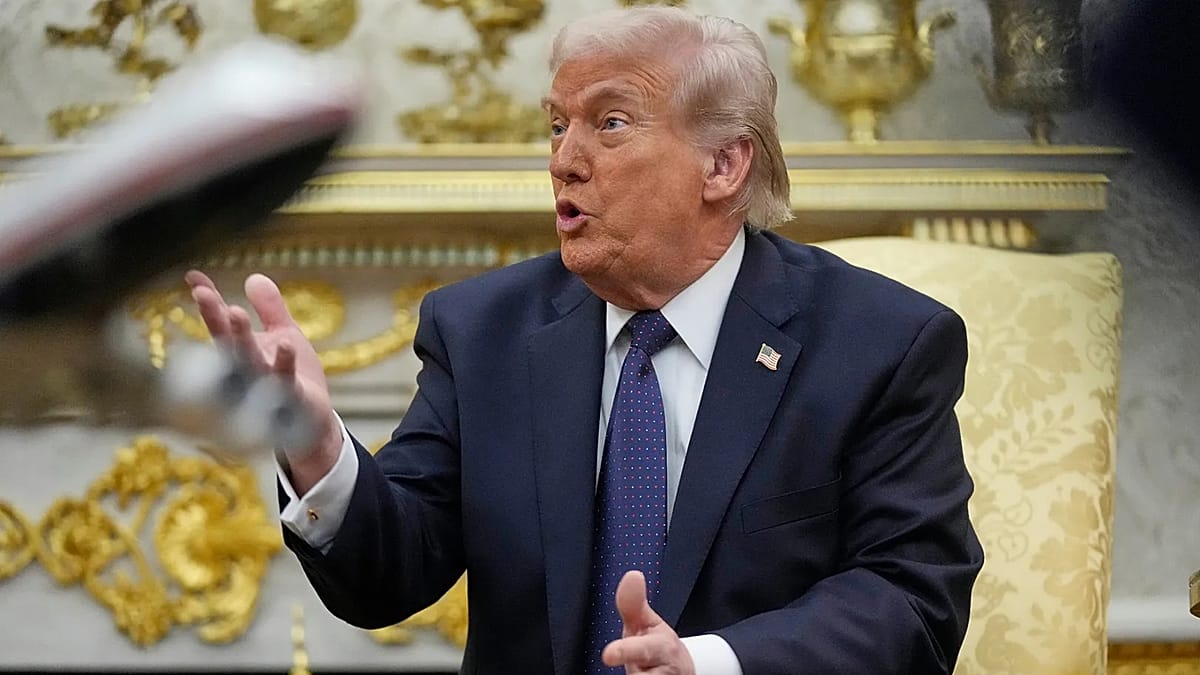
From the Oval office on Tuesday, Trump referred to Spain as an “unfriendly” and “terrible” ally. As he threatened a trade embargo in response, while German Chancellor Friedrich Merz—who was visiting the White House—remained silent, Spain judged that the time had come to confront the world’s most powerful man and began preparing its response.
Sources close to the Spanish government late afternoon began to brief that, if Washington were to unilaterally terminate trade ties, it would have to do “in compliance with international law, EU-USA terms of trade and respecting private companies.”
By 8 p.m. Madrid time, the Prime Minister’s office informed journalists that Sánchez would deliver a “declaración institucional”—a statement typically reserved for solemn occasions—at 9 a.m. the following day. The announcement was made just ahead of the evening news broadcasts.
Little was left to chance, reflecting Sánchez’s carefully managed communications strategy, which is often viewed as both highly effective but also opportunistic.
According to people familiar with the Moncloa palace, as the 17th-century inspired office of the prime minister is known, backtracking was never an option.
Instead, Madrid was clear it needed to respond forcefully, emphasizing Spain’s sovereignty, the consistency of its foreign policy from Ukraine to Gaza and Sánchez’s position as the only European leader standing up to Trump.
The Spanish Prime Minister delivered just that.
‘Our position is best resumed in four words: no to the war,” he said, adding that “23 years ago, another US administration dragged us into war in the Middle East.”
“We were told it would destroy weapons of mass destruction, export democracy and guarantee global security. In hindsight, it was the opposite. It led to a drastic increase of terrorism, a grave migration crisis in the Mediterranean and more expensive energy.”
The political assessment of the Spanish government is that Europeans are tired of appeasing Trump, whether in tariff disputes or defence commitments such as imposing a 5% spending goal with a large chunk dedicated to buying US weapons.
As a result, a candidate who is seen as willing to defend European interests and confront Trump could gain a strong electoral advantage. The Spanish government has not been shy about its policy positions, at the risk of antagonising the real estate magnate since he returned to the White House last year.
Last summer, Madrid refused to adhere to the 5% target suggesting that it would lead to chaotic off-the-shelf purchases of weapons, rather than common European buying, and suggested that NATO performance should be measured on capabilities.
The message is simple: Spain is an ally, but it’s also sovereign.
Echoes of Villepin and the ghost of the Azores
For his latest move, Sánchez took inspiration from two defining moments after the launch of the US operation against Iraq in 2003 under President George W. Bush.
The first was a powerful speech delivered in February that year by former French foreign minister Dominique de Villepin who warned before the UN Security Council—of which France is a permanent member—against what he described as a potentially disastrous invasion.
De Villepin passionately pushed back against the US, disputed military actions and suggested intelligence report did not support American claims of a linkage between al-Qaeda, the Saddam Hussein regime and the existence of weapons of mass destruction.
Time proved Villepin right.
The Iraqi war is particularly relevant for the Spanish public opinion because, at the time, former Spanish Prime Minister José María Aznar alongside former UK Prime Minister Tony Blair threw their support behind the Bush administration in its operation.
In the Spanish press, the three leaders were dubbed the “Trío de las Azores,” a name inspired by a photograph taken of them on the Portuguese Atlantic archipelago of the Azores. Spain’s backing of the war sparked a massive protest movement across the country under the slogan “No a la guerra.”
More than 20 years later, Sánchez is reviving it, hoping it will energize his base, increase his international profile and — just as it did for Dominique de Villepin —vindicate his choices.
The Spanish prime minister is facing a difficult re-election campaign, with the next vote scheduled to take place in 2027. Still, Madrid is rife with speculation that he could call for a snap election if he sees a favourable opening and succeeds in rallying his progressive coalition.
But to move up a planned election date, he needs a compelling justification or risk being seen as too cynical to be palatable. Sánchez is perceived by a large part of the Spanish electorate as lacking a moral compass.
The war in the Middle East — and his hard line toward Donald Trump, which the opposition claims risks isolating Spain within the EU, NATO and the broader Western alliance — could provide such a rationale.
The Spanish Prime Minister played that card back in 2023: when he framed a snap election as a referendum on his policies. Although the conservatives secured the largest share of the vote, Spain’s parliamentary system enabled Sánchez to assemble a majority coalition and remain in power.
A clash a long time in the making
In many ways, the rocky relation between the US under Trump and the Spanish government is hardly surprising. The two have clashed on everything from migration policies to societal values, each embracing their role as the other’s political opposite.
For Sánchez — a deeply polarizing figure who denies any wrongdoing in multiple court cases involving members of his family — the international stage offers a political shelter, as is often the case for embattled leaders at home. And he is intentional in cultivating a global profile.
An international conference of left-leaning voices expected to take place in Barcelona next April debating topics from democracy, tech oligarchs and reactionary movements, according to a person familiar with the organizer. The goal is to present a forum that can rival the CPAC, the largest gathering for conversatives, only this time for progressives.
In the meantime, the Spaniards have grown increasingly convinced that more European voices will join them as the war drags on. “Many are afraid of confrontation with the US, but our words reflect what a large camp thinks in Europe,” said a Spanish diplomat.
On Wednesday, French President Emmanuel Macron called Sánchez to express his solidarity in the face of Trump’s trade threats. European Council President Antonio Costa and Commission President Ursula von der Leyen did the same.
Still, his power moves have not gone unnoticed by critics, who argue that Madrid is treading a very fine line by antagonizing the United States for political gain, even as the EU seeks to secure a fair peace deal for Ukraine. With an American security guarantee necessary to ensure Kyiv is not attacked again by Russia, and US input in NATO remaining crucial for European security, such tensions carry significant risks.
“He does this for national politics, and he knows the EU will back him up because solidarity always prevails. But is this really necessary?” asked a diplomat from another EU country.
For Madrid, it’s not just necessary, it’s imperative.
Read the full article here