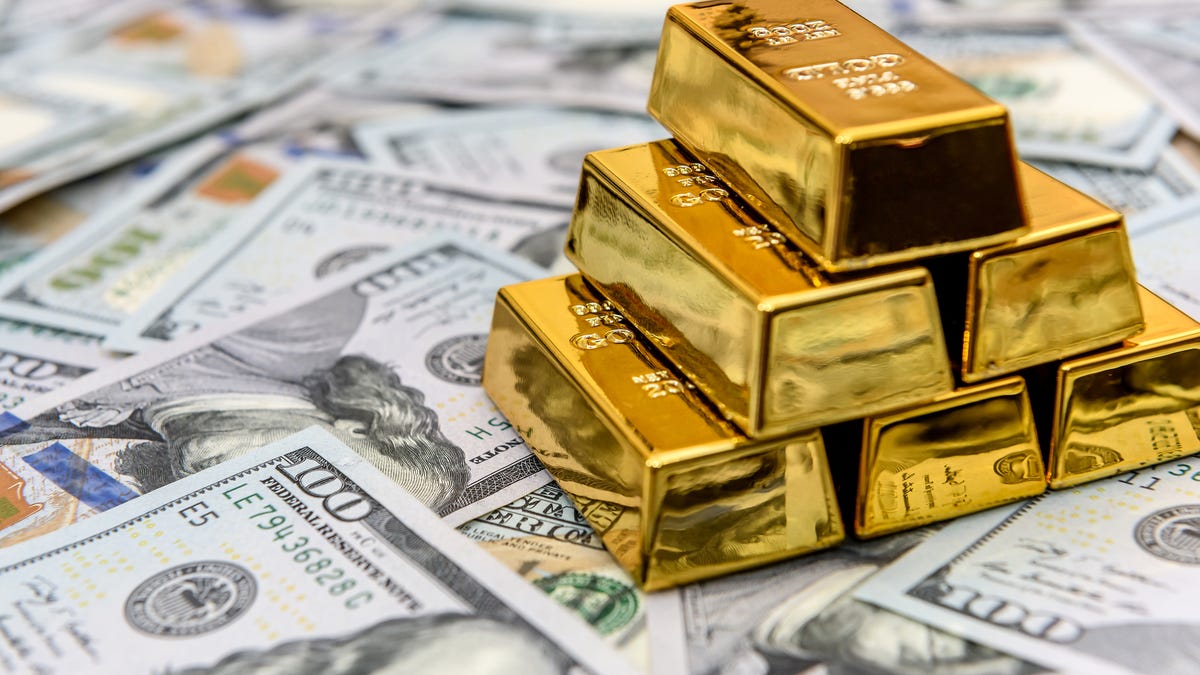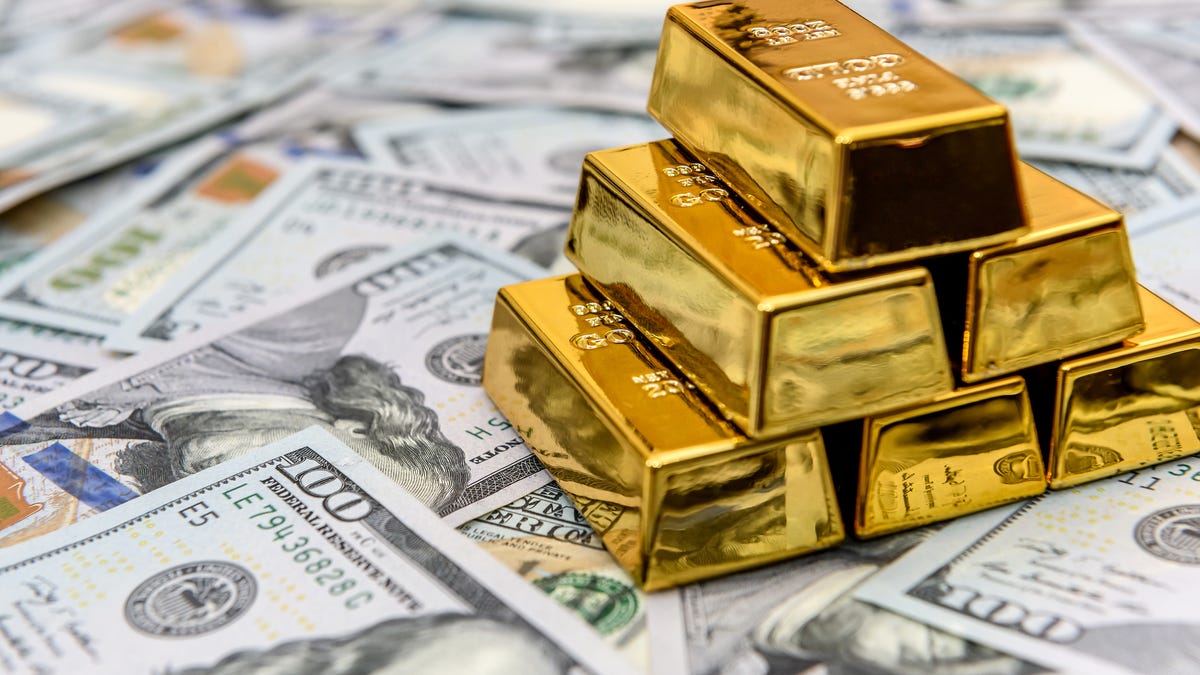


Gold is having a moment. Feeling the economic pinch, Americans are pawning their gold or buying as a hedge against inflation.

America’s new gold rush brings prospectors back to panning
Surging gold prices spark a new rush as prospectors return to panning.
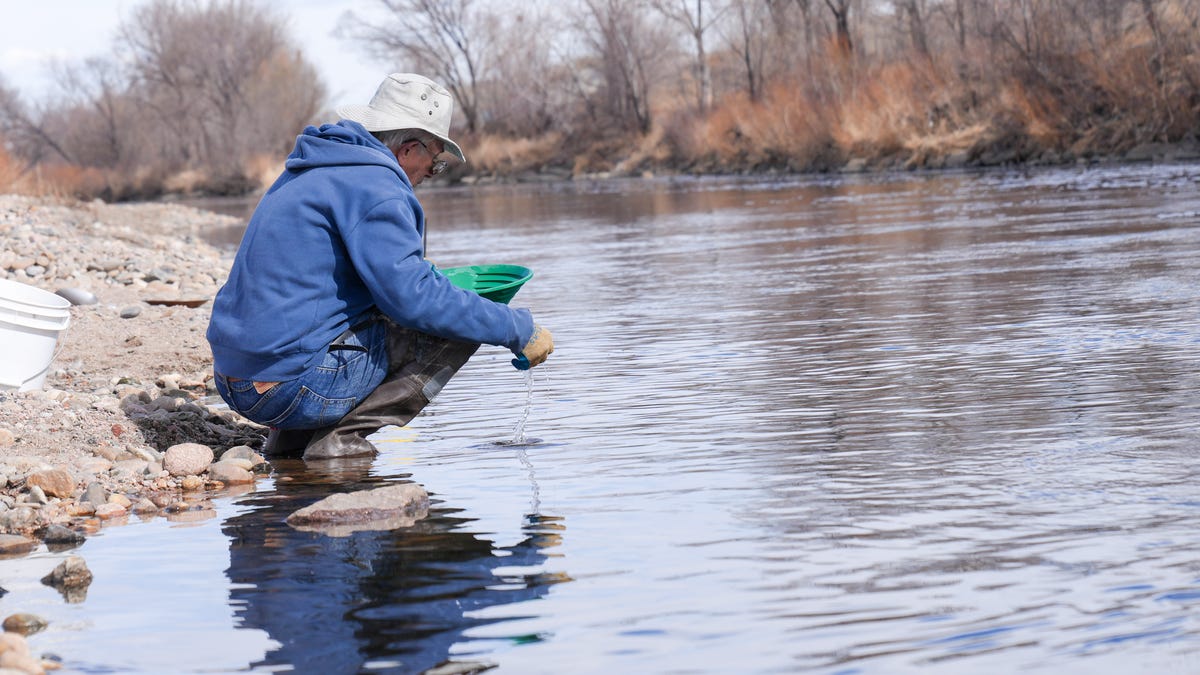
DENVER ‒ Sloshing chilly river water around his black plastic pan, Kevin Singel tilted it this way and that, catching the sun, looking for a telltale glint: flecks of gold.
“Right there,” exclaimed the longtime prospector and guidebook author. “We got two this time.”
Record-high prices are driving a renewed interest in gold across the United States. Some families feeling the economic pinch are selling jewelry at pawnshops. Others are buying it as a fear-based hedge against inflation. The U.S. government has bought more than $1 billion worth in the past year ‒ and famously gold-loving President Donald Trump has adorned the Oval Office with it.
Singel likes to go find it himself. On the South Platte River, the gold flakes wash down from deposits high in the Rocky Mountains, carried down each spring by the rush of melting snow.
On a recent day on the river’s gravel bank in sight of Denver’s skyscrapers, Singel found speck after speck of gold, sucking it out of his pan with an eyedropper. Each piece was the size of a grain of sand ‒ a lustrous grain of sand that’s almost twice as heavy as a similarly sized fleck of lead. Some days, he works at his richer claim near a Colorado ski resort, where a hard day of shoveling, sifting and sluicing gravel can earn him $30.
“It’s not like you’re going to find a $10,000 nugget. It’s the equivalent to picking up dimes off the sidewalk ‒ eventually you get enough to pay for lunch,” Singel said.
Over the years, though, Singel has collected what now amounts to tens of thousands of dollars worth of gold. He sells some to tourists, and made some into wedding rings for family members. And with current prices so high, his guidebooks are flying off the shelves, and there’s been a surge in interest for the prospecting group he helps run. Every month, hundreds of new faces join his Facebook group.
Gold mining, he says, is an addictive hobby, made even more interesting by prices hovering around $5,200 an ounce. A year ago, it was around $3,000, which itself was double the pandemic-era level of about $1,600 an ounce.
“There’s a lot of people out there whose mom or dad or grandparents bought 10 ounces of gold 20 years ago and that 10 ounces is now enough to buy a car,” Singel said. Based on historic prices, that 10-ounce gold purchase 20 years ago for about $5,500 would be worth more than $50,000 today.
Why the price of gold is so high
Gold prices typically rise when the stock market is lagging, as investors seek stability in a metal that largely sits unused in government vaults around the world, including Kentucky’s Fort Knox. What’s different today is that gold is surging at the same time as the stock market is climbing.
Trump has pointed to the rising stock market as a reflection of his administration’s economic successes. But he has also made gold a symbol of his presidency, figuratively promising a new “Golden Age” for the country and literally decorating the White House in golden décor.
There are golden urns on the Oval Office fireplace mantel and golden coasters on the coffee table. A new sign announces the Oval Office in gold lettering. There are gold-leaf flourishes on the walls and ceilings, golden sconces in the Lincoln bathroom, and renderings show the planned 90,000-square-foot ballroom will be decked with gold accents.
But while Trump ‒ and the federal government ‒ are buying gold, the ongoing economic squeeze for many Americans means those who have some are cashing in. Large purchases by governments are typically what drives up the price of gold as they temper inflation, and purchasing records show the United States has been buying gold from sources in both Europe and Utah.
In Oklahoma City, Naifeh Fine Jewelry is seeing people from “all walks of life” come in with pieces to sell, said George Naifeh, who co-owns the business with his wife, jewelry designer Valerie Naifeh.
Some just want to know what their piece might be worth, he said. Others are looking to help make ends meet.
He has seen customers who inherited jewelry years ago and “put it in their safes and forgot about it,” he said. “Now all of a sudden the opportunity is there, so they’re bringing in the jewelry to sell it.”
Former investment banker Peter Ricchiuti said he understands why Americans who have gold are selling it, given the high prices of groceries, housing and insurance. But he remains mystified, he said, why people buy gold when the economy feels shaky. Ricchiuti is now a finance and investing professor at New Orleans’ Tulane University, and recently brought a class to a pawn shop to see the gold-buying process.
Ricchiuti said compared to investing in companies via the stock market, gold typically doesn’t appreciate as fast. The last year, he said, has been an exception.
“It’s all about the insecurity of the global economy,” he said. “It’s a fear factor.”
Ricchiuti said foreign investors have also been buying gold. Internationally, the value of the U.S. dollar has been sliding since Trump took office, making gold purchases relatively cheaper for other governments. Ricchiuti, who used to run the state of Louisiana’s $3 billion investment portfolio, said he remains skeptical that gold is ever a good investment, akin to buying bitcoin.
“I’d much rather own shares of a good public company … but that just doesn’t seem to be the fit,” he said. “The only thing you can sell people is gold and amazingly risky tech ideas.”
Out on Colorado’s South Platte River, Singel tends to agree. As a former international businessman, he remains a committed amateur gold miner. Still, standing in waders in the weak winter sun, he extolls the benefits of panning for gold: getting outside, making new friends, experimenting with different kinds of pans and sluice boxes to filter out the unwanted sand and gravel. If he makes a few bucks doing it, all the better.
Singel’s prospecting follows a routine: Dig gravel, sift out the big rocks. Dump the remaining gravel through a sluice box to remove lighter sand and small rocks, which filter into a gold pan. Fill that pan with water, and with motions born of thousands of hours of practice, swirl away the sand until all that’s left is gold.
“You’ve got gold showing in your pan already,” he told a guest after a few expert swirls. “Look at that. You dug gold.”
But Singel also cautions: Asking a gold miner if they’re hitting a pay streak is a good way to get lied to. No one, he said, will cop to hitting it rich, even when prices are so high. In fact, people are probably even more liable to mislead you.
“While it does mean you could make more money flipping burgers at Wendy’s, it is more lucrative than it used to be,” Singel said as he crouched on the riverbank, a few tiny gold flecks glinting in his pan. “I might do better than break even today.”