


Published on •Updated
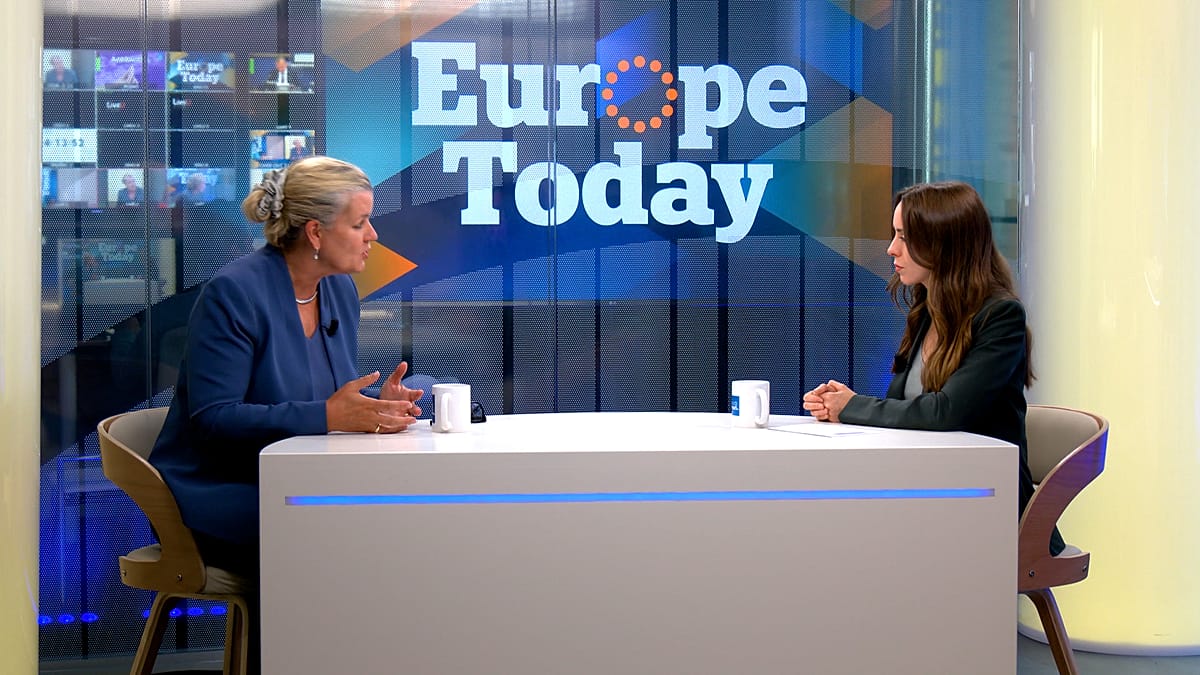
Any tweaks to the EU’s current protection scheme for those fleeing war in Ukraine should be implemented “very gradually”, the UN’s Deputy High Commissioner for Refugees Kelly Clements has told Euronews, as EU capitals reportedly mull removing protections for Ukrainian men of conscription age.
ADVERTISEMENT

ADVERTISEMENT
“The war has not abated. It has become more intense, with more civilians caught in the middle,” Clements explained. “The circumstances that created the conditions for the European Union to issue temporary protection have largely not ended.”
It comes as a handful of EU countries, including Poland and Germany, are pushing to exclude men of military age from the temporary protection scheme triggered by Brussels in response to Russia’s invasion of Ukraine in 2022.
The scheme, which allows Ukrainians to secure refugee-like protection without applying for asylum, currently provides refuge for 4.37 million Ukrainians across the EU.
EU home affairs ministers last week held an initial discussion around narrowing the scheme, with a proposal to exclude Ukrainian men aged 23 to 60 who are eligible for military service gaining most traction.
Nonetheless, most Ukrainian men aged 23 to 60 are currently barred from leaving the country, with certain exemptions for certain groups such as people with disabilities, those deemed unfit for military service, fathers of three or more children under 18, and individuals providing full-time care for sick relatives.
Ukraine’s formal conscription age begins at 25.
Adult men account for 26.6% of Ukrainian refugees in Europe, although there are no figures showing how many are of military age or how many arrived irregularly.
“I realise it’s an active debate,” Clements said, “but hopefully, until the war ends, there would be an opportunity to keep those temporary protections in place so that people can support themselves and so that the responsibility doesn’t fall unduly on other nations.”
“Until then, if there’s any sign of (the protection scheme) lifting, it should be done very gradually with other options for those that need to take care of themselves when it’s not possible to go back safely or voluntarily.”
Last November, German Chancellor Friedrich Merz told Ukrainian President Volodymyr Zelenskyy in a phone call that he needed to curb the number of young Ukrainian men fleeing to Germany, saying that they were “needed there”.
The German Interior Minister Alexander Dobrindt has since said that Berlin has noticed an uptick in Ukrainians of “compulsory military age” in Germany in recent months.
Clements told Euronews that the priority should be to “find peace” so that “people don’t have to flee”.
Read the full article here