




Treasury Secretary Scott Bessent said on Monday that the regularly scheduled Treasury auctions of U.S. debt are expected to continue per usual after his agency announced an increase in the size of buybacks of longer-dated securities.
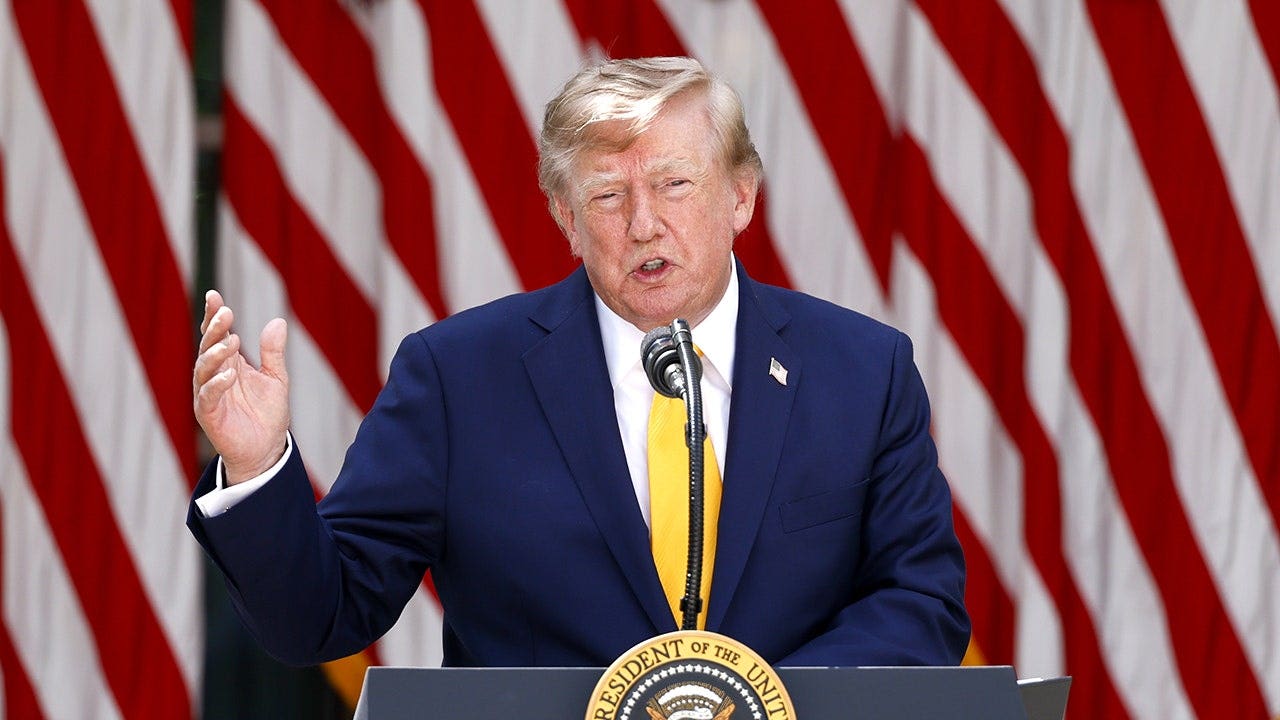
Bessent spoke Monday at a press conference to discuss a new plan for the “economic asphyxiation” of the Iranian regime through the implementation of secondary sanctions on Iran’s trading partners.
During the press conference, the Treasury secretary was asked about whether the agency may reduce the size of auctions for longer-term debt going forward or if there are other actions from the department’s toolkit that may be used to help lower yields.
“We are going to continue with our regular program of auctions. So you will be hearing from us again at the beginning of next quarter,” Bessent said. He added in response to a follow-up question that, “We haven’t bought a single bond yet.”
TREASURY YIELDS HIT MULTI-DECADE HIGHS AMID SURGING NATIONAL DEBT
Bessent noted that the next auctions of longer-dated Treasurys, such as the 10-year note and the 20- and 30-year bonds, aren’t scheduled until mid-September which is the earliest the new buyback structure could come into play after the change takes effect on Sept. 9.
Under the change, which was announced on Aug. 19, the Treasury’s maximum buyback authority rises from $2 billion per operation to at least $4 billion per operation, which will serve as a floor rather than a cap to allow the size of buybacks to respond to market conditions.
The change is expected to remain in effect through the rest of the quarter, or through Nov. 4, after which the Treasury will provide more information about future buyback sizes.
Treasury said in its announcement that the “increase in buyback operations reflects Treasury’s desire to provide greater liquidity support in longer-dated nominal sectors where there is consistent strong sponsorship from market participants, as evidenced by the significant volume of high-quality offers Treasury routinely receives in longer-dated buyback operations.”
US NATIONAL DEBT HITS $40 TRILLION MILESTONE FOR FIRST TIME EVER
Last week’s announcement lowered yields on the 10-year Treasury note and on 20- and 30-year bonds for a short period of time, though they largely retraced those declines by the end of the week. Yields were down modestly on Monday.
Bessent said last week that the higher buybacks aim to support liquidity in a more thinly traded portion of the market, particularly in the 30-year sector, while the longer-dated Treasurys are also competing with heavy issuance of corporate bonds at higher yields amid the artificial intelligence (AI) buildout.
Higher yields on Treasurys can cause fiscal pressure for the federal government, which is forced to pay more interest to service the national debt. The move comes as the U.S. gross national debt topped $40 trillion for the first time ever last week.
BESSENT LAYS OUT 5 PRINCIPLES GUIDING TRUMP ADMIN’S APPROACH TO ECONOMIC STATECRAFT
The Treasury Department’s announcement didn’t indicate the funding source for the Treasury buybacks. A Reuters report noted that the Treasury General Account (TGA) at the Federal Reserve could serve as a source because it would negate the need to issue new, shorter-dated Treasurys – though it would eat into the nation’s cash reserves.
The TGA effectively functions as the federal government’s checking account, as it’s used to pay for daily government operations ranging from federal worker salaries, contracts and Treasury’s interest and principal obligations.
As of last Wednesday, the TGA stood at about $940 billion in funding. Treasury has beefed up the TGA this year in part to help pay for some of the $166 billion in tariff refunds owed to importers in the wake of a Supreme Court ruling that struck down a key portion of President Donald Trump’s tariff regime.
In the past year, the TGA has had an average balance of around $840 billion, which was the highest ever outside its rapid run-up during the COVID-19 pandemic.
Reuters contributed to this report.
Read the full article here