





Key takeaways:
- Bitcoin’s sudden decoupling from a strong Nasdaq index highlights shifting capital flows into the AI sector.
- A strengthening US dollar and high Treasury yields are weighing heavily on non-yielding crypto assets.
Bitcoin (BTC) faced a 7% correction after failing to reclaim the $67,200 level on Monday, triggering $330 million liquidations in bullish leveraged positions. More concerningly, the drop happened while the Nasdaq 100 index showed strength, trading 1% away from its all-time high. Should Bitcoin traders brace for a $60,000 retest?
Nasdaq 100 futures (left) vs. Bitcoin / USD. Source: TradingView
The bullish momentum in the stock market likely came from the memorandum of understanding signed by US President Donald Trump and Iran’s President Masoud Pezeshkian. Crude oil prices fell to their lowest level in 15 weeks to $74, easing inflation risks. Moreover, US job market data boosted investors’ morale as continuing jobless claims held flat at 1.81 million.
Bitcoin’s decoupling from tech stocks coincides with US Federal Reserve (Fed) Chair Kevin Warsh’s remarks on Wednesday. The term “price stability” was cited by Warsh on multiple occasions, leading investors to believe that the new Fed mandate will keep a closer eye on inflation trends, according to CNBC. The US 5-year Treasury yield remained relatively high at 4.21%.
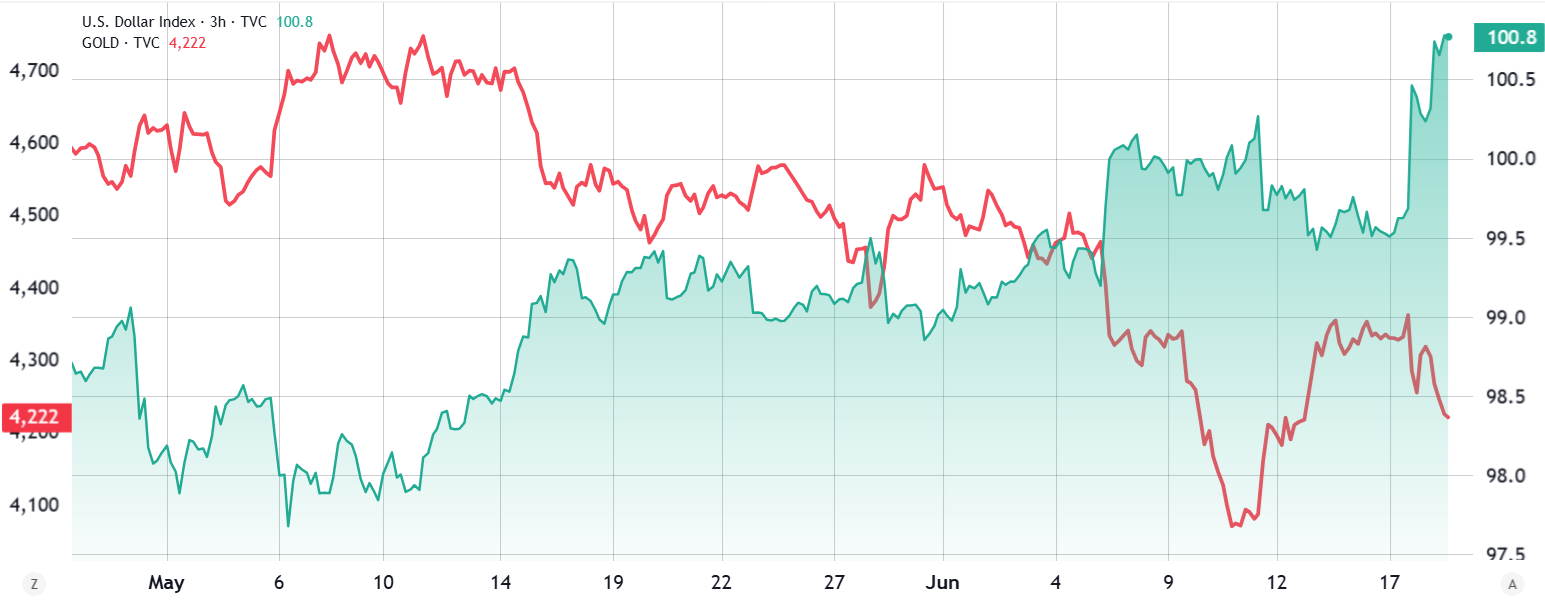
Gold / USD (left) vs. US dollar strength index (right). Source: TradingView
The US dollar strengthened against a basket of foreign currencies, signaling confidence in the US government’s strategy to sustain economic growth despite inflationary pressures. The move hurts non-yielding assets, since fixed income remains profitable longer, as seen in gold prices trading down 3.3%.
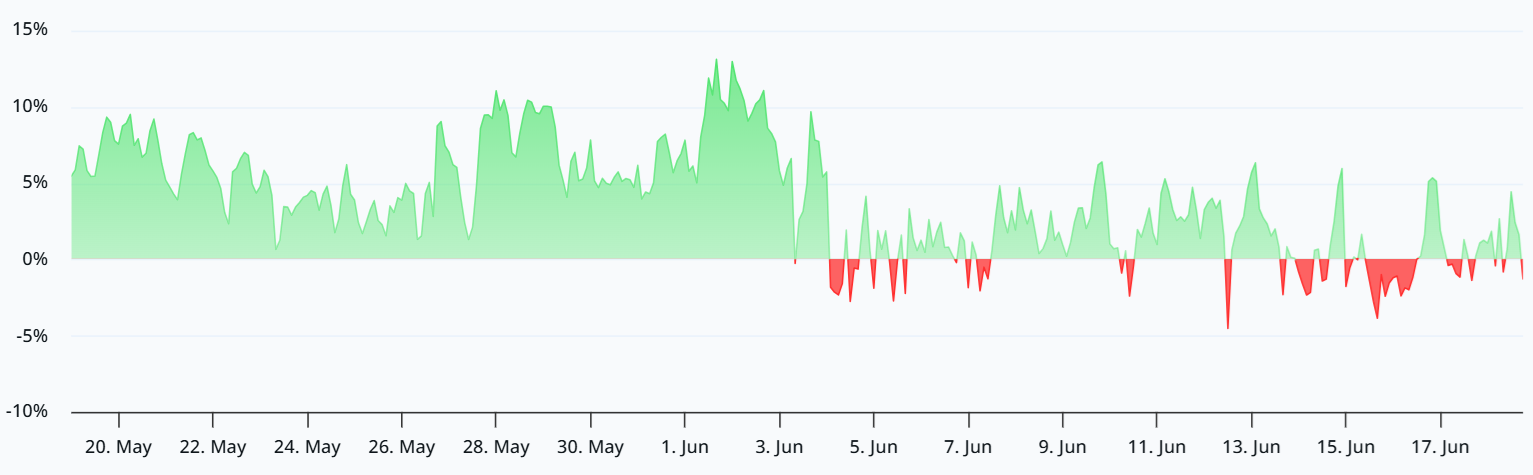
Bitcoin perpetual futures annualized funding rate. Source: Laevitas
Demand for bullish leveraged Bitcoin positions has faded since June 4, indicating a lack of confidence after the crash from $73,700 to $61,300 in just three days. Bitcoin’s bearish momentum contrasts with rising demand in the artificial intelligence sector. SpaceX (SPCX US) market capitalization soared to $2.4 trillion within days of its IPO.
AI sector narratives contrast with weak Bitcoin narratives
Intel (INTC US) shares jumped 10% on Thursday after President Trump announced that Apple (APPL US) had agreed to work with the chipmaker to build its processors. Memory chip and data storage producers Micron (MU US) and SK Hynix (000660 KS) have also recently joined the select list of companies valued at $1 trillion or higher.
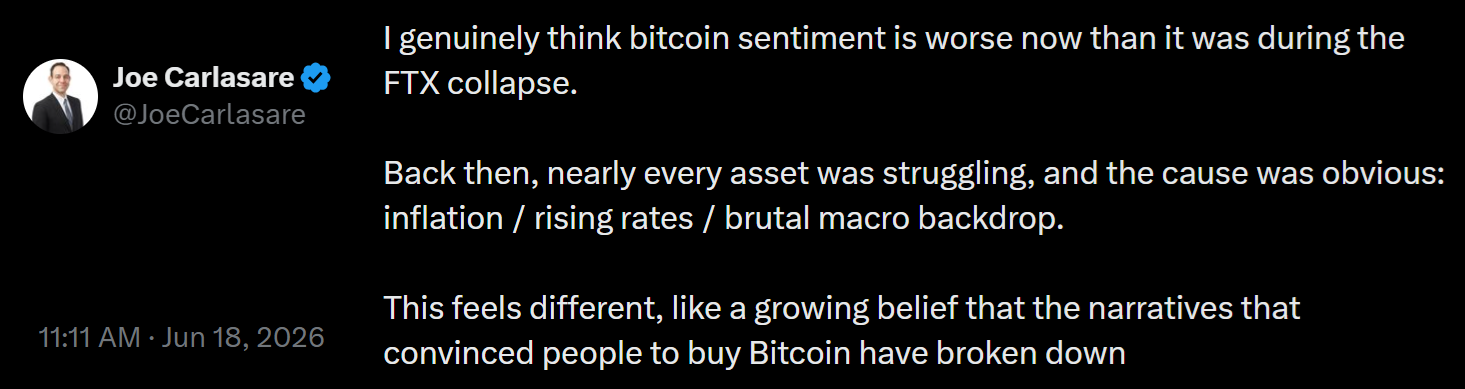
Source: X/JoeCarlasare
According to Joe Carlasare, commercial litigator and Bitcoin supporter, traders’ sentiment is currently worse than it was during the FTX exchange collapse. For Carlasare, nearly every asset class was struggling back in November 2022 due to the macroeconomic backdrop. This time around, the “narratives that convinced people to buy Bitcoin have broken down”.
Related: Bitcoin’s deeply discounted versus AI-stocks, but hawkish Fed risk lingers–Bitwise
Bitcoin’s presence in the traditional finance industry is far more mature than during the previous halving cycle. The US-listed spot Bitcoin exchange-traded funds (ETFs) accumulated over $102 billion in assets, and major financial institutions initiated Bitcoin investment offerings to clients, including Morgan Stanley, Bank of America and Goldman Sachs.
A retest of the $60,000 level should not be ruled out as the AI sector stays in the spotlight with massive investments and potential new IPOs and follow-on offerings, but institutional demand for Bitcoin will likely dictate price trends.
Read the full article here