


The opinions expressed in this article are those of the author and do not represent in any way the editorial position of Euronews.
The state of the German economy is serious, very serious. Over the past eight years, we’ve lost approximately 15 percent of our industrial production. Month after month, Germany loses around 15,000 industrial jobs. And the industrial base that underpins our prosperity is starting to erode. Private net investment has fallen to almost zero. On balance, companies are doing nothing more than replacing what wears out. High costs are paralyzing companies’ willingness to invest. Even the special depreciation package (the “Investitionsbooster”) that the German government introduced in mid-2025 has done nothing to change that.
ADVERTISEMENT

ADVERTISEMENT
Of course, US tariffs, China’s aggressive industrial policy, and geopolitical tensions weigh on investment too. But the real problems are of our own making: an overregulated economy, high energy costs, high labor costs, high taxes, and falling levels of education and skills.
Planned reforms are not enough to reverse the economic trend
At the beginning of the year, many entrepreneurs had almost lost faith in Germany’s ability to reform. In July, the German government surprised everyone with a reform of statutory health insurance, along with reform plans for pensions, taxes, and the labor market. This package isn’t enough to pull Germany out of its structural crisis. But the current coalition showed it can compromise to help move the country forward. If those compromises were now unpicked and watered down, the damage to business confidence in politics would be devastating. The planned reforms are still not the breakthrough we were hoping for, the one that would actually turn the economy around.
Right now, we need to put everything into the next round of reforms, the ones that deliver real momentum for investment and growth. And that means the governing coalition, employers, and unions all stepping outside their comfort zones to live up to their responsibility for Germany. The special funds for defense and infrastructure will hardly lead to a self-sustaining upswing in the economy unless conditions for doing business here improve noticeably. The next reform steps have to keep cutting bureaucracy, raise the total hours worked, bring labor costs down, and give companies real reasons to invest in research and development.
Public authorities should enable, not obstruct
What we should expect from public authorities is nothing less than high-quality administration: rules people can understand, procedures that are lean and fast, reporting requirements that are reasonable. Digital, and supported by artificial intelligence. Clear rules and fast, straightforward decisions should make investment possible, not hold it back.
The draft law presented by the new Baden-Württemberg state government on reducing reporting and documentation requirements could send an important signal. The principle is simple: statutory reporting obligations should be dropped across the board and only retained where their necessity is explicitly justified. If public authorities acted far more as service providers for people and businesses, it would strengthen confidence in Germany as a place to do business – and in politics too.
Increase hours worked
People working in industry are hugely dedicated, responsible, and highly professional. Without that commitment, German companies would not be succeeding the way they do around the world. STIHL is just one example among countless others.
But demographics are slowing the whole economy down and putting massive pressure on the welfare state. To protect our prosperity and to ensure high levels of social benefits, the total number of hours worked has to rise. More hours worked means more economic output. So the debate about working more is really a debate about holding on to what we have – and it is in no way a debate about employees being lazy.
Germany has to use every lever it has to get those hours up. Incentives to work more hours. A longer working life, with fair exceptions for physically demanding jobs. Better use of the labor we already have, meaning people out of work and people in part-time roles. Skilled immigration. No sick pay for the first day of illness. An end to doctor’s notes issued over the phone. Productivity gains from digitalization and AI won’t offset what demographics are doing to us.
Reduce labor costs
The collective bargaining round in the metal and electrical industry, which will begin in fall 2026, will be a key factor in determining whether Germany remains an industrial nation or falls further behind. The reason is simple: we no longer have the productivity edge over our main competitors that justifies those high labor costs. That’s why I’m calling for a 40-hour workweek – with no increase in pay. I know I’m asking a great deal of unions and employees. But I’m not trying to take anything away from anyone. Quite the opposite. I want industrial companies to be able to compete, production to stay in Germany, and jobs to be safe.
And the current debate pays far too little attention to non-wage labor costs. Contributions to pension, health, long-term care, and unemployment insurance should not go above 40 percent of gross wages. That is the economic limit. Getting there means overhauling the social security system from the ground up. The German government’s latest reform measures do at least address the stabilization of contribution rates for pension and statutory health insurance. However, the 40 percent limit has already been far exceeded.
Priority for research
The close links between world-class research institutions, universities, innovation clusters, and innovative companies rank among Germany’s greatest strengths as a business location. Give innovative companies better conditions and you speed up the whole chain: knowledge moves faster, and so does the production and marketing of what comes out of it, new business models included. Regulatory leeway would do that. So would higher tax incentives and more venture capital. Overall, innovations and the approvals they need must be given far greater priority than before, and they must not be held back by bureaucracy.
Future-oriented fields deserve far more targeted support: the industrial use of AI, robotics, biotechnology, medical technology, space technology, and quantum technologies. The Germany Fund, launched at the end of 2025, is only a start, measured against other countries with strong research bases.
Act decisively
We have no more time to lose. Because only a strong, competitive place to do business can secure prosperity and a strong welfare state.
Germany has shown many times that it can reinvent itself. But if people are going to understand what’s coming, we have to start with an unflinching look at where we actually stand. And then set out a plan they can follow, one that spells out what will change for them. With a plan like that, the government can give direction, bring people with it, and win back trust. It’s time to act.
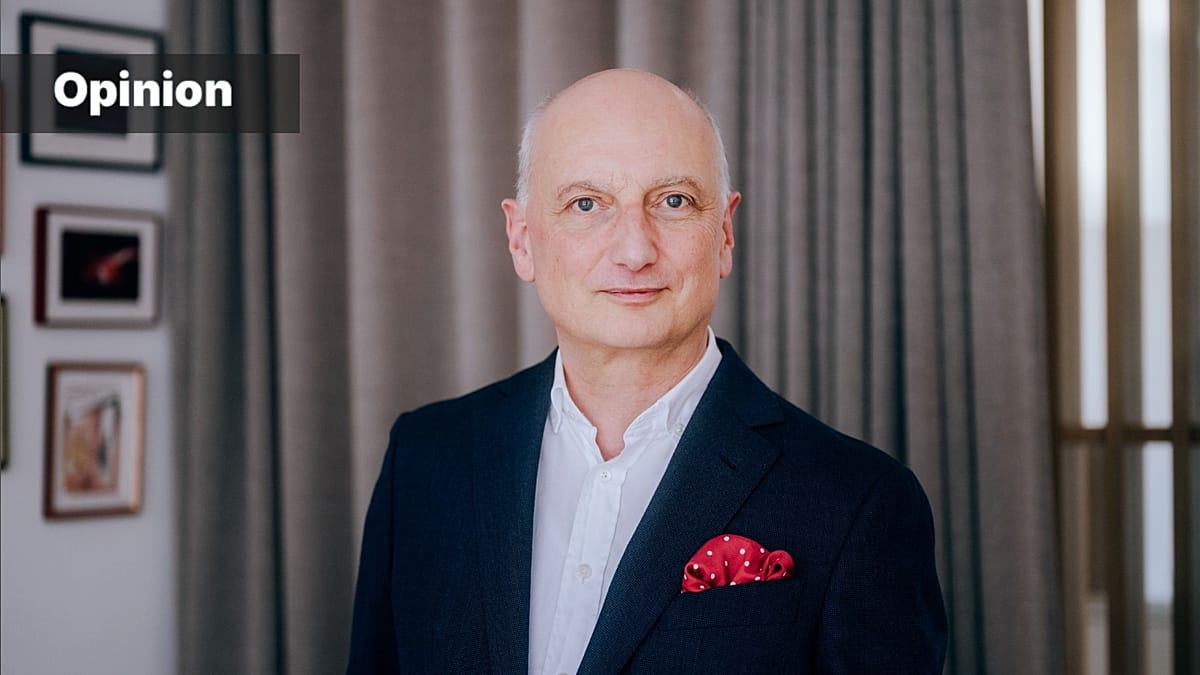
Dr Nikolas Stihl is the grandson of the company’s founder, Andreas Stihl, and represents the third generation at the helm of the world’s leading chainsaw brand and a global technology company. Under his leadership, STIHL has further expanded its international presence and, in 2025, achieved a turnover of 5.48 billion euros with 20,246 employees worldwide. STIHL has been the world’s best-selling chainsaw brand since 1971.
Read the full article here