


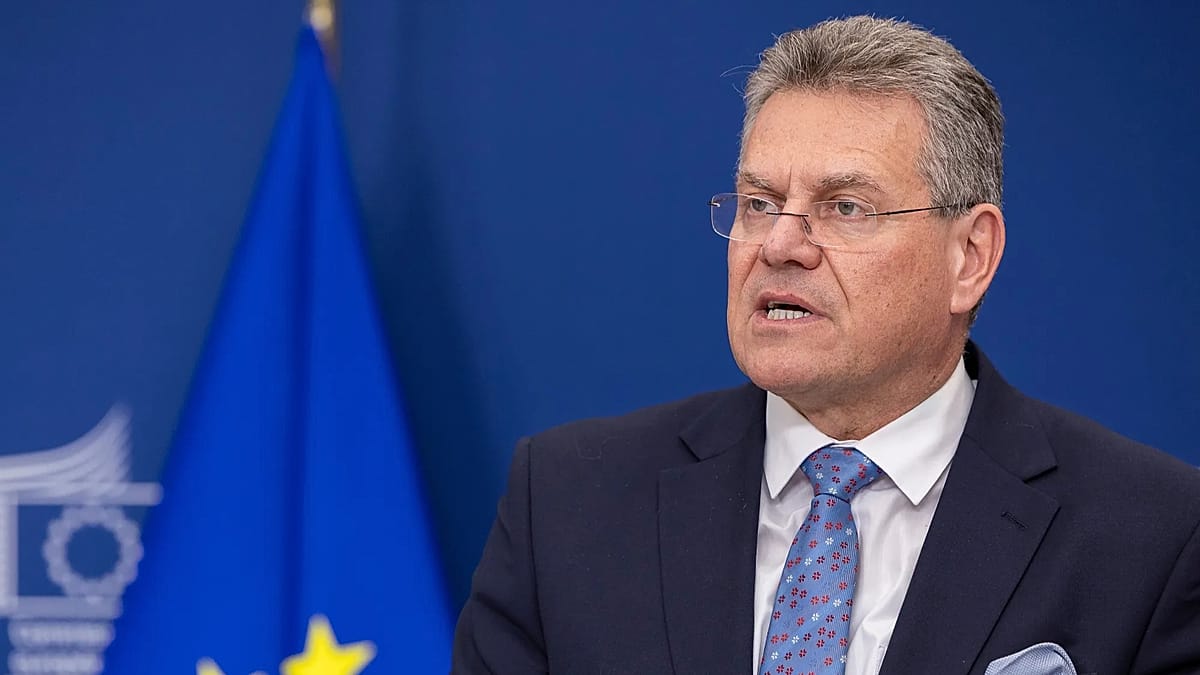
In an exclusive interview, European Union Trade Commissioner Maroš Šefčovič told Euronews that the EU is not in a position to mediate in the trade war between Canada and the United States following the collapse of their trade talks.
ADVERTISEMENT


ADVERTISEMENT
Ten days ago, Canadian Prime Minister Mark Carney walked away from the negotiations with the Trump administration, blaming them for pressuring Canada over the use of the French language.
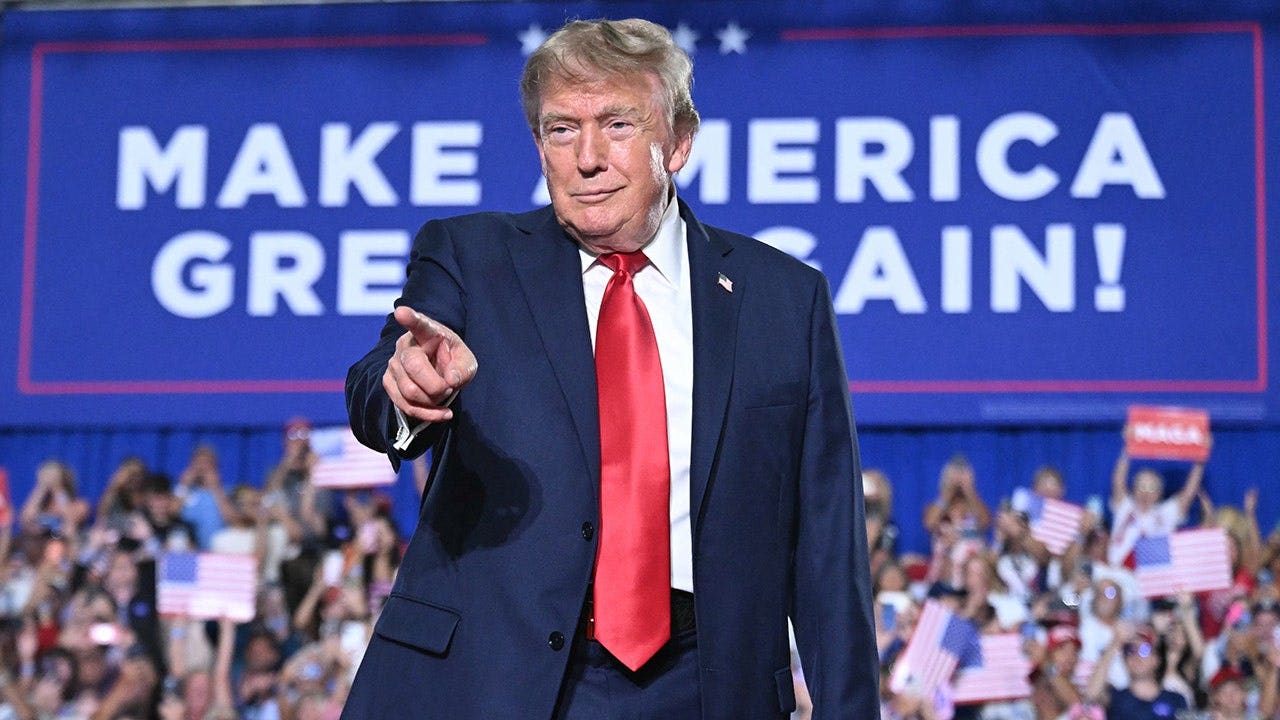
In the following days, US President Donald Trump announced 50% US tariffs on Canadian cars and trucks, to which Ottawa retaliated with tariffs on more than 700 US imports, worth about $20 billion (€17.2 billion).
“I don’t think that we are in a position to mediate,” Šefčovič said. “At the same time I know that they [Canada and the US] have such a close economic relationship that, despite the current tension, sooner or later there will be attempts to resolve it.”
The Commissioner added that “tariffs are taxes which are paid in the end by the economic operators or by the citizens”, a message he has reiterated several times over the last year during the EU’s own trade dispute with Washington.
“We clearly support free and fair trade with the lower or no tariffs at all,” he told Euronews.
Ready to cooperate
Since the trade talks stopped, Carney has called for a closer relationship between Ottawa and Brussels and announced he will attend European Commission President Ursula von der Leyen’s State of the Union in Strasbourg in mid-September, one of the main events in Brussels’ political calendar.
An EU-Canada summit is also scheduled for later this autumn.
Šefčovič said the Commission is ready to explore “all possibilities” to increase cooperation with Canada, but he added that any new arrangements “would very much also depend on how comfortable the Canadian side would feel and what is its level of ambition”.
He pointed out that after Brussels clinched a trade deal with Ottawa in 2016, trade between the EU and Canada grew by 75% – but he also suggested that the deal could be pushed further.
“On both sides, we have certain elements which we can improve, still certain barriers, certain sensitivities for the products. I really think that we can explore much more that.”
Šefčovič said that a digital agreement might be signed with Canada before the end of the year, and he also cited coming cooperation in critical raw materials with potential joint investments.
Ottawa is seen by Brussels as a like-minded partner sharing its vision of the new global trade order, and Šefčovič hopes to have its backing to get closer to members of the Comprehensive and Progressive Agreement for Trans-Pacific Partnership (CPTPP), which has liberalised trade between 12 countries in the Asia-Pacific region and the Americas, including Canada – but not the US. The UK became the pact’s first and to date only European member in 2024, with Canada ratifying its full accession as of 1 September.
“Canadians are very important partners for forging a new level of cooperation with the CTPPP,” Šefčovič said, “which represents together 40 percent of global trade.”
Read the full article here