

Published on •Updated
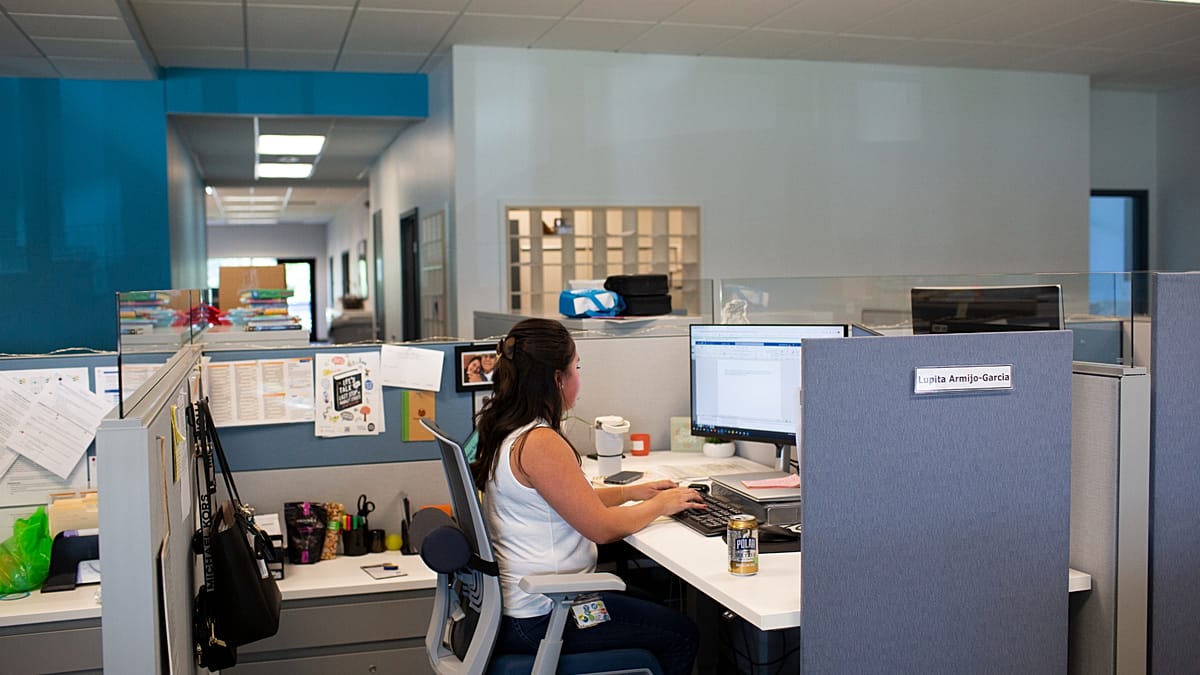
The European Parliament called on Tuesday for stronger EU action to tackle burnout, stress and other work-related conditions, addressing an increasingly common problem among European workers as digitalisation and AI reshape the workplace.
ADVERTISEMENT

ADVERTISEMENT
MEPs want new rules to recognise that psychosocial risks, including harassment, excessive workloads and unpredictable working hours, can give rise to occupational diseases, including mental health disorders.
“Illnesses linked to psychosocial risks, such as burnout, must be recognised as occupational diseases,” Belgian Socialist MEP Estelle Ceulemans, the report’s rapporteur, told Euronews.
According to the European Agency for Safety and Health at Work (EU-OSHA), 29% of EU workers experienced stress, depression or anxiety caused or made worse by their work in 2025. The figure rose to 32% among workers aged 25 to 39, as young people are disproportionately affected by those conditions, due to their intensive use of digital technologies and the often-precarious nature of their jobs.
MEPs urged the Commission to introduce EU-wide rules to protect workers, as existing provisions vary significantly across member states and do not always provide sufficient protection.
The resolution calls for binding obligations on employers, stronger labour inspections and a right to disconnect outside working hours.
It also features a reversal of the burden of proof in cases involving occupational disease. Where a worker establishes facts indicating exposure to work-related psychosocial risks and health damage consistent with that exposure, the employer would have to demonstrate otherwise.
The Parliament’s text also calls for telework to be voluntary. While remote working can improve flexibility and work-life balance, MEPs warn that it can also blur the boundaries between work and private life, particularly when imposed by employers.
The approach was considered too far-reaching by far-right groups, which voted against the resolution. “We must strike a balance between decent working conditions and the right of employers to manage and organise their business,” Spanish MEP Margarita de la Pisa Carrión of Patriots for Europe (PfE) wrote in a note on the resolution.
The next step now lies with the European Commission, which has been asked to come forward with legislation on psychosocial risks, stress and mental health at work. In the past, the Commission has regulated the minimum daily and weekly rest periods required to safeguard workers’ health and safety.
Read the full article here