




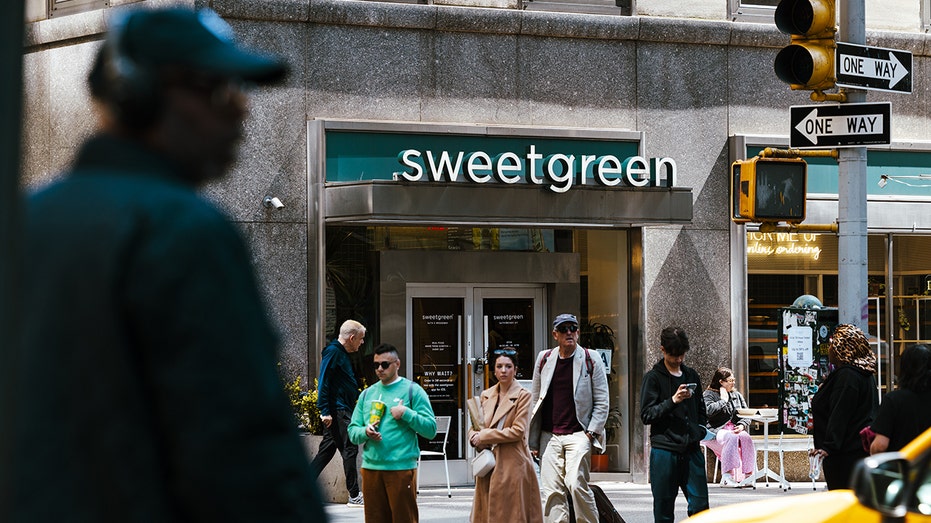
Sweetgreen CEO Jonathan Neman was just months out of college in 2007 when he and the company’s co-founders bet that Americans wanted an option somewhere between slow, pricey sit-down dining and cheap, unhealthy fast food.
Nearly two decades later, that bet has scaled into a 290-location fast-casual powerhouse employing 6,486 workers.
The Los Angeles-based chief executive – whose Persian Jewish family fled Iran during the 1979 Islamic Revolution to rebuild their lives in the U.S. – credits his immigrant upbringing, youthful “naivete” and focus on simplicity for Sweetgreen’s rise.
“I think so many people don’t believe in the American dream today, and I think that’s misguided,” Neman told FOX Business. “I think the American dream is alive and well.”
That belief is driving Sweetgreen’s latest push to attract both workers and budget-conscious diners.
BUILT FROM SCRATCH: HOW THREE GRANDSONS TURNED $500 AND A GARAGE INTO A HEARING AID COMPANY
The company, best known for its salads and bowls, recently rolled out a compensation plan that pushes top restaurant manager pay past $200,000 a year, alongside a menu expansion into wraps.
For Neman, creating a six-figure career track in hospitality ties directly back to his family’s roots.
“Restaurants are one of the true engines of opportunity and growth in this country,” Neman said.
POPULAR SALAD CHAIN ROLLS OUT PLAN THAT COULD PUSH TOP MANAGERS’ PAY PAST $200K
“I wanted to create that opportunity where we could incentivize and empower people to create great lives for themselves and truly be a win-win-win situation where they do great, they do great for their customers, they do great for themselves.”
Neman views his CEO role as constant service to customers, employees and shareholders.
“If I walk into a restaurant and I see a napkin on the floor, I’m picking it up, I’m wiping things down,” he said.
POPULAR SALAD CHAIN MAKES BIG CHANGES IN BID TO WIN BACK DINERS
“Yes, in one way, you’re the boss, but I think great leaders are really in service to their customers, their team members and their investors.”
Long before Sweetgreen became a publicly traded company, Neman said co-founders Nathaniel Ru and Nicolas Jammet tested their concept on the street.
| Ticker | Security | Last | Change | Change % |
|---|---|---|---|---|
| SG | SWEETGREEN INC | 11.39 | -0.10 | -0.87% |
They sat outside competitors including Chipotle and Subway to tally daily foot traffic – calculating they only needed about 100 customers a day – before signing a lease on a 500-square-foot former burger joint in Washington, D.C.’s Georgetown neighborhood for under $3,000 a month.
“I think there’s something about when you start a business when you’re so young, there’s this naivete where, if I knew what I knew today about restaurants… I would have definitely never done this,” Neman said.
“But the naivete of not knowing what I didn’t know, and that bright-eyed optimism around it… it allowed us to think differently,” he continued.
Starting out right after graduating from Georgetown University also stripped away the fear of financial ruin.
SALADS OUTSELL FRIED FAVORITES AT THIS CALIFORNIA CHICKEN CHAIN GROWING NATIONWIDE

“I already had three roommates, I was in college, I was already living off of almost no money,” Neman said. “There’s this quote, ‘You can’t fall off the floor.’ … There’s no better time to start a business.”
Pointing to other food industry giants, Neman said keeping operations streamlined is the real secret to scaling.
“I think there’s a lot of value in simplicity,” he said. Because execution is so important, if you look at so many of the great restaurant brands like the In-N-Outs and the Chick-fil-As, there’s that level of simplicity there that allows them to really focus on driving a consistent execution.”
Read the full article here