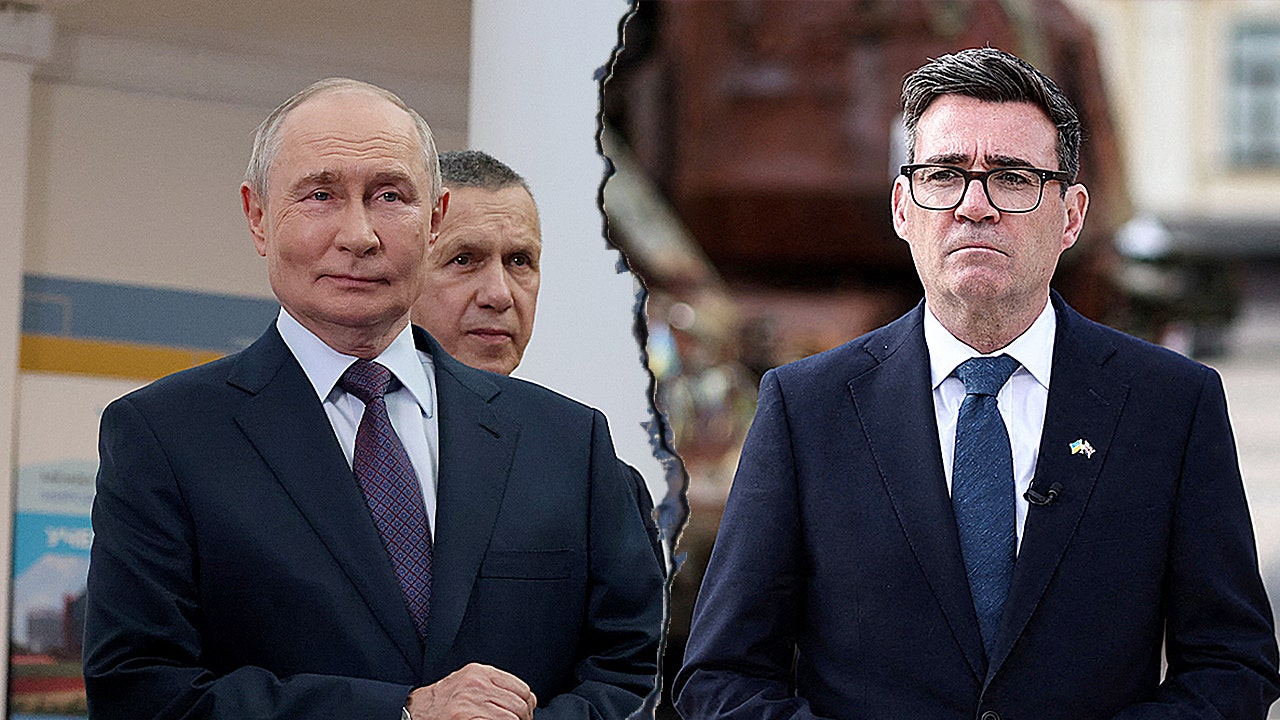





If CIA Director John Ratcliffe’s secret trip to Moscow was intended to calm fears of a confrontation between Russia and NATO, it appears to have achieved almost the opposite.
ADVERTISEMENT


ADVERTISEMENT
His sudden arrival in the Russian capital this week triggered days of speculation over what intelligence could have prompted Washington to dispatch its spy chief to deliver a message to Moscow and whether the Baltic states should be worried.
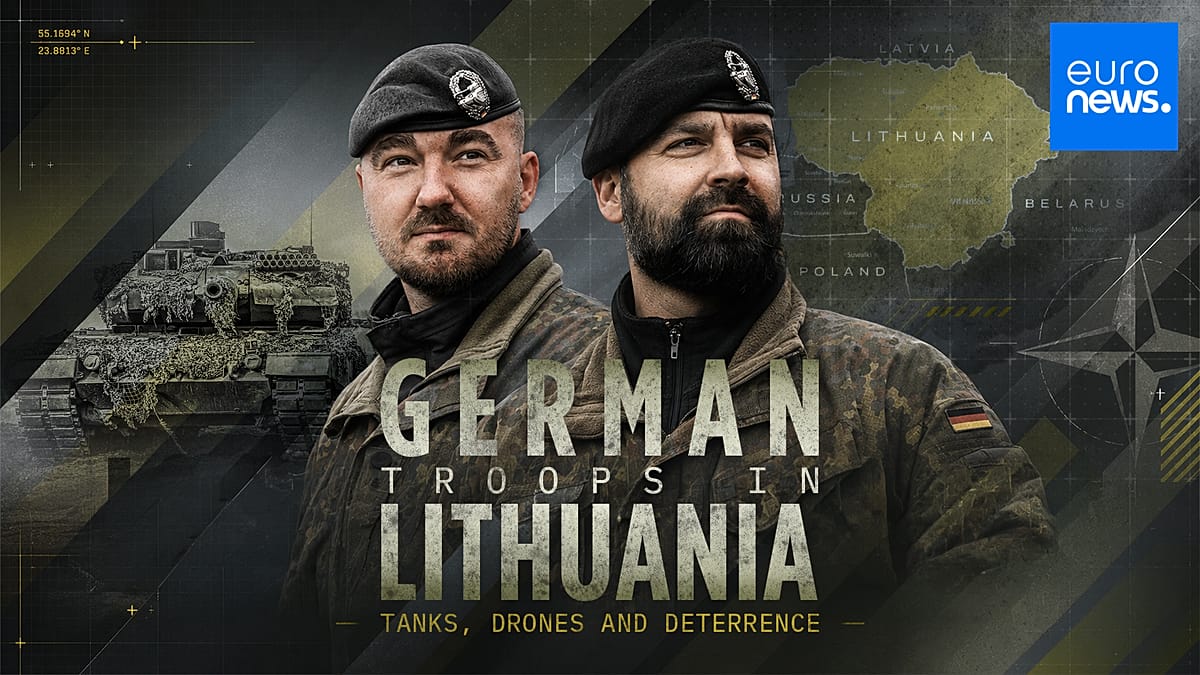
US media reported that Ratcliffe warned Russia against attacking NATO members, particularly Estonia, Latvia and Lithuania, amid intelligence assessments that Moscow could seek to test the alliance as its war in Ukraine remains deadlocked.
American thinktank the Institute for the Study of War (ISW) said the circumstances of the visit suggest Washington regarded the intelligence behind it as sufficiently urgent and sensitive to justify Ratcliffe travelling to Moscow in person.
“US Central Intelligence Agency Director John Ratcliffe’s visit to Moscow suggests that Russia may be preparing to conduct an act of aggression against a NATO member in the relatively near term to invalidate NATO’s Article 5,” ISW said.
But the Washington-based organisation also drew an important distinction: there are no signs of the kind of large-scale Russian military build-up around the Baltic states that preceded the invasion of Ukraine in February 2022.
Instead, it said, any near-term Russian action could be considerably more limited: an air, missile or drone strike, or a small land incursion designed not to seize large amounts of territory but to test whether NATO allies would respond collectively under Article 5.
Former Estonian President Toomas Hendrik Ilves questioned whether the Baltic states were the reason for Ratcliffe’s trip at all.
In an exclusive interview with Euronews, Ilves said he had “severe doubts” that concerns over the Baltic states were behind the CIA director’s mission, arguing that Washington’s more immediate concern was Russia’s support for Iran.
“What is the real problem for the United States right now? The real problem is Iran, the fact that the Russians are giving targeting information to the Iranians,” Ilves said.
He was equally sceptical about suggestions of an increased Russian military threat to the Baltic states, dismissing them as “all spin.”
“Why would they do anything in the Baltic states at this time?” he said, arguing that Moscow had little reason to risk a confrontation with NATO while its war in Ukraine remained deadlocked.
Concern in European military circles
A European military source told Euronews that intelligence agencies have been picking up signals for months suggesting that Moscow could seek to exploit the Trump administration’s changing approach to its European NATO allies to launch another attack in the region, as Washington pushes Europe to assume greater responsibility for its own defence.
The source cautioned that this did not amount to evidence that Russia has taken a decision to act. But the concern, they said, was that a distracted Washington, combined with the shift in responsibility towards Europe, could present Moscow with a window of opportunity.
Seen through this lens, Ratcliffe’s trip could have been intended to remove any doubt in Moscow about the consequences of testing NATO at a time when Washington is both heavily preoccupied elsewhere and redefining its role in European defence.
The source described Ratcliffe as one of the Trump administration’s strongest supporters of NATO, Europe and Ukraine, but doubted that Putin would heed his warning. The timing itself may be part of those calculations.
The source stressed that the Baltic states, particularly Estonia and Lithuania, are considerably better prepared for a potential confrontation with Russia than much of the rest of Europe.
As Europe strengthens its defences, it raises another strategic question: if Moscow is considering testing NATO, why wait until the continent is better prepared and a new US administration that might be more committed to its defence?
A painful memory of 2021
Nearly five years ago, Ratcliffe’s predecessor, William Burns, travelled to Moscow with a warning. When he arrived in November 2021, Russia was already months into a large and increasingly visible military build-up around Ukraine. Less than four months later Russia launched its full-scale invasion.
A European military source drew an uncomfortable parallel between the two missions.
“It is good that the CIA director went to Moscow to deliver a warning,” the source told Euronews. “Not that Putin will listen.”
But there is a crucial difference between the two cases. No comparable Russian build-up is visible around the Baltic states today. A Russian attempt to test NATO, however, would not necessarily require one.
A more limited operation could require little of the visible military preparation that preceded the invasion of Ukraine. If the objective is to test NATO rather than seize territory, ambiguity could be the point.
‘Our threat assessment has not changed’
Officials in the Baltic states have spent the days since Ratcliffe’s visit trying to dampen fears that another 2021 may be unfolding on NATO’s eastern flank.
Estonian Foreign Minister Margus Tsahkna said the possibility of Russian provocations against NATO must be taken seriously, but insisted that Estonia’s threat assessment had not changed.
Latvian officials similarly said their assessment of the conventional military threat remained unchanged and the risk of a Russian invasion was low.
Yet public reassurance has been accompanied by calls for considerably greater preparedness.
Five European Commissioners from countries on the EU’s eastern flank have urged European Commission President Ursula von der Leyen to take additional measures in response to what they described as mounting security challenges in the region.
Their proposals include appointing a high-level coordinator for the eastern flank, strengthening regional stockpiles and civil preparedness, improving the protection of critical infrastructure and accelerating the EU’s Eastern Flank Watch initiative against hybrid threats.
Baltic officials may see no evidence of an imminent conventional invasion, yet preparations continue for sabotage, drone incursions, hybrid operations and more limited Russian military provocations — many of which the region has already faced.
From Kyiv’s concerns to Washington’s warning
In April, Ukraine’s President Volodymyr Zelenskyy warned that Russian preparations could point to further mobilisation and a possible offensive either against Ukraine or the Baltic states.
Estonia publicly pushed back. Tsahkna said the warning did not correspond with Estonian intelligence or Tallinn’s own assessment.
“We do not see Russia concentrating its forces or preparing in any way militarily to attack NATO or the Baltic states,” he said.
By July, however, Lithuania and Latvia were themselves warning about the possibility of more limited Russian action.
Lithuanian President Gitanas Nausėda said intelligence indicated Russia could be planning limited attacks on critical infrastructure, including energy and transport facilities, while Latvian President Edgars Rinkēvičs warned that Moscow could seek to test NATO’s Article 5 commitment without launching a full-scale invasion.
A week ago during a summit in Kyiv, Estonian Prime Minister Kristen Michal said there was no direct conventional Russian threat to the Baltic or Nordic states.
Read the full article here