

Von der Leyen hails multilateralism as key to boosting the EU’s economy
Ursula von der Leyen told European lawmakers that the European Union’s dependencies need to be reduced, saying that all the challenges the bloc is currently dealing with are “intrinsically linked”.
Von der Leyen said 55% of the bloc’s GDP comes from trade within the single market, but the figure with the rest of the world is 44%.
“Our supply chains and derisking goals depend on trade… trade matters more than ever,” von der Leyen told MEPs in Strasbourg.
The EU chief hailed the recently signed Mercosur trade deal as “historic” and said next week another “groundbreaking” trade deal will be signed with India.
“Others want to do business with us, and these deals will open massive opportunities for our businesses, create jobs, give us resilience and security of supply,” said von der Leyen. “The more trading partners we have worldwide the more independent we are.”
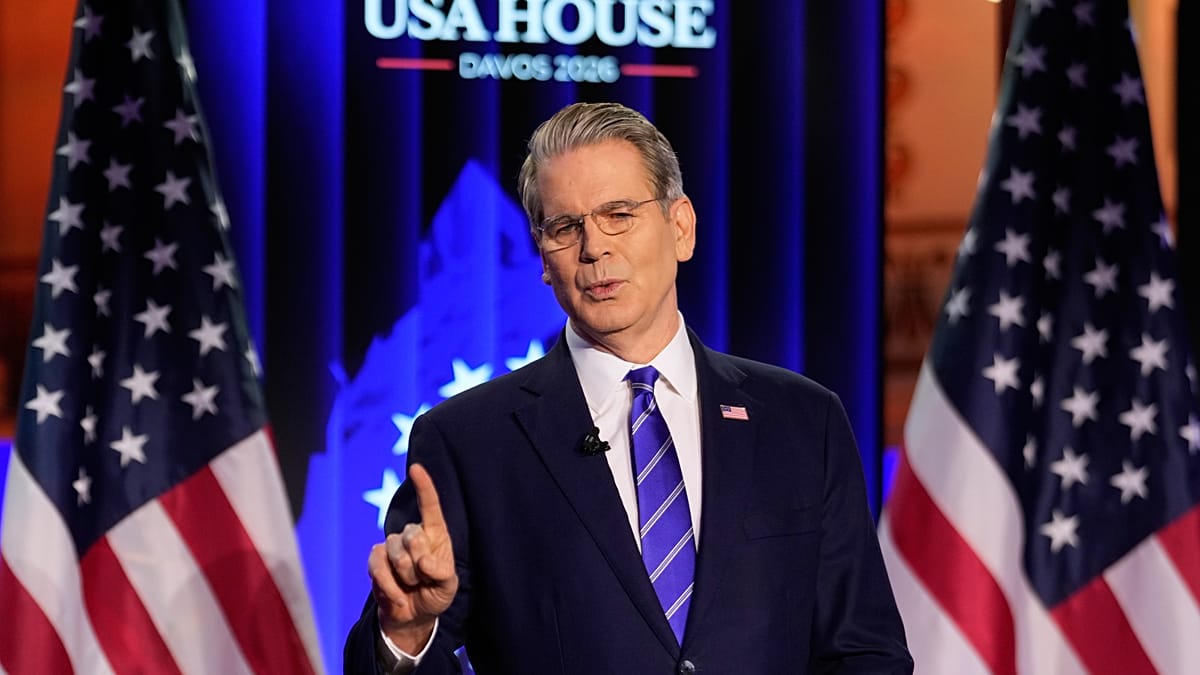
Von der Leyen’s comments clash with US Secretary of Commerce Howard Lutnick, who said on Tuesday that “globalisation has failed”.
On the sidelines of the World Economic Forum in Davos, Lutnick dubbed globalisation a “failed policy” that has exported jobs and “offshore” America’s future.
“The Trump Administration and I are here to make a very clear point—globalisation has failed the West and the United States of America. It’s a failed policy… and it has left America behind,” said Lutnick.
No comment from me on Greenland – Rutte
Mark Rutte refused once again on Wednesday morning to comment on the row between the US and Denmark, two NATO allies, over Greenland.
“You can be assured I’m working on this issue behind the scenes,” the NATO secretary-general said during a Davos panel on “Can Europe defend itself?”. “Statements from me will not add anything.”
The only way through the crisis, he continued, is “thoughtful diplomacy”.
The US remains committed to the military alliance because “NATO is crucial not only for the defence of Europe, but also for the defence of the US,” Rutte said, because the US “needs a safe Arctic, a safe Atlantic and a safe Europe”.
He did add that on the Arctic, President Donald Trump “is right.
“We have to protect the Arctic against Russian and Chinese influence,” he said.
MEPs tipped to freeze EU-US trade deal after Trump threats
The European Parliament is expected to suspend the implementation of the EU-US trade deal during a meeting this afternoon in Strasbourg, following new tensions with Washington.
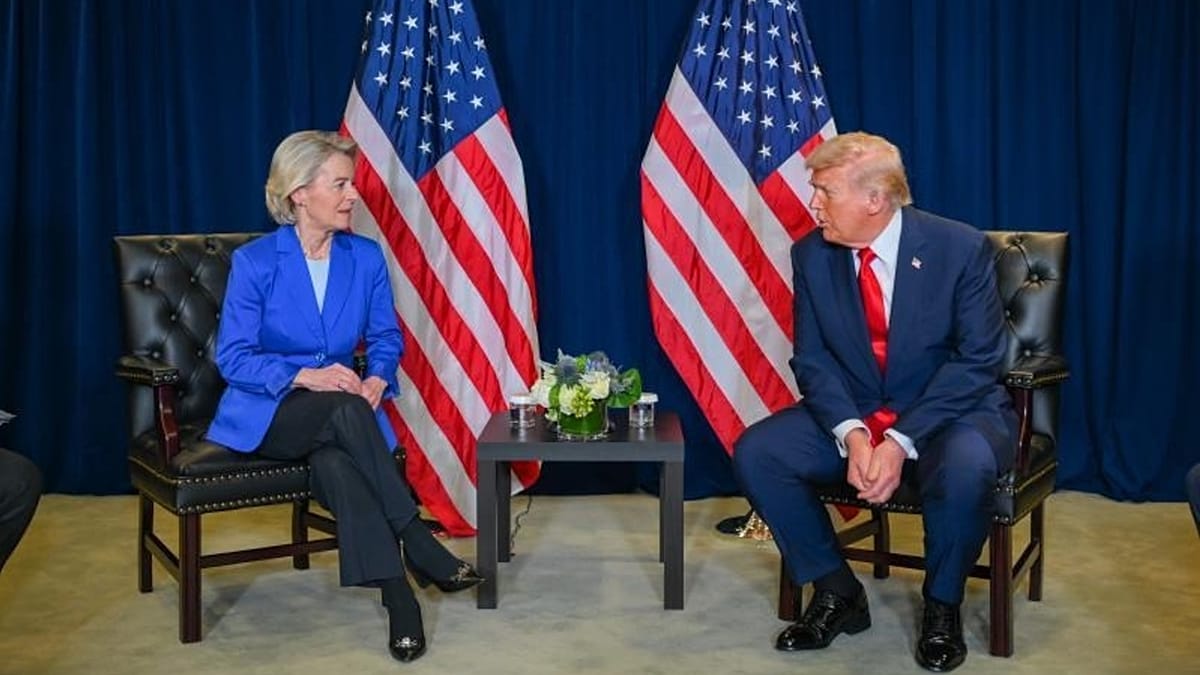
The agreement, clinched in July 2025 in Scotland by European Commission President Ursula von der Leyen and US President Donald Trump, has come under fire after Trump threatened to impose 10% US tariffs on several EU countries if they refused to allow the US to acquire Greenland.
Leaders of the Parliament’s main political groups – the EPP, S&D and Renew – called over the weekend for the deal to be frozen. On Tuesday, Iratxe García Pérez, president of the S&D group, said there was a “broad agreement” among political groups to suspend the accord.
The trade deal introduced 15% US tariffs on EU imports while cutting EU tariffs on most US industrial goods to 0%. Some lawmakers have criticised the agreement as unbalanced, arguing it favours US exporters.
MEPs had been expected to amend the deal in the coming days ahead of a vote on its implementation. The escalation in trade tensions now puts the entire agreement in jeopardy.
“The EPP is in favour of the EU–US trade deal, but given Donald Trump’s threats regarding Greenland, approval is not possible at this stage. The 0% tariffs on U.S. products must be put on hold,” German MEP Manfred Weber, leader of the EPP (the largest political group) wrote on X on Saturday.
A meeting of MEPs tasked with monitoring the agreement’s implementation is scheduled for 15:00.
EU retaliatory measures would be deployed ‘very quickly’ – Dombrovskis
If Donald Trump moves ahead with an additional 10% tariff on eight European countries to force the sale of Greenland, the European Union would “respond very quickly”, the European Commissioner for the Economy said on Wednesday morning.
“In terms of retaliatory tariffs, we can respond very quickly because actually we had been preparing them already last year in a context of previous tariffs introduced by President Trump,” Valdis Dombrovskis told CNBC from Davos referring to a €93 billion package of countermeasures the bloc had prepped last year in case trade talks with the US failed.
These included two sets of counter-tariffs:
- the first covered a wide range of US products hit with 25% duties, including almonds, orange juice, poultry, soybeans, steel and aluminium, tobacco and yachts. Many of the targeted goods were linked to Republican constituencies in the US;
- the second targeted €72 billion of US goods, including aircraft, cars and car parts, as well as agri-food products. It too was put on hold to give negotiations a chance.
“We are obviously willing to engage with the United States and find a constructive solution, but also ready to react if this is not forthcoming,” Dombrovskis also said.
He described the situation as “very disappointing”, saying that “like-minded democratic countries should be working together to counter this instead of having disputes amongst themselves”.
“There are many issues we need to deal with. Obviously, we need to put aside this Greenland question. War in Ukraine continues to rage. People are freezing right now in Kiev. Russia is continuing its relentless bombardment. So we should focus also on how to stop this,” Dombrovskis said.
With all eyes on Greenland, Costa and von der Leyen shed light on Ukraine’s plight
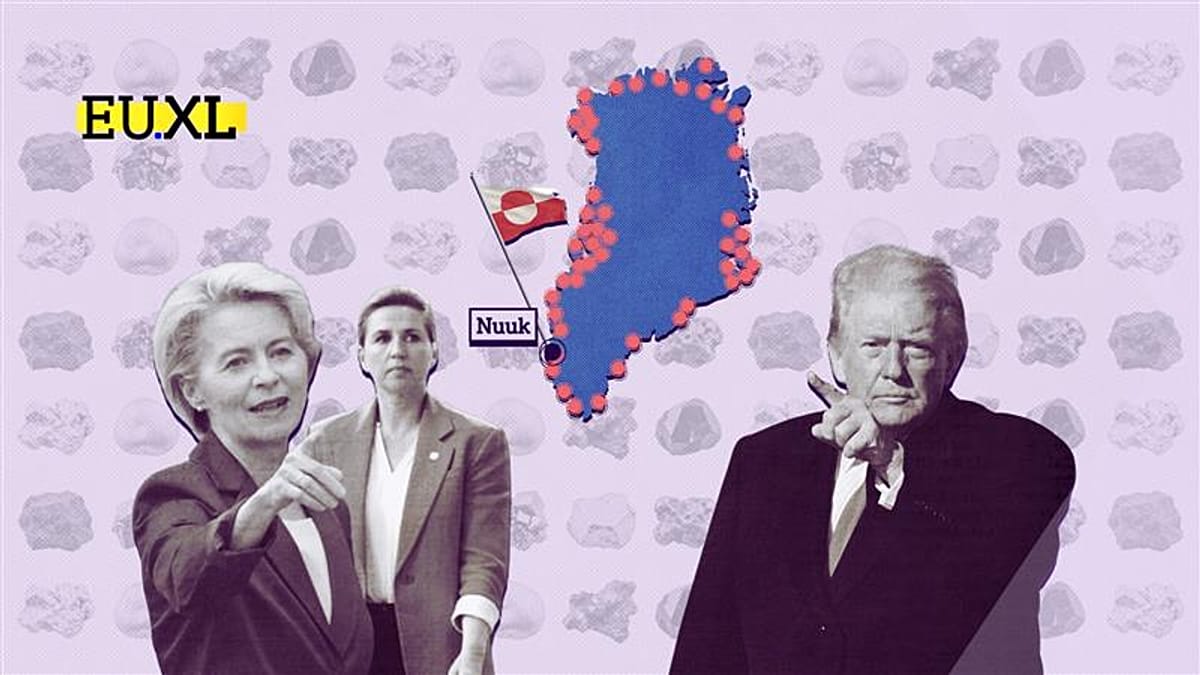
Donald Trump’s desired annexation of Greenland has single-handedly captured all political and media attention since his social media post threatening an extra 10% tariff on eight European countries to force the sale of the mineral-rich territory.
But in their back-to-back speeches on Wednesday morning, both António Costa and Ursula von der Leyen took a moment to remind MEPs of the predicament that Ukrainians are still enduring under Russia’s relentless war. The country is now suffering from sub-zero temperatures with limited electricity hours, as Moscow pummels the energy infrastructure to bring Kyiv into submission.
“Long-term security in Europe cannot be upheld through increased investment and cooperation in defence alone. It must be achieved through a just and lasting peace in Ukraine. Because Ukraine’s security is Europe’s security,” Costa said. “Our response has been clear since the first day of Russia’s war of aggression: To provide full support to Ukraine – financially, in terms of security, for reconstruction, and on its path to European Union membership.”
Von der Leyen denounced the Kremlin’s unwillingness to seriously engage in the peace effort launched by the White House, which is now at risk of being derailed by Trump’s threats over Greenland.
“It is now almost four years since Russians rolled into Ukraine. Peace talks are now ongoing, and we recognise the efforts of the US in this regard. But while these efforts intensify, so do Russia’s attacks. So Europe will continue to support Ukraine in every way,” she said.
The fact that Costa and von der Leyen devoted just one paragraph to Ukraine in their speeches is a remarkable turnaround in the European agenda. The last four months of 2025 were spent, almost exclusively, on deciding how to provide Ukraine with €90 billion in financial and military support over the next two years, leading to an overnight EU summit in mid-December that concluded with an agreement to raise common debt.
EU needs its own ‘strategic approach’ to the Arctic, says von der Leyen
The European Union needs its “own strategic approach” to the Arctic region, Ursula von der Leyen says as she continues her speech.
“The first pillar will be a massive European investment surge in Greenland. In particular, to further support the local economy and infrastructure,” she says.
“We will work with the US and all partners on wider Arctic security. In particular, I believe we should use our defence spending surge on Arctic-ready equipment. And strengthen our security arrangements with partners such as the UK, Canada, Norway, Iceland and others,” she adds.
“I believe Europe itself needs to reassess its wider security strategy. This should look at what is needed to adjust to today’s new realities. Many of you have worked on various national and European security strategies. Some of them in the recent past. But the world has changed so fast, and Europe now has to change with it.”
It’s unclear, however, when this new security strategy will be presented.
EU will respond to Trump’s tariffs with ‘urgency and determination’, says von der Leyen
Ursula von der Leyen vows to hit back if Donald Trump goes ahead with his proposed 10% tariffs to force the sale of Greenland.
“Greenland is not just a territory in a key region of the world map, a land rich in critical raw materials, a strategic outpost on emerging global sea routes. It is all of those things. But above all, Greenland is home to a free and sovereign people. It is a nation with its sovereignty and its right to territorial integrity. And the future of Greenland is only for Greenlanders to decide,” she tells lawmakers in Strasbourg.
“We do agree with our American friends on the need to ensure the security of the Arctic region,” she goes on.
“We share the same strategic assessment on Arctic Security. And this is why the threat of additional tariffs for security reasons is simply wrong. If we are now plunging into a dangerous downward spiral between allies, this would only embolden the very adversaries we are both so committed to keeping out of this strategic landscape.”
“We are at a crossroads. Europe prefers dialogue and solutions – but we are fully prepared to act, if necessary, with unity, urgency and determination.”
France calls for Greenland NATO exercise
The French presidential palace this morning announced that Paris “is requesting a NATO exercise in Greenland and is prepared to contribute to it”.
Ursula von der Leyen: ‘We will need a departure from Europe’s traditional caution’
Ursula von der Leyen, the president of the European Commission, has now taken the floor in the European Parliament. Her speech echoes her message a day prior in Davos, where she made a strong plea in favour of “European independence”, calling it an “imperative” to survive in the 21st century.
“The shift in the international order is not only seismic, but it is permanent. And the sheer speed of change far outstrips anything we have seen in decades. We now live in a world defined by raw power – whether economic or military, technological or geopolitical. And while many of us may not like it, we must deal with the world as it is now,” von der Leyen tells MEPs.
“We have to be strong in shaping ourselves if we want to shape the world around us. In this increasingly lawless world, Europe needs its own levers of power.”
Von der Leyen then hails the collective action taken by EU countries in recent years to face the COVID-19 pandemic, support Ukraine, manage the energy crisis and ramp up defence spending.
“We are already moving in this direction, but the speed of change requires a new approach from Europe. We will need a departure from Europe’s traditional caution,” she says. “The world is changing faster, so does our mindset. So our institutions, governments and societies – all of us – must transform the ways in which we think and act.”
Costa: ‘Alliances cannot just boil down to a sequence of transactions’
After discussing the crisis over Greenland, António Costa shares a reflection about the turbulent state of the international order.
“The first way for Europe to become stronger and more sovereign is to remain a firm champion of the international rules-based order, international law and multilateralism. We will always uphold the principles enshrined in the United Nations Charter and defend human dignity and individual freedoms,” he says.
“We cannot accept that the law of the strongest prevails over the rights of the weakest. Because international rules are not optional. And alliances cannot just boil down to a sequence of transactions,” he adds, referring to Trump’s notoriously transactional approach to foreign policy, which has unnerved Europeans.
“We cannot accept violations of international law. Anywhere. Whether in Ukraine, Greenland, Latin America, Africa, or in Gaza,” Costa goes on.
“In times like these, principles matter more than ever. Because reliability is strength, and consistency is key.”
Trump’s tariffs are ‘incompatible’ with EU-US trade deal, says Costa
António Costa continues his speech addressing the crisis over Greenland, which will be discussed by leaders during an extraordinary summit on Thursday evening.
He says member states are “united around the principles of international law, territorial integrity and national sovereignty” and “in full support and solidarity with the Kingdom of Denmark and with Greenland.”
“Only they, Denmark and Greenland, can decide on their future,” he says.
Costa adds that both sides of the Atlantic have a “shared interest in peace and security” in the Arctic region, which climate change is making increasingly strategic. He then warns that the 10% tariffs threatened by Donald Trump against eight European countries, aimed at forcing the sale of Greenland, “undermine transatlantic relations and are incompatible with the EU-US (trade) agreement.”
“We stand ready to defend ourselves, our member states, our citizens, our companies, against any form of coercion. And the European Union has the power and the tools to do so,” he says, in what reads as a reference to the Anti-Coercion Instrument, the so-called “trade bazooka”.
“We want to continue engaging constructively with the United States on all issues of common interest – and there are many, since we are partners and allies and share a transatlantic community.”
State of transatlantic relation is testing European principles, António Costa tells MEPs
António Costa, the president of the European Council, has begun his speech at the European Parliament in Strasbourg.
“Let’s face it: taken together, the geopolitical challenges Europe is facing sometimes seem daunting,” Costa says, referring to Russia’s war on Ukraine, transatlantic tensions over Greenland and the erosion of the rules-based global order.
“But the European Union will come out of this stronger, more resilient and more sovereign. For this to happen, our response must have three components: A Europe of principles. A Europe of protection. And a Europe of prosperity.”
“All these three dimensions are being tested in the current moment of transatlantic relations,” he adds.
Here’s what to expect today
Good morning and welcome to our third day of live coverage on the Greenland crisis dividing the US and the European Union.
We will, once again, seek to bring you the very latest on developments in Brussels, other European capitals, Washington, and Davos.
The two main events we’ll be avidly watching from the Swiss mountains are as follows:
- 10.15-11.00: Panel on “Can Europe defend itself?” with NATO chief Mark Rutte, Finnish President Alexander Stubb, Polish President Karol Nawrocki, and the head of the European Investment Bank Nadia Calvino;
- 14.30-15.15: the speech by US President Donald Trump.
Time to buckle up!
Read the full article here