


Good morning from Brussels. This is Maïa de la Baume and Angela Skujins, writing Friday’s newsletter from the Belgian capital, where EU officials have already slipped into long-weekend mode.
ADVERTISEMENT

ADVERTISEMENT
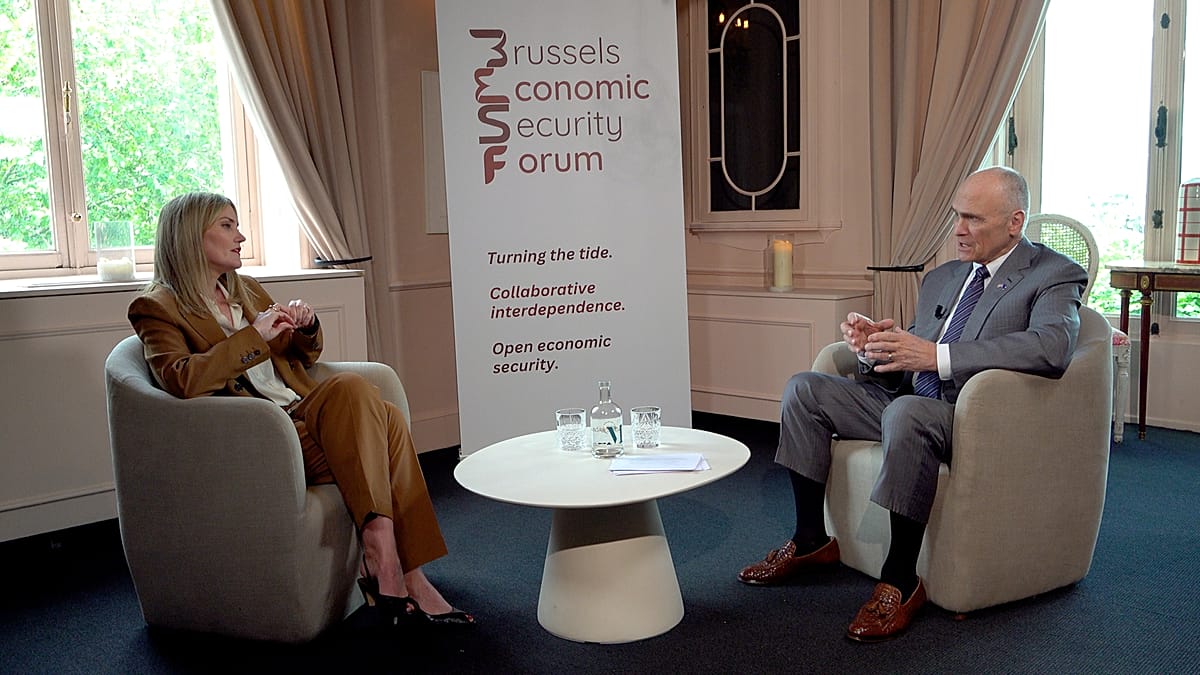
Just in: Latvia’s former defence minister Andris Sprūds, who resigned on Sunday, told the Europe Today programme that he had “always said that it is difficult to deal with drones which have lost their trajectory.”
Sprūds is at the center of a political firestorm that brought down Latvia’s Prime Minister Evika Siliņa on Thursday, following a coalition collapse over a drone-related security dispute near the Russian border.
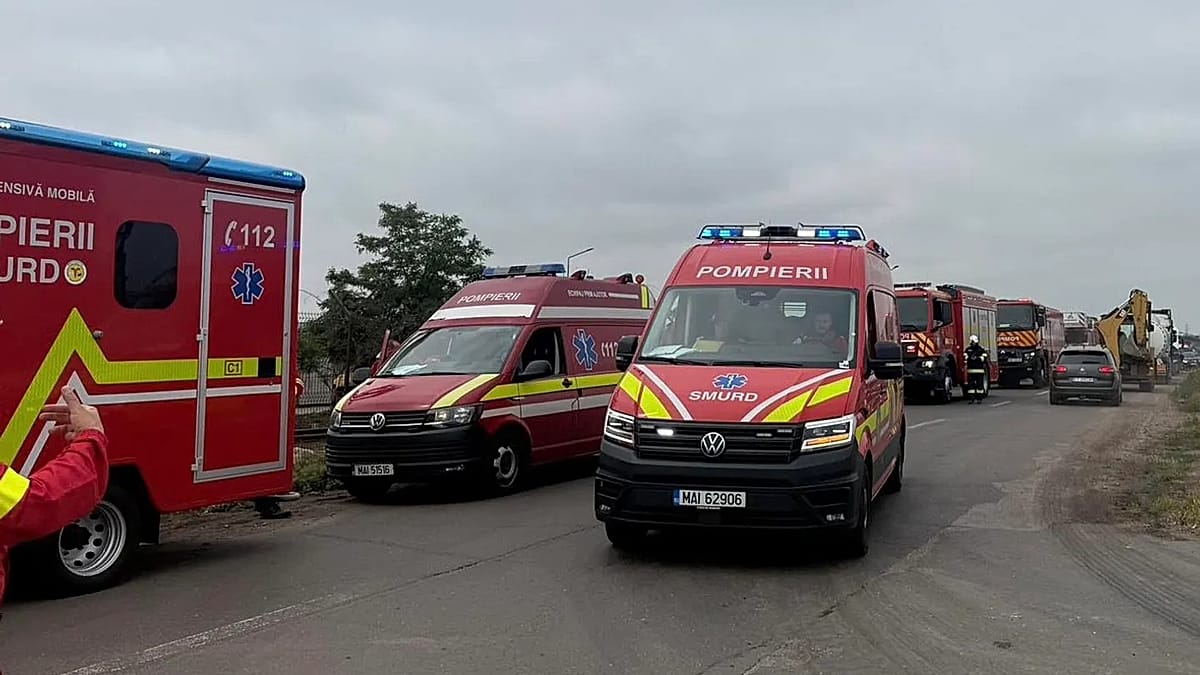
Reminder : Last Thursday, multiple drones entered Latvian airspace and crashed in the eastern Latgale region near the towns of Balvi and Ludza, close to the Russian border. One of the drones hit an oil storage facility, triggering a minor fire. There were no casualties but residents complained that emergency alerts arrived nearly an hour after the incident.
The incident sparked major controversy in the Baltic country, leading to Sprūds’s resignation, while Siliņa said it had “clearly demonstrated that the political leadership of the defence sector has failed to fulfil its promise of safe skies over our country.”
Latvia’s political leadership has blamed Russia for electronically redirecting Ukrainian drones into Baltic airspace, while domestic critics have accused Sprūds of leaving the country vulnerable.
In recent weeks, multiple drones believed to have been aimed at Russia have crossed into Latvian, Lithuanian, and Estonian airspace, fueling concerns about the Baltic states’ readiness to respond to military threats.
The latest episode took place earlier today in Finland, with the country’s president Alex Stubb, thanking the country’s authorities on X “for their swift reaction to the drone alert this morning,” and making clear that “there is no direct military threat against Finland.”
Sprūds himself argued on Euronews that his country must now focus on strengthening its resilience against future crises “that are coming”.
Meanwhile, Latvia is in the process of finalising a €3.49 billion defence loan from the European Union (EU) as part of the Security Action for Europe (SAFE) scheme.
Read more from the exclusive interview by Angela Skujins, and this in-depth investigation into the failings that occured.
In other news, U.S. President Donald Trump met with Chinese leader Xi Jinping for a second day of talks on Friday, wrapping up his state visit to China. The leaders are scheduled to meet for tea today, followed by a diplomatic lunch, before the U.S. president departs for Washington.
After visiting the Zhongnanhai leadership compound next to Beijing’s Forbidden City, Trump told his Truth social account that “Hopefully our relationship with China will be stronger and better than ever before,” adding that Xi had congratulated him “on so many tremendous successes in such a short period of time”.
The visit has reportedly led to a Chinese offer to help reopen the Strait of Hormuz, alongside a warning from Beijing that mishandling Taiwan could trigger conflict.
According to the White House, the two sides agreed that the Strait of Hormuz must remain open to support the free flow of energy, while U.S. President Donald Trump said that Chinese leader Xi Jinping had also assured him that China would not provide military equipment to Iran.
The most contentious issue remains Taiwan, with Xi warning the U.S. that disputes over the self-governed island—which China claims as its own—could lead to confrontation or conflict.
However, the visit has so far primarily focused on stabilizing relations between the U.S. and China and preserving a fragile truce agreed at the end of last year.
In October, Washington agreed to lower tariffs on all Chinese goods, while Beijing agreed to pause its restrictions on rare earth exports.
More here from Evelyn Ann-Marie Dom.
Poland makes history with first same-sex marriage registration following EU court ruling
Poland’s capital, Warsaw, registered its first same-sex marriage on Thursday, implementing court rulings that require the country to recognise same-sex marriages registered abroad.
In November, the European Union’s highest court ordered Poland to register same-sex marriages that were entered into in other EU countries even if Polish law does not currently permit them.
Three months later, according to Aleksandra Galka Reczko and Gavin Blackburn’s reporting, Poland’s Supreme Administrative Court cited that ruling in ordering authorities to recognise the marriage in Germany of two Polish men.
“This morning we issued the first transcription of a marriage certificate for a same-sex couple, in accordance with the court rulings,” Warsaw Mayor Rafał Trzaskowski said.
The mayor also promised his city would proactively recognise other Polish same-sex marriages registered elsewhere in the EU even without a specific court ruling.
Read more.
How the EU intends to tackle the new energy crisis
Before the war in the Middle East, the EU was already facing an energy crisis at home, with heavy industry players calling on “urgent and bold” action to rapidly slash electricity bills.
The war launched by the US and Israel against Iran has only exacerbated the problem. Under pressure from capitals, the European Commission is preparing a major overhaul of grid charges and electricity-related taxes to provide relief to households and citizens struggling with soaring prices, a document seen by Euronews reveals.
According to figures in the draft paper, the grid charges and taxes combined often outweigh the price of the electricity consumed. Network charges accounted for 27% of household electricity bills and 21% for businesses, while national taxes and levies added another 24% for households and 16% for firms.
However, the Commission’s focus on taxation is likely where the most politically sensitive changes will arise. The executive is proposing to reverse the current pricing logic, ensuring that electricity — increasingly generated from renewable power — is taxed less than fossil fuels.
For energy-intensive industries, EU countries would gain flexibility to reduce electricity taxes to zero, a move designed to keep European manufacturing competitive. But there’s more in the soon-to-be-announced package. Marta Pacheco is kind enough to break it down for us.
More from our newsrooms
Pope decries rise of AI-directed warfare, saying it leads to a spiral of annihilation
Pope Leo XIV denounced how investments in artificial intelligence and high-tech weaponry were leading the world into a “spiral of annihilation” on Thursday, as he called for peace in the Middle East and Ukraine during a visit to Europe’s largest university. Cecilia Attanasio Ghezzi and Gavin Blackburn have the latest.
Hungary’s Orbán-era wartime state of emergency ended, PM Péter Magyar says
Hungary’s government has ended the country’s state of emergency in a move that new Prime Minister Péter Magyar said represented a return to “normality.” Ferenc Horvath and Gavin Blackburn have more.
We’re also keeping an eye on
- European Commissioner for Democracy, Justice, the Rule of Law and Consumer Protection Michael McGrath will participate in a roundtable with civil society organisations in Prague, Czechia.
- European Commissioner for Enlargement Marta Kos meets Albulena Haxhiu, acting President of Kosovo in Pristina, Kosovo.
That’s it for today. Marta Pacheco contributed to this newsletter.
Read the full article here