

Published on •Updated
European countries that still hold significant stocks of interceptor missiles are expected to face pressure from the European Commission to transfer them to Ukraine, as Kyiv’s need for air-defence systems grows increasingly urgent, EU officials told Euronews.
ADVERTISEMENT


ADVERTISEMENT
Spain and Greece, in particular, are expected to come under pressure at a defence meeting on Tuesday in County Wicklow, Ireland, to provide some of their stocks.
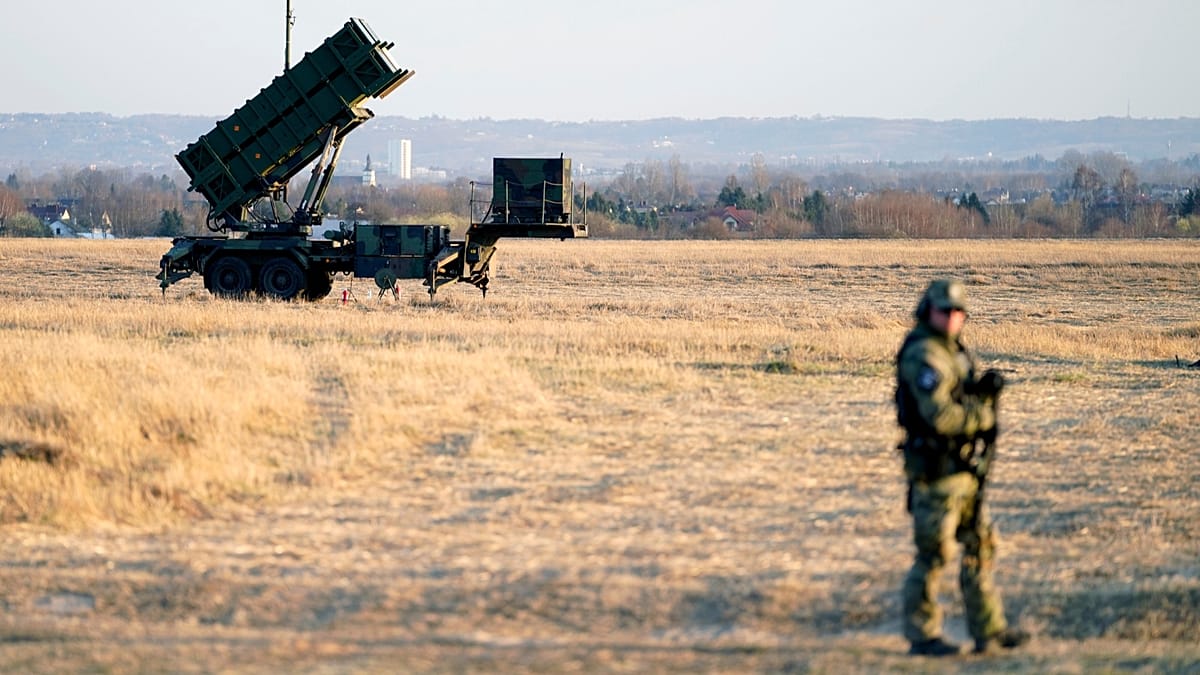
Ukrainian President Volodymyr Zelenskyy said late August that deliveries of Patriot interceptors had declined even as Russian missile attacks on Ukraine intensified. He said Kyiv needs an estimated 300 interceptors to fend off what is already shaping up to be a bitter winter battling another year of Russia’s full-scale invasion.
The war with Iran has forced the US to draw heavily on its own Patriot reserves, shrinking the pool of interceptors available to replenish allies — including Ukraine — at precisely the moment Kyiv needs more.
Spanish Prime Minister Pedro Sánchez said earlier this year Madrid pledged to donate five Patriot missiles to Ukraine amid the shortage. Greek Prime Minister Kyriakos Mitsotakis said Athens has “resisted” pressure to transfer any of its six Patriot batteries to the war-torn nation in the past. He argued they are critical for defending the country’s own airspace.
One EU diplomat speaking to Euronews on condition of anonymity, due to the sensitivity of the matter, said the issue of Madrid and Athens keeping a tight grip on their Patriot interceptors is not new. But the issue is gaining pace with Zelenskyy voicing louder requests for interceptors, with the air defence system proving to be the “debate of the summer”, they said.
The European External Action Service (EEAS), the EU’s diplomatic arm, is currently speaking with Japan and South Korea to convince them to share some of their stocks with Ukraine.
However, diplomats are wary that potential tensions with China are due to limit how much the two Asian countries are willing to share. Greece may also be reluctant to draw down its stockpile amid rising tensions with Turkey in recent months.
Three EU diplomats agreed that Ukraine’s shortage of Patriot interceptors is a “big issue” with broader questions about how to fill the gap. “What this will look like, I am not sure,” one EU diplomat said, adding that Tuesday’s meeting is informal and therefore not expected to produce any formal conclusions.
The effectiveness of Europe’s own defences, particularly in the wake of a series of hybrid threats, is also expected to be a key focus of the talks.
Moldova, an EU candidate country, was recently rocked by a series of drone incursions. Five unmanned aerial vehicles entered the country’s airspace on 27 August, with the president Maia Sandu offering a defiant statement in response.
The meeting comes after media reports also reveal the director of the CIA, John Ratcliffe, embarked on a secret trip to Moscow.
In the wake of the visit, which reportedly centred on warning the Kremlin against any form of aggression towards Baltic nations, various leaders from the region have insisted their threat assessments of a Russian attack on Latvia, Estonia and Lithuania remains the same.
The former president of Estonia, Toomas Hendrik Ilves, went so far as to tell Euronews he is sceptical that Ratcliffe was dispatched to warn Russia against escalation. He argued that Washington remains more concerned about Iran.
Meanwhile, one European Commission official revealed to Euronews that Kyiv is mulling whether to use the next funding envelope of the €90 billion support loan to purchase anti-ballistic systems, which could either be Patriots or the Franco-Italian version, the SAMP/T NG system.
To find other ways of plugging Ukraine’s anti-ballistic gap, the EU executive recently rubber-stamped a €6.1 billion defence procurement to supply the country with air and missile defence systems, missiles, ammunition and radars.
Read the full article here