





Published on •Updated
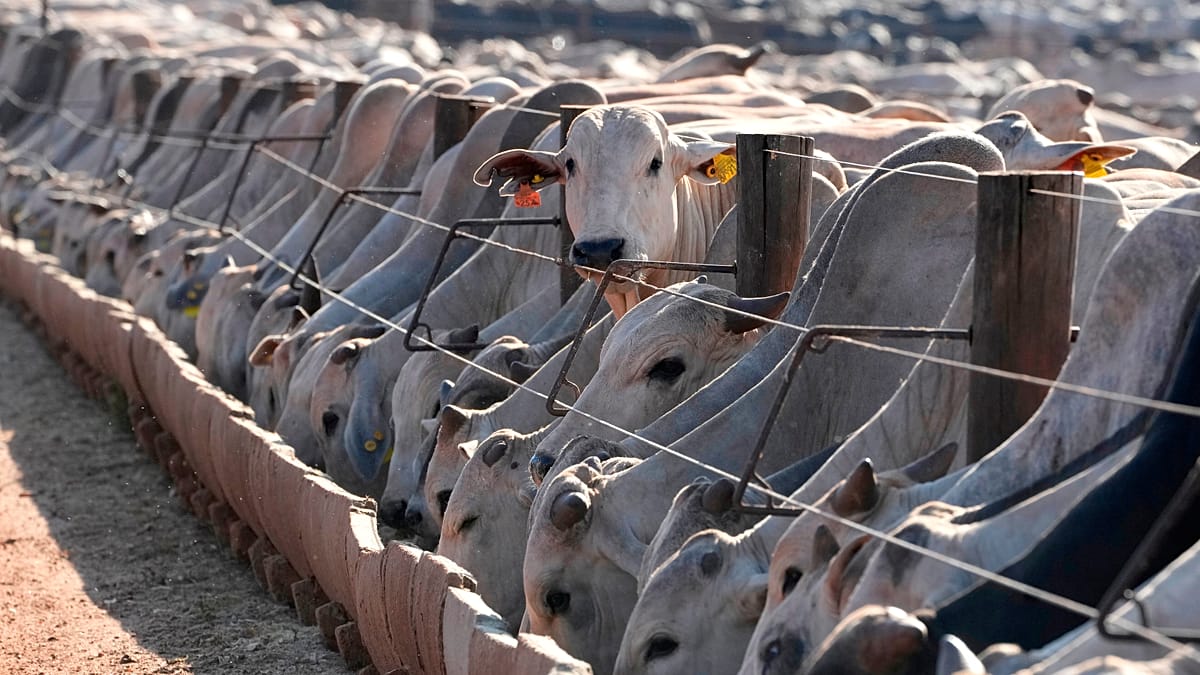
The European Commission suspended imports of meat from Brazil on Thursday over concerns about antibiotic use, after Brasília failed to convince the EU executive that its products comply with European standards.
ADVERTISEMENT


ADVERTISEMENT
The move comes as Brazilian meat imports lie at the heart of opposition to the free trade agreement signed in January 2026 by the Commission with Mercosur countries — Brazil, Argentina, Paraguay and Uruguay.
EU farmers accuse Latin American producers of failing to comply with the bloc’s phytosanitary and food safety standards, arguing that this gives Latin American products an unfair advantage on the EU market.
“We have rules that ban antimicrobials or using antimicrobials for growth,” Commission spokesperson Eva Hrncirova said. “On the 3rd of September, the list of countries that basically comply with our rules on antimicrobials comes into application.”
The spokesperson added that Brazil was not currently on the list, meaning its imports were suspended as of Thursday.
No guarantees for beef
The suspension, which resulted from a vote by national experts in May, covers beef, poultry, eggs and honey.
Imports of some products could resume following an audit of poultry and honey, launched on the basis of written guarantees of compliance provided by Brasília. The audit is expected to run until the end of the week, although the conclusions will take longer.
Hrncirova said no such guarantees had been provided for beef, adding that they must cover the animals’ entire life cycle, which is naturally longer for cattle.
Brazil’s ambassador to the EU, Pedro Miguel da Costa e Silva, told Euronews ahead of the summer that technical discussions with the Commission were ongoing. However, Brazil ultimately failed to prevent the suspension from taking effect.
Trade in agricultural products was the most contentious issue throughout the 25-year negotiations over the Mercosur agreement.
The deal was provisionally applied in May after the European Parliament suspended the ratification process with a legal referral to the European Court of Justice.
Read the full article here