




Published on
Lithuania’s capital of Vilnius was shutdown on Wednesday due to reports of a potential drone incursion, highlighting growing anxiety along NATO’s eastern flank amid Russia’s war with Ukraine.
ADVERTISEMENT

ADVERTISEMENT
Since the start of the month, there has been six reported or suspected drone incursions have occurred in Baltic and Finnish airspace since the beginning of the month, sending shivers up the spine of European countries near Russia’s border – as well as their allies.
Wednesday’s warning in Vilnius lasted for roughly one hour, but prompted the closure of the country’s airport, the evacuation of Lithuanian parliament and President Gitanas Nausėda and Prime Minister Inga Ruginienė, who were taken to shelters.
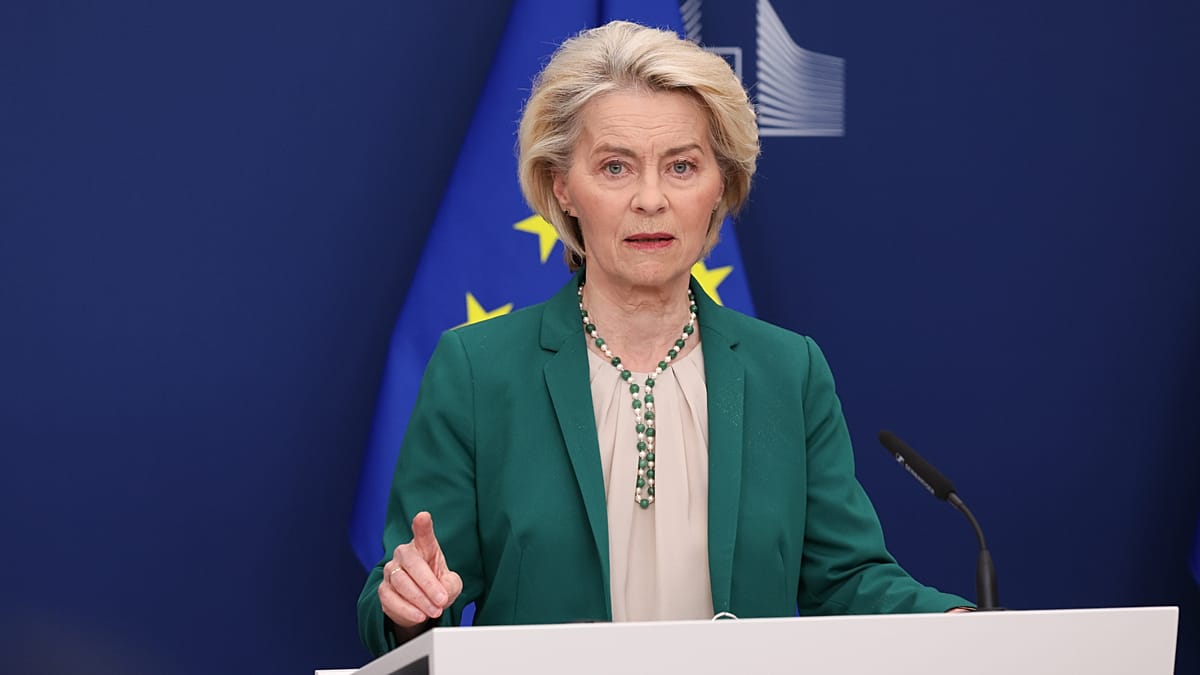
European Commission President Ursula von der Leyen said in a statement posted onto social media platform X following the incident that “Russia’s public threats against our Baltic States are completely unacceptable.”
“Russia and Belarus bear direct responsibility for drones endangering the lives and security of people on our Eastern flank. Europe will respond with unity and strength.”
The comments were a response to a letter circulated on Wednesday by 15 Baltic Members of the European Parliament (MEP) who urged the President of the European Commission to condemn Russia’s actions.
“Russia’s continuous open, dangerous and threatening provocations against the Baltic states” have “reached a critical point”, the letter reads, adding that the Baltic MEPs demand Russia stop these actions “immediately”.
Polish Prime Minister Donald Tusk stated on Wednesday from Warsaw that these incidents are a “coordinated provocation” and “we can’t pretend that nothing is happening.”
Roughly 20 drones entered Polish airspace last September in an incident Tusk labelled at the time as a “direct threat” while placing the blame squarely on Russian President Vladimir Putin.
NATO Secretary-General Mark Rutte said the recent spate of drone incidents are the result of Russia’s “reckless, illegal, full-scale” invasion of Ukraine from 2022 – while praising the efforts of the alliance’s fighter jets that responded promptly.
“This is exactly what we planned for,” Rutte said.
Some of the drones are Ukrainian in origin but are believed to have been diverted by Russia over Baltic airspace to sow havoc.
The European Commissioner for Defence Andrius Kubilius said on Tuesday, following a drone incident in Latvia, that Russia is testing new “forms” of pressure on the Eastern Flank countries – with the goal of “frightening people of the region”.
“Our answer: further increase of national defence spending; further increase of national defence spending; further increase of EU support to the Eastern Flank; stronger support to Ukraine so that Ukraine prevails,” he wrote on X.
Read the full article here