


European leaders are once again rushing to mitigate rising oil prices as Saudi cargoes are delayed or cancelled amid another conflict escalation in the Middle East, raising fears of soaring prices at the pump across many capitals.
ADVERTISEMENT

ADVERTISEMENT
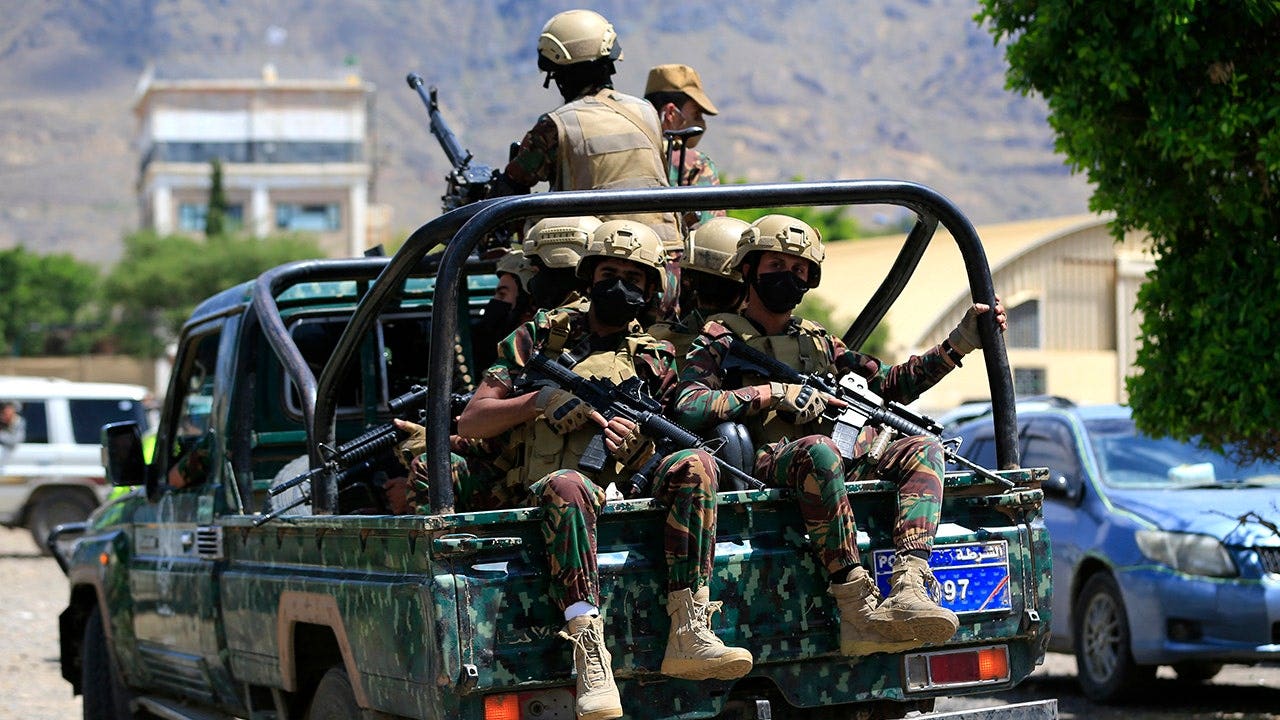
The latest shock is coming from Saudi Arabia, where Houthi and Iraqi attacks have forced the temporary closure of the 1,200-kilometre East-West oil pipeline – a crucial route designed to bypass the Strait of Hormuz.
The disruption threatens as much as 4% of global oil supply if it persists, this after Saudi crude output fell sharply in August to its lowest level in more than three decades. Meanwhile, Brent crude oil recently traded above $113 a barrel due to mounting supply risks.
For France and Italy, both of which will hold crucial elections in 2027, high energy prices are a major domestic political issue, as voters are preparing to judge governments on purchasing power.
Rising energy and fuel costs in France are already feeding into consumer anxiety, with inflation reaching 2.7% in August and energy among the main drivers. Italy faces a similar problem, with August inflation accelerating to 3.3%, driven heavily by energy, while petrol and diesel prices have climbed sharply.
French diplomacy
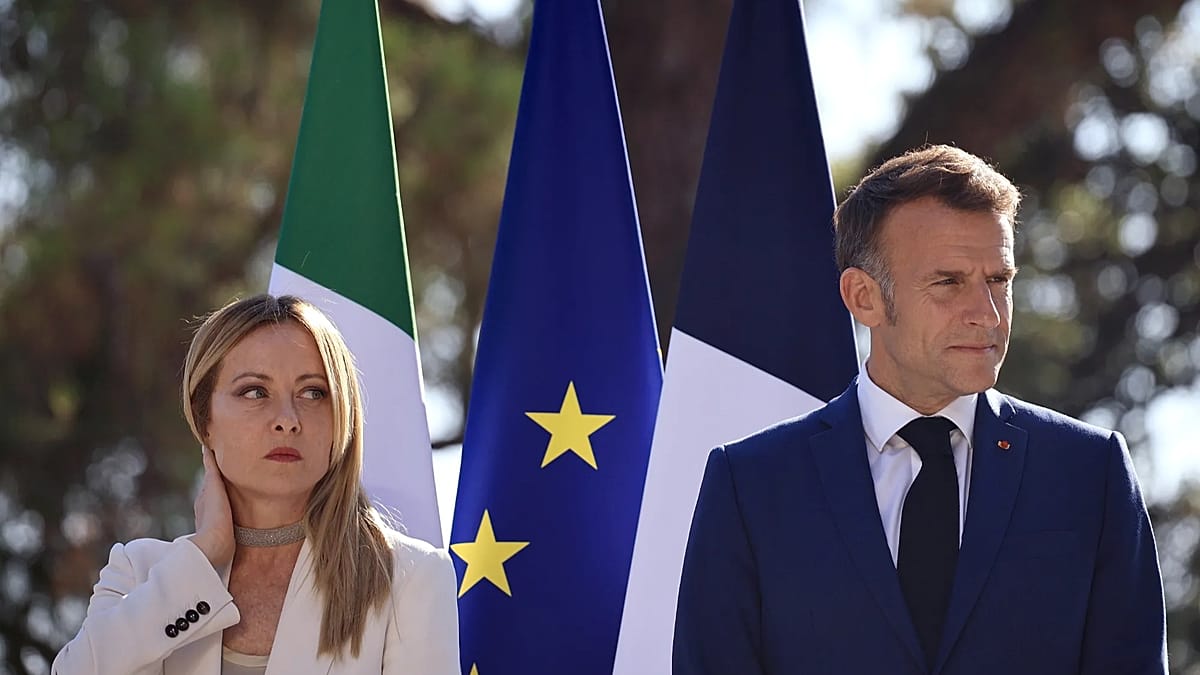
On Wednesday evening, French President Emmanuel Macron ordered a “mobilisation” to tackle fuel prices, while saying France is working to secure oil supplies and reduce pressure on motorists.
Macron has also linked energy security directly to diplomacy in the Middle East, arguing after talks with Iraq’s prime minister this week that alternative routes around Hormuz and regional de-escalation are necessary to protect French consumers.
“The priority: restoring freedom of navigation in the Strait of Hormuz, a vital artery for oil transit, protecting the energy infrastructure of our partners, and securing production. It’s essential to guarantee our supplies. We’re working with our coalition partners to ensure freedom of navigation in the Strait of Hormuz,” Macron wrote on X.
The French President added that ongoing work alongside “our coalition partners for freedom of navigation” through Hormuz aims to open alternative routes to reduce dependence on the vital waterway and secure supplies.
Italy scraps car taxes
Meanwhile, Prime Minister Giorgia Meloni announced overnight the abolition of the stamp duty imposed on small and medium-powered cars, which she described as one of the taxes most hated by Italians.
“We have chosen to redirect a portion of the resources used so far to address rising fuel prices into a simple, structural measure designed especially for those who use cars and motorcycles every day to work, take their children, or get around,” Meloni wrote on X.
The Italian leader stressed that the car tax will remain beyond 2027, noting the measure is designed to be “structural and permanent”. Meloni has also asked the European Commission to treat the energy crisis like a defence emergency and relax fiscal rules that member states must comply with.
At the same time, Rome has already adopted measures to accelerate domestic oil and gas projects, explicitly presenting increased production as part of a broader energy-security response.
Spain doubled its diesel tax cut to 20 cents a litre from September 1 after diesel prices jumped 15.7% in July, activating an automatic mechanism in the government’s anti-crisis package. Spanish Economy Minister Carlos Cuerpo is meeting with social partners in Madrid on Thursday to assess the war’s impact on Spain.
Germany coming soon
Chancellor Friedrich Merz said recently that Berlin will “soon” present measures to ease the impact of record fuel prices. Petrol and diesel prices stood at €2.45 per litre on Thursday, according to the General German Automobile Club.
However, just like any other nation, Germany’s exposure to imported energy means the government has little ability to control the underlying international price. After losing a tremendous number of seats in the latest regional election to the far-right Alternative for Germany, Merz’s Christian Democrats must strike a delicate balance to avoid alienating its electorate further.
Merz also framed the problem as one requiring international coordination, warning that the expansion of Houthi control around the Bab el-Mandeb threatens Saudi and other regional oil exports and further tightens global energy markets.
“The Houthis now control strategic positions around the Bab el-Mandab Strait and are attacking energy facilities in Saudi Arabia; this further exacerbates the situation in international energy markets,” Merz told a press conference on 14 September.
Pricing issue
Asked whether Europe is approaching a potential supply shock, a Commission spokesperson said pricing is the major crisis rather than diesel shortages, noting that no member state has so far raised any security of supply concerns.
“There is no supply problem in the EU at the present time,” Commission Spokesperson Anna-Kaisa Itkonen told Euronews. “Demand for jet fuel and diesel in Europe continues to be met through higher EU refinery production, as well as alternative supplies from global markets.”
However, Itkonen acknowledged that the evolution of the conflict in the Middle East, as well as usual autumn and winter demand trends, could impact the coming weeks and months and further tighten markets.
“We’re not yet in a situation where we’ll be tapping strategic resources, and we keep monitoring the situation alongside member states and the industry,” she added.
Nonetheless, the Commission said that it has been encouraging EU countries to cushion prices through taxation, which plays a big role in determining energy prices, noting that it is beyond its power to influence global oil prices.
Homayoun Falakshashi, head of crude oil analysis at the market intelligence firm Kpler, said the Saudi disruption – which runs as high as 5.5 million barrels per day – could be less bad than expected, as the Saudis have said work on the damaged pipeline has started.
“Up to 3.5-4 million barrels per day of exports are at risk, but also some 1.5 million barrels per day that feed western Saudi refineries, so it’s also bullish for diesel,” Falakshashi told Euronews, referring to a likely price increase regardless of supply.
Nonetheless, Falakshashi said throughput should come back to 3-4 million barrels per day instead of 5.5.
“On the other hand, we are hearing that Yanbu loadings are continuing, but we cannot yet confirm if this is true. So the key question is how much can get loaded from the east coast (Ras Tanura) and if these volumes can escape the Persian Gulf.”
Momentum for windfall profit tax
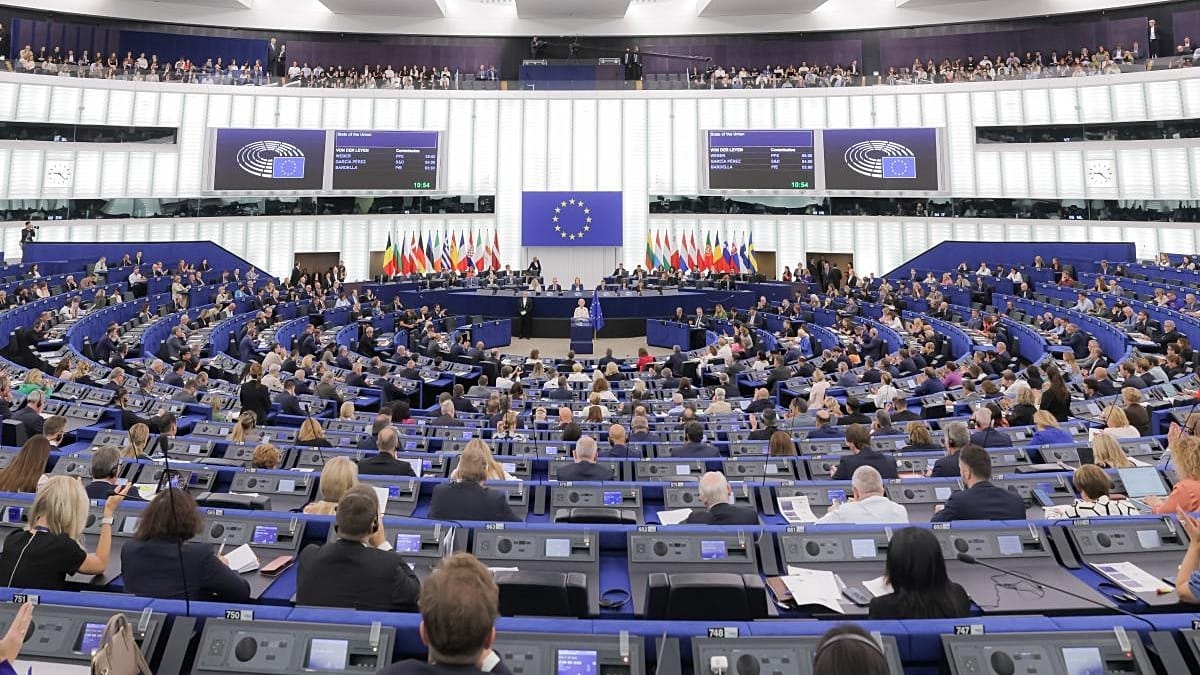
With soaring prices and rising inflation, the call for a windfall profit tax is gaining traction, with several EU lawmakers and EU leaders mentioning it on the sidelines of Ursula von der Leyen’s speech at the State of the Union on 16 September.
During her address to the plenary in Strasbourg, the leader of the centre-left Socialists and Democrats group, Iratxe García Pérez, proposed introducing a windfall tax on energy companies to finance a social support scheme.
“Trump and Netanyahu’s war against Iran has strengthened the ayatollahs and sent the cost of living soaring,” she said. “Let’s accelerate renewables. And let’s get those who benefit from this crisis to contribute.”
García said the contribution would be used to help fragile households pay their electricity bills, fill their shopping carts, put petrol in their cars and heat their homes.
Her remarks were echoed by those of her Green counterpart, Terry Reintke, who argued energy companies continue to profit from Europe’s extraordinary energy crisis, leaving the big bill for consumers to foot.
In August, Germany, Spain, Portugal, Italy, Poland and Austria asked Ireland’s EU Presidency to put an EU-wide windfall-profit mechanism on the agenda of the September finance ministers’ meeting, which will be held during an informal gathering of finance ministers on the 18 and 19 of September.
Esther Lynch, General Secretary at the European Trade Union Confederation representing millions of workers in the EU, said the introduction of windfall taxes is a “matter of justice” needed to stop price gouging and relieve the cost pressure on working people.
“It has been clear for some time now that energy companies are exploiting the geopolitical crisis to cash in at the expense of working people suffering a prolonged cost-of-living crisis,” Lynch told Euronews.
Read the full article here