


The European Commission seems to have been monitoring unidentified aerial phenomena (UAP) under the radar since at least 2023, according to a document from the Commission’s defence department seen by Euronews, which pertains to sky and space observations in Malaysia.
ADVERTISEMENT

ADVERTISEMENT
“We are getting better at seeing it (UAPs) and better identifying it as our technological capacities improve, but we need to get even better,” the letter read, signalling the EU executive is actively monitoring the phenomenon more than officially stated and seems keen to investigate it.
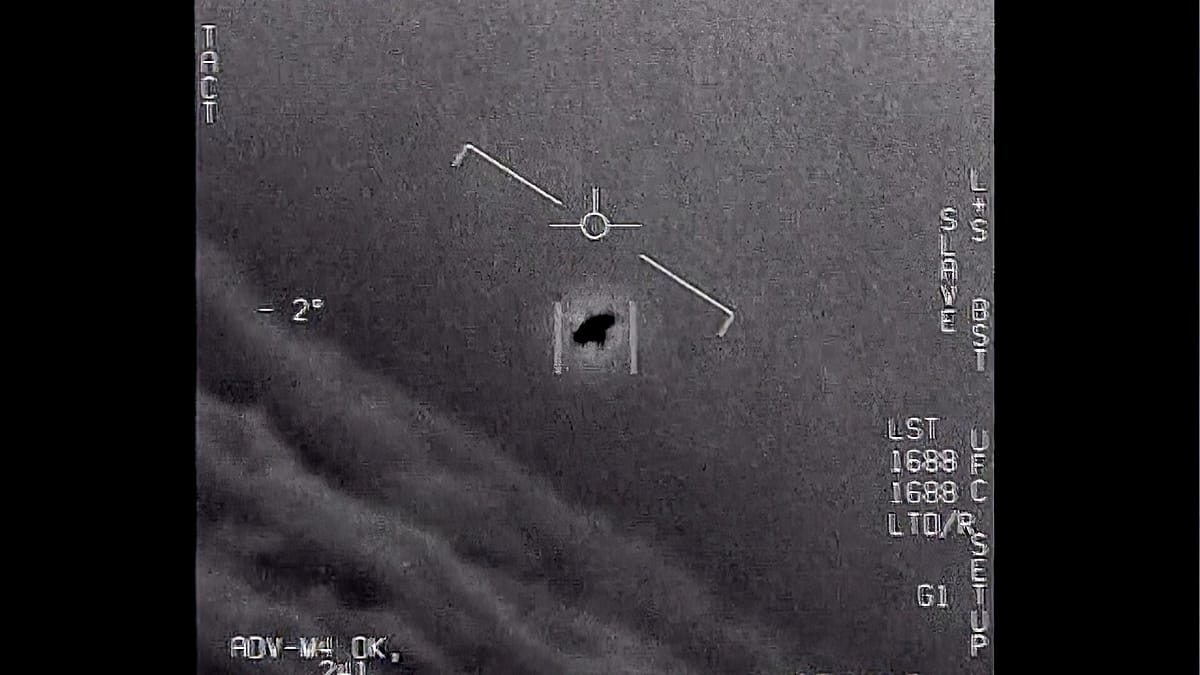
Formerly known as unidentified flying objects (UFOs), the term UAP was introduced by the United States defence department, the Pentagon, in August 2020, when Washington established the UAP Task Force to investigate inexplicable occurrences in restricted airspace.
The topic took on a more serious tone after a New York Times report revealed in 2017 that the US defence department files contained UAP footage from military flights that the US Navy had released.
Euronews also identified a Malaysian father and son — amateur astronomers internationally recognised by space agencies for their discoveries of the surfaces and activities on the moon in 2020 — who reached out to the Commission with a letter titled “UAP captures in the airspace and deep space using our UV infrared telescope” in October 2022.
The family duo sent 37 sky and space footage images to the Commission, including alleged UAPs, and asked President Ursula von der Leyen about their origins.
They noted that “all governments simply have no opinions” of these UAPs when confronted about them, and said they appear to be flying “very near to aircraft and important targets, such as military and nuclear facilities”.
“We have also detected various signals from up above through the local networks Wi-Fi frequency,” the Malaysian duo wrote.
Since these UAPs were spotted over Malaysia, the Commission would have no authority to investigate the matter, the EU executive responded.
However, the Commission said it would propose to its 27 member states to “increase its ability to detect objects in the space environment around the Earth”.
“This is partly to help us better identify the UAPs that you have seen and the many pieces of space debris that endanger the many uses of space,” the Commission said.
“We do not claim that in the future this will solve all cases like those you have reported, but maybe some of them.”
The Malaysian amateur astronomers also reached out to NASA, the director general of the Malaysian Nuclear Agency, Abdul Rahim Harun, the Malaysian Ministry of Science, Technology & Innovation and the Canadian Defense Ministry. All entities politely shunned the appeal.
Former Canadian MP Larry Maguire, who was also approached individually by the Malaysians, encouraged the pair.
“I suspect that more and more people around the world will be turning their attention to the skies and will be collecting even more data and recordings in the coming year,” Maguire wrote in an email in June 2022, seen by Euronews.
“At the end of the day, the skies aren’t classified, and as more information is collected, it will lead to more public awareness of the issue.”
US landmark Congress hearing
A landmark US Congress UAP hearing, hosted by the House Oversight Committee’s National Security Subcommittee, took place on 26 July 2023. The hearing focused on national security implications and explosive allegations of classified government programmes that retrieve and reverse-engineer UAPs, according to the US government.
The change in designation, from UFO to UAP, was meant to kill the stigma associated with UFOs and more exotic theories that have circulated for decades, and to widen the scope of the phenomena.
In the EU, discussions about the topic remain limited and subject to stigma. This starkly contrasts with countries such as the US, which has released several confidential files in recent years. Most recently, it established a UAP Science Council chaired by Avi Loeb, a theoretical physicist who specialises in astrophysics and cosmology at Harvard University.
France is the only EU country with a dedicated, state-funded UAP monitoring and investigation centre: the Study Group and Information on Non-Identified Aerospace Phenomena, more commonly known as GEIPAN.
Since its inception in 1977, GEIPAN has analysed over 3,300 UAP cases. Exactly 106 investigations have been classified as unexplained after thorough analysis. Another 1,014 cases are unresolved due to insufficient data to conduct a proper investigation.
On 29 June, the French Parliament held a major discussion on UAPs. The debate centred on UAP research, work on UAPs by GEIPAN and the French Air and Space Force, and potentially liaising with the US to garner “responses from public authorities”.
“We want to move beyond sensationalism and fantasies and instead address, in a serious and rational way, an issue that is generating significant interest,” French MP Arnaud Saint-Martin, who has a background in aerospace and astronautics, told Le Parisien.
Flight safety concerns
Over the past decades, several EU lawmakers have questioned the Commission about the phenomena, more recently raising flight safety concerns as reports of pilot sightings increase.
These safety concerns gained momentum after several US congressional hearings featured testimony from military pilots describing “unexplainable” flying behaviour that defied the laws of physics.
In 2025 and 2026, MEP Fabio De Masi (Germany/Non-attached) asked the Commission several times to review and update EU aviation reporting systems to introduce a dedicated and standardised reporting category for UAP incidents. This would ensure consistency, data integrity and higher standards of flight safety across EU countries.
The plea has also been raised by pilots who argue that the lack of standardised reporting protocols for UAP encounters hampers data collection and risk mitigation.
They argue that sudden appearances of UAPs may lead to a loss of situational awareness or to emergency manoeuvres, fearing that the phenomena could temporarily cause malfunctions in aircraft sensors and communication systems.
Rob Akkermans, a commercial pilot working for a Dutch airline, spoke to Euronews about his experiences over the past 35 years. The first was in the early 1990s and the last two in 2023 and 2024.
“We, two pilots and four cabin crew members, were on a flight in 2023 from the Middle East to the Netherlands. For over two hours, starting around 19:30 UTC, we witnessed this strange phenomenon, which we found truly remarkable,” Akkermans told Euronews, noting that all six crew members viewed the scene from the cockpit.
“It began while we were south of Cyprus. Precisely on a heading of 300 degrees (Magnetic North) — at an elevation of roughly 25 to 30 degrees and at a very high altitude — we saw a light flare up intensely and then slowly fade out. Subsequently, this occurred more frequently, often accompanied by one or two other lights that would also flare up and fade,” the Dutchman explained.
“The most bizarre aspect was that one of the three lights would sometimes manoeuvre around the others. It resembled a chase — what air forces call ‘dogfighting’ — after which two or all three of them would fade out again,” he said.
“Initially, we thought it might be a mission over the Balkans, but upon reaching the Balkans, we witnessed the same spectacle — still on the same heading, at the same angle, and at a very high altitude. After approximately 21:30 UTC, the lights suddenly vanished with incredible speed, and we did not see it again,” he added.
Akkermans said that the following day, one of his colleagues witnessed the same from his back garden in the Netherlands.
The Dutch pilot said that after his experiences, he felt “a mix of wonder and surprise because what I saw was completely unexplainable,” saying that such an experience “never truly leaves you”.
But that excitement quickly turned into a distraction during the flight.
“Emotionally, the worrying part to deal with was frustration and concern over the stigma. You are forced to carry this experience in silence, worrying far more about the professional consequences of the taboo than the actual safety risk you just witnessed,” he said.
Christiaan van Heijst, 43, a Boeing 747 captain with over 20 years of commercial flying experience, shared with Euronews four experiences he had between 2005 and 2010. Two of them were particularly noteworthy.
His second sighting, in Greece in 2005, probably on the island of Mykonos, was late in the evening.
“After landing at night, we made a 180° turn on the runway, and during the turn we saw a bright light appearing in the sky at extremely high altitude. It moved instantly, disappeared, appeared again, moved roughly the same distance, disappeared again — about three times,” the Dutch pilot told Euronews.
“Before it appeared roughly two times that distance and instantly shot off at instant and unbelievable speed, without acceleration: just instant speed and it was gone from sight.”
Van Heijst noted that the US Carrier Strike Group 2 with the USS Theodore Roosevelt aircraft carrier was passing by in the Mediterranean on its way to the Persian Gulf that night for the Second Gulf War.
“This was mentioned in airspace closure (NOTAMS) as well (…) Unknown if these events are connected,” van Heijst said.
His fourth sighting took place during a flight with a 737 from Amsterdam to Málaga in the late afternoon of 23 January 2010.
“We noticed a certain object far ahead of us showing a rounded rectangular shape as if we were looking in the rear side of a contrail. But we were flying at 41,000 feet and there is hardly any commercial and/or military traffic above us at these altitudes,” van Heijst said.
“While still flying in the north of Spain, we asked Madrid Air Traffic Control if there was any known traffic ahead and above us. They told us there was no traffic at all, and wondered why we asked. So, we told them we saw an object far ahead of us and rather large,” he added.
“We were just casually wondering what it was. He immediately asked us to contact the military air traffic control frequency and tell them what we saw. Military air traffic control was prompt, interested and took serious note of all we saw,” the Dutch pilot continued.
“Military air traffic control confirmed there was no other traffic at all, all the way down to Morocco — no military activity, no commercial traffic, no weather balloons, nothing. We saw the stationary object all the time for an hour at least, until we descended into the clouds over Málaga, far to the south of the Iberian peninsula,” he added.
While van Heijst said he felt “no emotional response to any of those sightings”, he emphasised that if something is present in the airspace and authorities are unable to identify it, then “first and foremost it is a safety issue and not science fiction”.
Joachim Dekkers is the founder and chairperson of the UAP Coalition Netherlands, a foundation that supports professionals who have encountered UAP. He said the greatest threat to European flight safety is the silence caused by stigma. This means that 90% of pilot sightings go unreported.
“Without a dedicated UAP category in aviation safety systems, flight crews are forced to misclassify critical data. The EU cannot maintain global leadership in aviation safety while ignoring a reality other major powers measure,” Dekkers told Euronews.
“We must normalise UAP reporting across member states to guarantee total sovereignty and airspace transparency.”
Although no conclusive evidence links UAPs to foreign adversaries, the possibility that some UAPs represent advanced espionage technology, such as drones, cannot be dismissed.
But MEP De Masi countered this argument. He said that neither the EU Commission nor the Council claims to possess specific evidence on the origin of these airspace incursions.
“This is quite astonishing given surveillance of airspace and critical infrastructure. Either our airspace is vulnerable, and we have a major flight safety and security risk, or the EU is misleading public opinion,” De Masi told Euronews.
“Either way, it is imperative to create more transparency and remove stigma around the UAP issue and follow international efforts to create better reporting systems. This is not about green little men but the safety of our airspace and the vested interests of the military-industrial complex and national intelligence services,” he added.
Reporting gap?
Despite several calls to include a standardised category for UAP reporting, the European Aviation Safety Agency (EASA) said it already provides a framework for reporting “any occurrence that may have an impact on aviation safety”, including UAPs.
“Pilots and other aviation personnel are encouraged to report anything they consider to represent a potential safety risk, regardless of its nature,” EASA told Euronews. The agency dismissed pilots’ requests to designate a UAP-specific category, instead of a miscellaneous incidents category.
EASA assesses incidents based on available evidence and the potential impact on aviation safety, the agency said.
“At present, EASA has not identified evidence indicating that reports of UAP represent a systemic aviation safety issue requiring additional measures,” it added.
However, some safety advocates suggest EASA’s lack of evidence may stem from a reporting gap rather than an absence of events.
In the Netherlands, the Dutch Safety Board has stepped in to accept UAP reports from flight crews under a general category. Germany’s Federal Aviation Office has also engaged in scientific research on the topic.
Without a standardised central database, advocates say, these localised insights remain fragmented, leaving the European agency with an incomplete picture of airspace anomalies.
Nuclear power plants
The plot thickens when UAPs are widely reported near nuclear facilities.
A 2015 French economic study confirmed that sightings of unexplained phenomena in France correlate with proximity to atomic sites. One such site is the La Hague reprocessing plant, where large quantities of highly radioactive materials are stored before and after reprocessing.
Similarly, incidents in the UK, such as the 1993 sightings over the Hartlepool nuclear power station and the infamous 1980 Rendlesham Forest incident near the RAF Bentwaters nuclear storage bunkers, have long fuelled public speculation.
UAP sightings have been associated with US nuclear facilities since the 1940s. Military personnel have reported unexplained objects near nuclear missile silos, weapons storage sites and nuclear power plants.
One of the most well-known cases occurred in 1967 at Malmstrom Air Force Base in Montana, where former US Air Force officers claimed that a UAP was observed near missile silos just before several nuclear missiles became temporarily inoperable.
Similar incidents have been reported at other military installations, including Minot Air Force Base and sites in the southwestern United States.
While many witnesses consider these events significant, no conclusive evidence has been found to establish the origin or nature of the objects involved. The US government is currently investigating UAP reports, but the causes of these incidents remain unresolved.
The paradox of boosting defence capabilities
The EU is currently asking EU countries to increase defence spending, cooperate more closely and invest jointly in European defence capabilities under the bloc’s binding industrial and military targets to ensure Europe is defence-ready by the end of the decade.
But when it comes to UAPs, Brussels argues this must be monitored at the national level.
Euronews asked the Commission whether it was considering any information-sharing mechanism between the US and the EU regarding UAPs, or whether it intended to act on its own to monitor and assess them, taking into account possible impacts on flight safety.
“UAP are the responsibility of EU member states, which handle them according to national security and defence priorities,” a Commission spokesperson responded.
Akkermans urged the EU to treat UAPs as an aviation safety reality rather than a taboo.
“We need the EASA, the European Commission and the Parliament to formally update our aviation safety frameworks with a standardised UAP reporting category, ending the policy of ignoring or misclassifying data. Right now, the system is forcing us to stay silent,” the Dutch pilot said.
For van Heijst, it is crucial to “get rid of the stigma” around the UAP topic since “there is a genuine concern for flight safety”.
“This is highlighted by the swarms of (potentially Russian military) drones that invaded European airspace en masse last year. Ignoring these things is in complete contradiction to the high standards of aviation safety in the EU,” van Heijst said.
Read the full article here