


Fast food is often viewed as one of the cheapest ways to grab a meal, but some deals that look like bargains may be doing more to boost restaurant profits than to protect consumers’ wallets.
At the center of the strategy is a pricing tactic known as the “decoy effect,” a psychological phenomenon in which a less attractive third option subtly nudges customers toward a more expensive choice, according to the journal Electronic Commerce Research and Applications.
Fast-food chains frequently use this tactic to steer customers toward higher-priced items, Chowhound reported.
“It’s meant to make the ‘right’ option feel obvious,” Mike Ford, CEO of Skydeo, told FOX Business. “The decoy effect proves that pricing is less about math and more about psychology. Brands that understand that win.”
CHINESE-OWNED PORK PRODUCER GOBBLES UP ICONIC AMERICAN HOT DOG MAKER
A common example of the decoy effect in fast food appears in small, medium and large menu options, where the medium is priced only slightly below the large.
A medium order of fries might cost $4.70, while the large is just $5 — making the larger size seem like the obvious choice, according to Chowhound.
Ford noted that the strategy extends far beyond fast food.
“This happens with wine lists at restaurants too,” Ford said. “Consumers are presented with high-priced bottles so that the second most expensive bottle seems like the smart choice even though it’s still three to five times the regular price.”
Some marketing experts caution, however, that the strategy could come at a cost to long-term loyalty.

MCDONALD’S PLANS MASSIVE OVERHAUL WITH MAJOR CHANGES TO RESTAURANTS AND MENUS
“The educated buyer who frequents these establishments will be quick to catch on to the fact that they are paying more,” Frank Tortorici, vice president of media relations at Marketing Maven, told FOX Business. “The decoy effect is not conducive to serving and/or creating your best and longest-term consumer.”
However, Jeffrey L. Degner, an economist with the American Institute for Economic Research, argues that price is just one factor driving fast food decisions and that the decoy effect is “far from deceptive.”
“The term ‘decoy’ implies that the customer isn’t getting what they really want,” Degner said. “But, what some customers want the most at the drive-through is ease of ordering, speed or just a little more caffeine from a large drink, rather than a few extra nickels.”
IN-N-OUT TO ENTER NEW MARKET WITH MULTIPLE RESTAURANTS BY YEAR’S END: REPORT
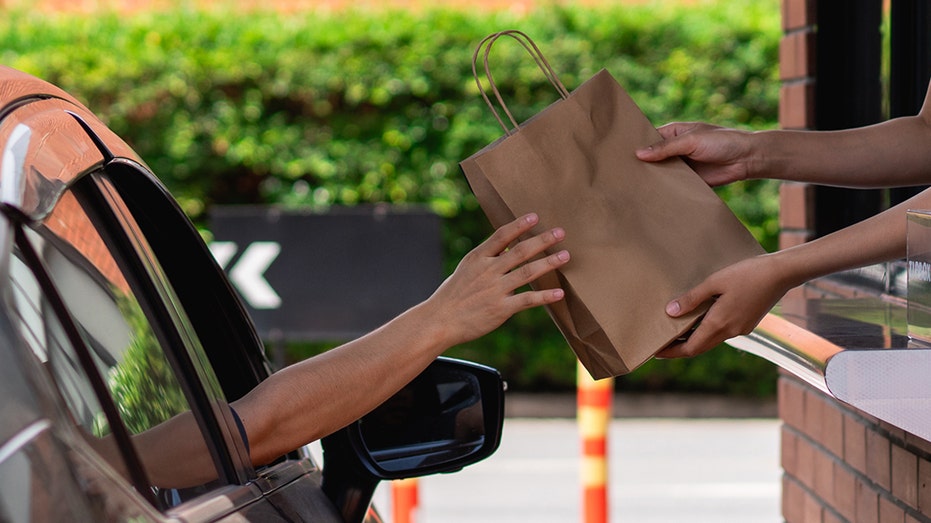
Degner also pointed out that restaurants sometimes lose money on individual items — a strategy known as a “loss leader” — and rely on add-ons like fries and drinks to turn a profit.
“A customer always has the option to buy the sandwich by itself, resulting in a potential loss for the restaurant,” Degner added. “This is far from a deceptive practice on the part of fast food outfits, and consumers have a multitude of choices and motives when pulling up to a drive-thru.”
Read the full article here