




Across Europe, pride rarely comes from a single source, and the strength of Europeans’ pride varies even more from country to country.
ADVERTISEMENT


ADVERTISEMENT
Arts and culture, history, food, and politics were among the themes mentioned by respondents in nine EU member states, out of 25 countries, in a Pew Research Centre study asking what makes people proud of their homeland.
Where is pride in arts and culture most common?
When it comes to pride in cultural heritage, including customs and traditions, national symbols, art and architecture, Italy stands out.
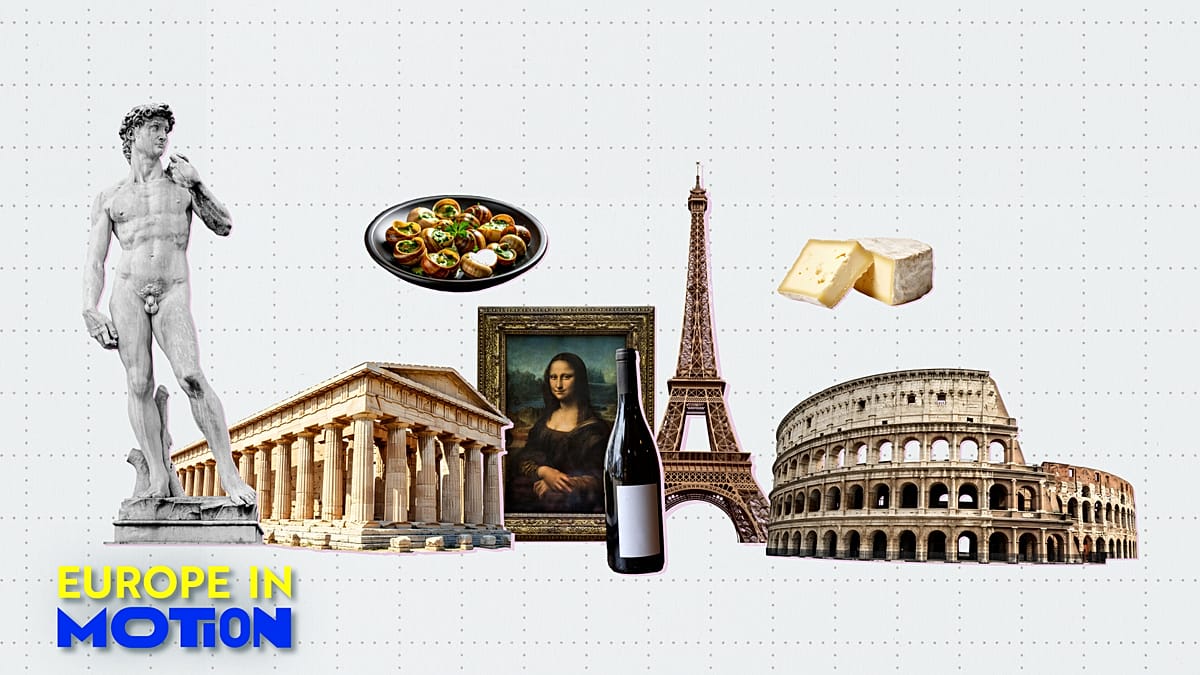
About four in 10 Italians say they are proud of Italian arts and culture, praising its Renaissance heritage and iconic architecture.
This is the top source of national pride for Italians, and compared with all other surveyed countries, people in Italy are the most likely to list arts and culture as a source of pride.
But holding the arts and culture in high regard is not limited to Italy: in France, a quarter of adults do the same and praise the know-how of its artists, such as the “craftsmen and women who rebuilt the Notre Dame” cathedral.
The country also stands out as one of the countries where people are most likely to express pride in their food, mentioning their cuisine and their ability to “enjoy good wine and cheese”.
The national motto “Liberty, Equality, Fraternity” is another thing the French take pride in. About two in 10 French people are proud of the level of freedom in their country, including their “ability to complain”.
Pride in history and people
Greece leads in historical pride, with 37% highlighting their ancient civilisation, philosophers and the heroism of their ancestors.
In addition, just more than one in 10 Greeks is also proud of their people, describing them as “hospitable and warm”.
It’s a familiar theme in southern Europe: Spaniards are the most proud of the people of their country (32%). They mention the solidarity among the public, as well as how “hardworking” and “welcoming” their fellow citizens can be.
In Hungary, the feeling of pride is divided: 23% say they are not proud of their country, while 21% praise their history and 20% have their people in high regard.
Hungary stands out as one of only a few countries where negative responses are as common as the most popular sources of pride.
Poland’s pride lies in its heritage and history, including its fight for independence and role in international affairs.
Poles are also proud of the people in their country, praising their diligence and hard work.
Where are people proud of their political system and economy?
The political system is a common source of national pride in several high-income countries, especially Sweden and Germany.
In fact, 53% of Swedes say they are proud of the way their country is governed — the largest share to name a single source of national pride in any country surveyed.
Germans are also more likely to say they are proud of their country’s system of government than anything else. Several claim their democracy is “the best” in the world.
Meanwhile, around two in 10 Germans and Dutch also say they are proud of their economy and the services provided by their government, such as healthcare, education and infrastructure.
People who are proud of their government services mention not only what benefits them personally, but also what helps the most vulnerable in their country, according to the survey.
Read the full article here