



Published on
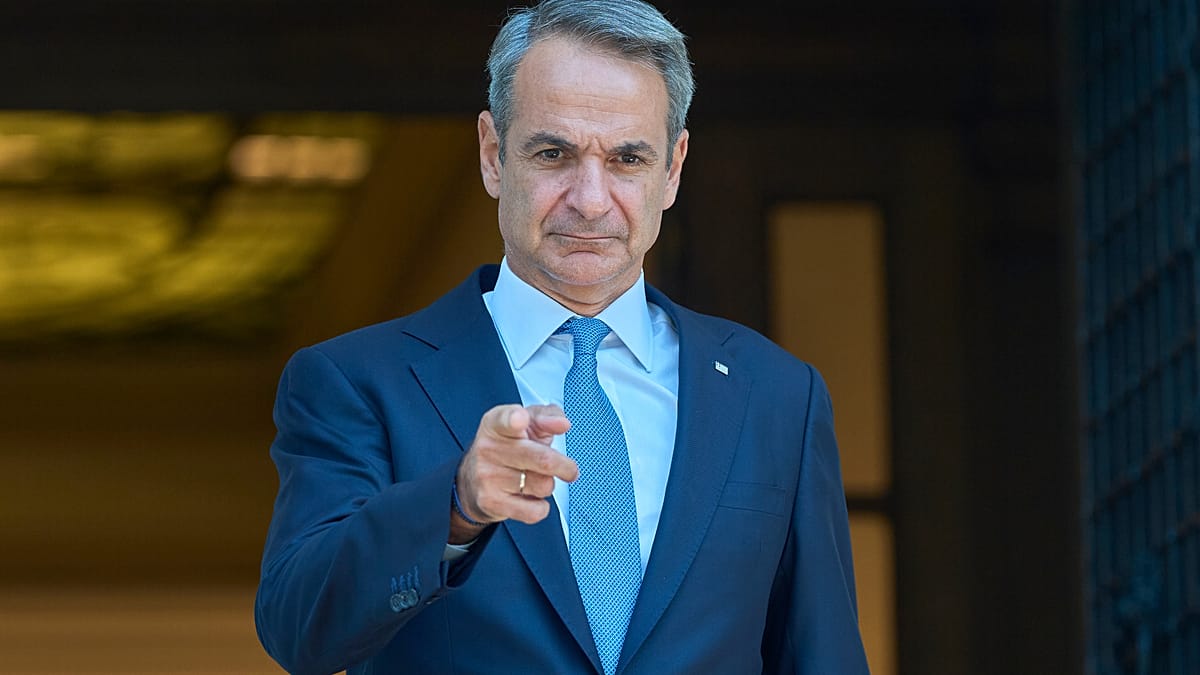
Greek Prime Minister Kyriakos Mitsotakis is calling on the European Commission to “take action” in giving national governments more fiscal room to shield households and businesses from a renewed energy-price shock, according to a letter seen by Euronews.
ADVERTISEMENT

ADVERTISEMENT
“We need more breathing room to protect our citizens and businesses (…) We must find the additional necessary flexibility within the Economic Governance Framework to allow Member States to take additional support measures (…) while safeguarding fiscal sustainability,” reads the letter dated 30 September.
Addressing Commission President Ursula von der Leyen and Eurogroup President Kyriakos Pierrakakis, Mitsotakis said that Europe’s latest energy crisis is lasting longer than expected, with increased attacks on energy facilities in the Middle East threatening to turn it into both an economic and political challenge for Athens.
Greece has the largest national debt among the 27 EU member states. While the country’s economy is growing, a wave of generous government subsidies and sweeping tax cuts is making it much harder to chip away at its massive national debt.
To help families cope with rising costs, Athens has been handing out hefty cash aid for energy bills, fuel and farming. At the same time, Mitsotakis has slashed income and property taxes to please voters and jump-start businesses ahead of parliamentary elections slated for 2027.
Artificially lowering energy prices
Several EU countries have already spent billions of euros in tax cuts and subsidies to shield against skyrocketing prices. But governments are reaching a tipping point when “there is no money”, as the Belgian Prime Minister Bart De Wever bluntly put it when he ruled out broad measures to tackle rising energy prices.
The Greek leader pointed to sharp price increases since the United States and Israel launched a war against Iran on 28 February: EU gasoline prices before tax are up 53%, diesel 66%, while gas has risen from just over €30/MWh to around €70/MWh.
In most EU countries, electricity prices have exceeded €100/MWh over the past month, up from €42/MWh before the Middle East disruption, with some markets approaching or surpassing €200/MWh. Mitsotakis argued that the problem is no longer just energy costs but their knock-on effect on wider inflation and household affordability.
Greece is proposing that temporary national measures to support consumers and companies could, up to a certain limit, be excluded from the EU’s net-expenditure indicator, a government spending cap that sets limits on how fast a national government can increase its day-to-day budget.
It also proposes that governments be able to account for additional VAT revenues generated by unexpectedly high inflation linked to energy prices.
If the European Commission considers these measures, it would give governments more fiscal space to subsidise or otherwise support citizens and businesses without the same pressure from EU fiscal rules.
The Greek leader expects the request to be discussed at the gathering of energy ministers in Brussels later in October and at next year’s summit of EU heads of state and governments.
“It is not politically acceptable that the main course of action that has been proposed by the Commission so far is just to reduce energy demand. We need to have on the agenda a broader set of ideas that speak to the urgency of the current moment,” reads the letter.
Italian Prime Minister Giorgia Meloni also urged President von der Leyen to loosen fiscal rules, the Italian leader said on 30 September, according to local media.
Meloni has previously called for greater fiscal flexibility, as Italy has the second-highest national debt in the EU.
Read the full article here