


The Secretary-General of the Gulf Cooperation Council (GCC) has criticised Iran for disrupting trade in the vital shipping lane and for carrying out “barbaric attacks” on the group’s members.
ADVERTISEMENT


ADVERTISEMENT
“Iran started this and should be the one responsible for taking all the effect that comes back from its policies,” AlBudaiwi, who has led the GCC since January 2023, said on Euronews’ interview programme 12 Minutes With.
“Nobody has done this. The region has seen many wars before, many conflicts. The Strait of Hormuz was never used. They should be the ones responsible for taking the blame.”
Iran took steps to close the strait shortly after the US-Israeli strikes began in late February, including attacking ships using boats, missiles and drones and laying mines to discourage ships from attempting to get through.
The two-week-long US-Israel-Iran ceasefire agreed on 8 April was supposed to resume navigation through the Strait of Hormuz.
However, confusion set in as Iran announced that under the deal, it would start charging ships for Strait passage together with Oman, and that navigation would only be possible via coordination with Iran’s armed forces.
The US responded by proposing that it would also set up tolls for ships passing the strait and invited European countries to join.
The Trump administration has since begun blockading Iranian ports to economically pressure Iran to reopen the Strait and bring it back to the negotiating table in Pakistan.
AlBudaiwi believes dialogue will be the only solution to the crisis with Iran and its proxies, but that the ball is firmly in Iran’s court to meet certain conditions.
“We know that Iran has to implement everything that is asked of it to achieve this success for the negotiations,” he said.
“We hope that not only in the escalation in our region, but all over the world, that everybody uses discussion and dialogue and negotiation to solve problems, not the use of force, not implementing a sanction or whatsoever. This is where we need to go to, using dialogue,” he added.
Since the war began, the Trump administration has believed that this would be a brief conflict resulting in the overthrow of the Islamic Republic regime and ending the threat of Tehran securing nuclear weapons. The strikes, which have killed Supreme Leader Ali Khamenei and thousands more, including officials, military and civilians, have been unsuccessful in achieving these aims.
In late March, Trump said he was “interested” in asking Arab countries to pay for the war as well. But AlBudaiwi indicated Iran should foot the bill. “The side that should take care of the cost is the one that caused all this damage, which was the reason behind the setback that the region is going through now.”
The Secretary-General insisted that the GCC has an “excellent relationship with the United States”, describing it as “a strategic partnership”. He said that the GCC had held discussions with the US government regarding ongoing talks to end the conflict.
“Everybody is trying to do their best to convince the Iranian regime to refrain from these attacks and to go back to the talks and to implement what is needed from them from the international community, especially on their nuclear programme,” he said. “Their programmes on missiles and drones, and their support to proxies all over the Arab world.”
“Any engagement has to involve everybody in the GCC and other players. In order to achieve that long-lasting stability, peace and security that we are all eager to achieve.”
Israel-Lebanon talks
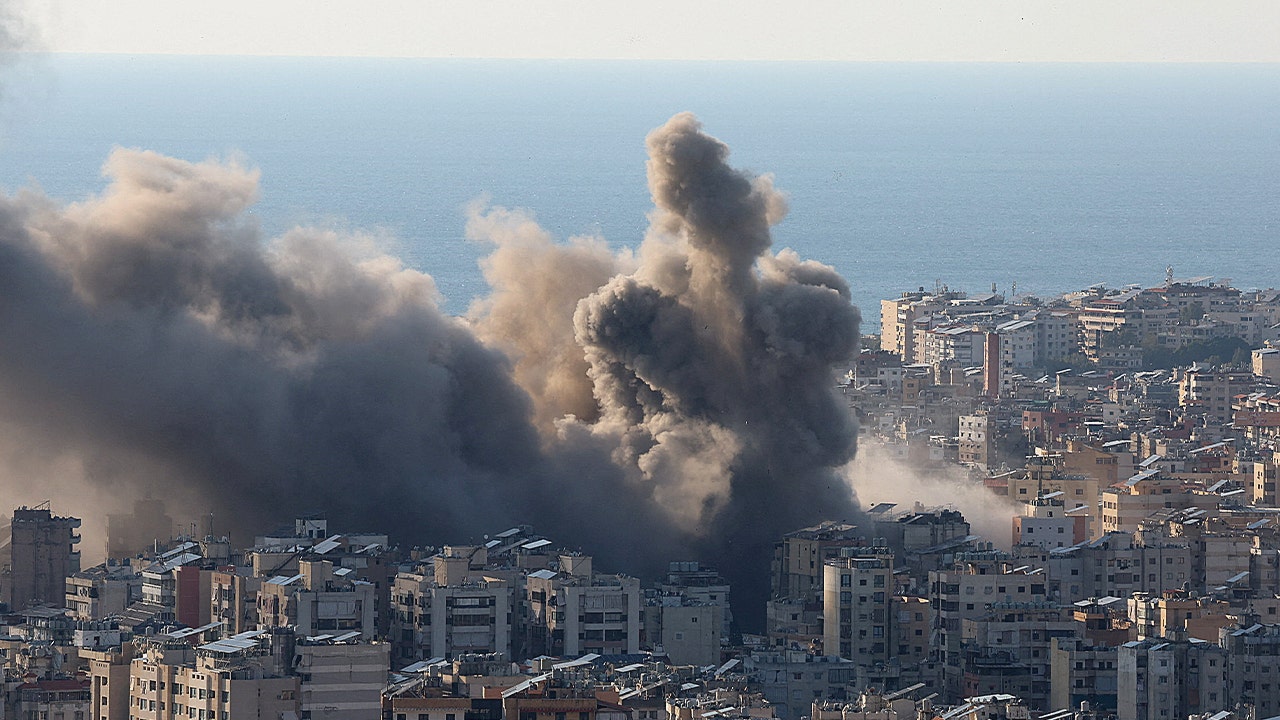
Parallel to the conflict in Iran, Israel has been carrying out strikes against the Shia paramilitary group Hezbollah in South Lebanon, straining the fragile US-Israel-Iran ceasefire. Iran has criticised the strikes against its proxy, calling them a “grave violation” of the deal brokered by Pakistan which they argue covered Lebanon too.
Direct peace talks between Israel and Lebanon resumed for the first time in decades on 14 April and are set to continue at a higher level today. AlBudaiwi said he hopes that they don’t “reach a stage where the Lebanese people don’t feel pressured, don’t feel that they were forced to do something they don’t want to do”.
“It has to be win-win. Deal for everybody, especially for the Lebanese people,” he said, adding that the GCC believes the current Lebanese government is working hard to bring their country back and disarm Hezbollah.
Hezbollah, which is also a political party in Lebanon, with two cabinet ministers and several MPs, has slammed the negotiations and warned it would not be bound by their outcome.
Recovery
The Gulf Cooperation Council (GCC), a political, economic, and security union comprised of six members, has been hit hard by Iranian strikes, and its members’ economies rely on the Hormuz Strait to export a range of crucial resources, including oil and gas, fertilisers and helium.
In March, the IMF downgraded the GCC’s economic growth forecast by 1.8 percentage points to 2.6% because of Iranian strikes in the region and the related disruption to trade, setting back their economies by a year.
Yet AlBudaiwi argues the GCC’s members, which include Bahrain, Kuwait, Oman, Qatar, Saudi Arabia, and the United Arab Emirates (UAE), are well-positioned to deal with the consequences.
“There will be effects, there will be repercussions, but we’re dealing with this in a very professional way that will help us get out of this setback as soon as possible,” he said.
Founded in 1981, the GCC promotes cooperation in trade, energy, and regional stability, aiming for economic integration and unified policies. The war with Iran has prompted intensified cooperation among its members on security too; connecting defence systems, sharing intelligence, training and coordination in a deal agreed in September last year.
Read the full article here