

Published on •Updated
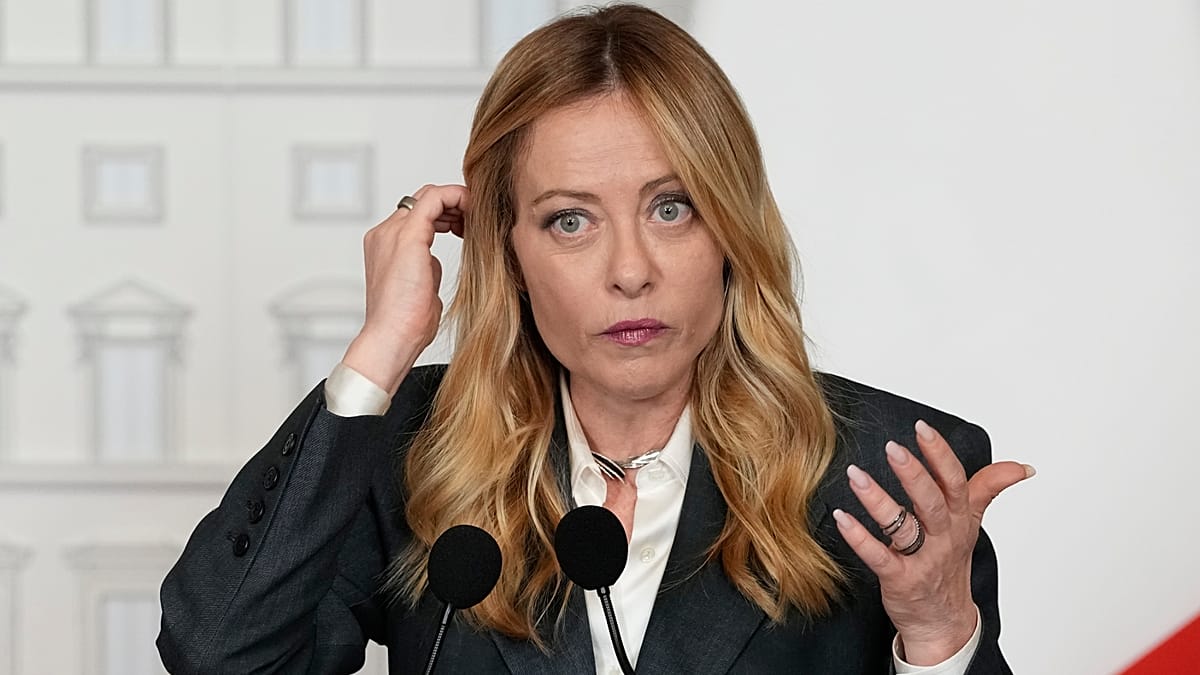
Italian Prime Minister Giorgia Meloni has urged the European Commission to relax fiscal rules for households and industries struggling with soaring energy costs, arguing that energy security should be treated with the same urgency as defence spending.
ADVERTISEMENT


ADVERTISEMENT
In a letter sent on Monday to Commission President Ursula von der Leyen seen by Euronews, Meloni said the EU should show the same “political courage” on energy as it has on defence.
“If we rightly consider defence to be such a strategic priority as to justify the activation of the National Escape Clause, then we must have the political courage to recognise that today energy security is also a European strategic priority,” reads the letter.
The appeal comes amid renewed fears of an energy shock as tensions escalate in the Middle East and concerns grow over potential disruptions to the Strait of Hormuz, a key global shipping route for oil and gas.
Across Europe, governments remain wary of a repeat of the energy crisis that followed Russia’s invasion of Ukraine, which triggered factory shutdowns, soaring inflation and emergency state subsidies.
Meloni argued that the EU cannot ask citizens to support increased defence spending while appearing indifferent to the financial pressure faced by households and businesses.
According to the Italian prime minister, security should not be measured solely in military terms, but also by whether factories can continue operating, families can afford energy bills and governments can maintain economic stability.
At the centre of Rome’s request is the EU’s National Escape Clause, adopted on 8 July, which allows member states temporary fiscal flexibility to boost defence spending under exceptional circumstances.
Meloni said Brussels had already shown a willingness to loosen budget rules in response to Russia’s war in Ukraine and growing concerns over Europe’s military preparedness. Italy is now seeking similar flexibility for emergency energy measures.
The prime minister, whose conservative Brothers of Italy party leads the governing coalition, is also facing uneven public support for higher defence spending at a time when many voters remain focused on living costs.
“We cannot justify in the eyes of our citizens that the EU allows financial flexibility for security and defence strictly understood and not to defend families, workers and businesses from a new energy emergency that risks hitting the real economy hard,” the letter states.
Italy has the second-highest debt-to-GDP ratio in the EU after Greece, limiting Rome’s room for large-scale subsidies under existing fiscal rules.
Meloni also suggested that a lack of greater flexibility on energy costs could complicate Italy’s support for the EU’s Security Action for Europe (SAFE) programme, the bloc’s €150 billion joint borrowing mechanism aimed at strengthening defence capabilities.
SAFE is intended to help member states boost military investment and meet more ambitious NATO spending targets.
“In the absence of this necessary political coherence, it would be very difficult for the Italian government to explain to the public a possible recourse to the SAFE programme under the conditions currently envisaged,” Meloni wrote.
Italian Defence Minister Guido Crosetto said on 14 May that he had requested clarification from the Treasury on whether Italy would participate in the EU weapons procurement fund, noting that Rome had until the end of the month to decide whether to join the scheme.
Read the full article here