

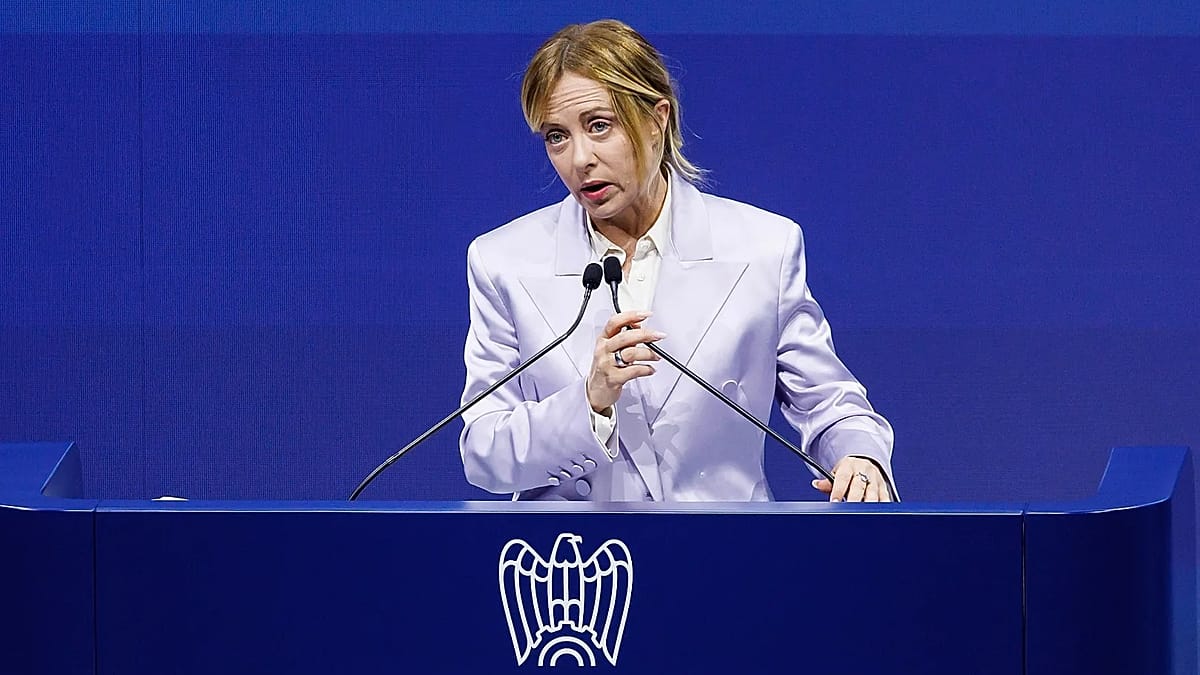
Italian Prime Minister Giorgia Meloni has ramped up her criticism of Brussels in recent days, pushing for greater fiscal flexibility as the energy crisis weighs on the Italian economy and the country heads into local elections.
ADVERTISEMENT

ADVERTISEMENT
During the general assembly of Confindustria, Italy’s main business association, Meloni openly attacked the “current structure” of the European Union on Tuesday.
“A bureaucratic behemoth that has all too often sacrificed competitiveness, growth and strategic vision on the altar of ideological and technocratic approaches, thereby contributing to the continent’s gradual economic and geopolitical decline,” she said.
The Italian prime minister appeared to double down on her criticism of the EU’s excessive red tape, its “unreasonable” approach to the green transition, and its failure to act as a strategic actor in an international setting beset by multiple crises.
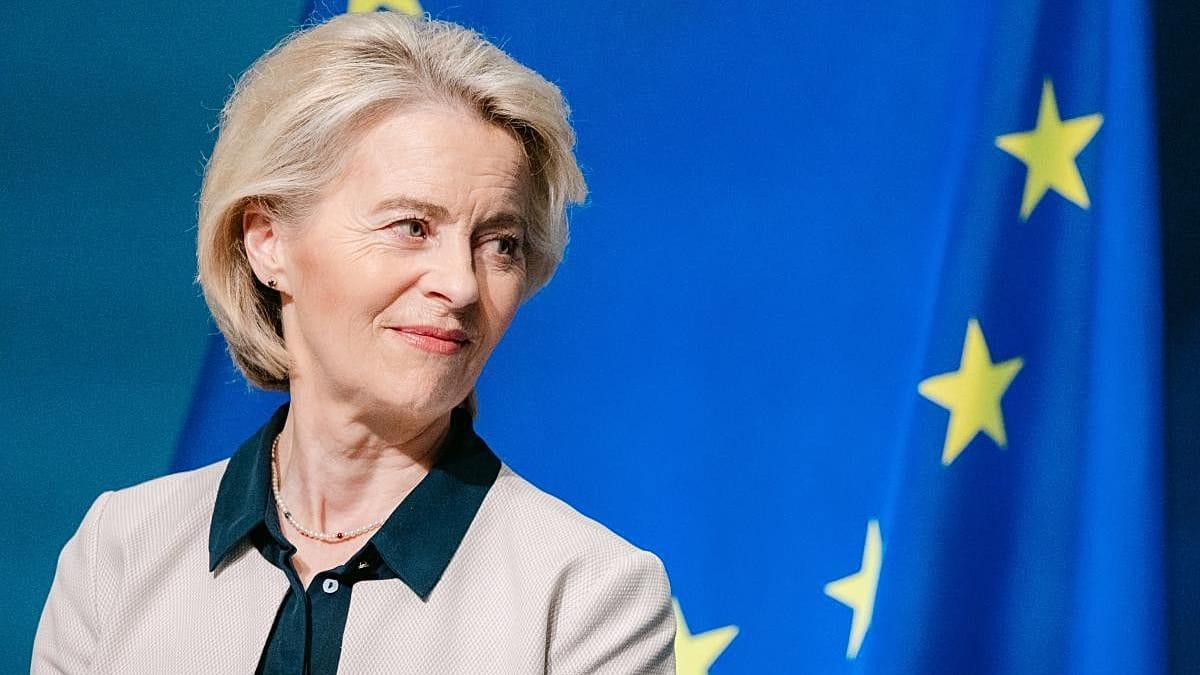
Meloni had already made headlines across Europe last week with a letter addressed directly to European Commission President Ursula von der Leyen, demanding fiscal flexibility to tackle the ongoing energy crisis — similar to that recently granted for defence spending.
In response, European Commissioner for Economy Valdis Dombrovskis said on 22 May that the Commission was examining “existing flexibilities” within its fiscal framework to address the energy crisis. But he made clear that any flexibility must be financially sustainable and meet the principle of the triple T: temporary, targeted and tailored.
Among EU member states, there is still no consensus on how to manage the fiscal response to the energy crisis. The debate is expected to dominate the summer, including at the European Council meeting in Brussels on 18-19 June.
Domestic agenda
Italy is in the middle of local elections, which have put its major party leaders under campaign pressure. The first round was held on 24-25 May in most towns, with a potential second round due on 7-8 June.
In May, the centre-right scored a string of victories, winning mayoral races in several major cities, including Venice in the north and Reggio Calabria in the south.
According to recent polls by Ipsos, Meloni retains significant support at home, despite her government’s defeat in a key referendum in March on justice reform — with nearly 54% voting against.
Italy faces general elections next year, and EU-bashing is a perennial fixture of Italian campaigns. For Rome, electoral campaigning is increasingly a permanent state of affairs.
In this context, Meloni’s more combative stance towards Brussels is also laying the groundwork for her push to secure greater flexibility on public spending from the European Commission.
For Nicola Procaccini, a senior MEP in Meloni’s right-wing party Brothers of Italy, the PM’s speech made a serious contribution to making the EU more pragmatic, authoritative and respectful of national identities.
“Being pro-European today does not mean passively accepting every decision made by the EU institutions, but having the courage to call for a Europe that is more practical, less ideological and more attuned to the needs of its citizens, businesses and member states,” Procaccini told Euronews.
The question of how far European governments should be allowed to deviate from the Stability Pact is expected to land on the table at the European Council meeting, where Rome is unlikely to find much sympathy from Nordic countries.
High debt, high costs
Italy is under considerable economic pressure. As a heavily indebted country with some of the EU’s highest energy costs, its strong industrial base faces growing strain if Gulf supply routes remain closed in the coming months.
Italy remains largely dependent on fossil fuels. The European Commission has projected a slowdown in growth, driven by energy-led inflation, cutting its forecast for GDP growth in 2026 from 0.8% to 0.5%.
One official in the banking sector argued that Meloni’s battle in Brussels over fiscal flexibility for energy costs goes far beyond standard EU budget arithmetic.
The official added that the outcome will weigh heavily on her domestic credibility ahead of elections, while noting that whether this political capital is enough to secure meaningful concessions on energy policy remains an open question.
“Meloni’s remarks at Confindustria sounded more like propaganda than a serious attempt to address the country’s problems, starting with energy costs,” Brando Benifei, an MEP of Italy’s main opposition party, the centre-left Democratic Party, told Euronews.
“She prefers to pick fights with Brussels instead of helping build European solutions. That only weakens Italy’s position at a time when we need stronger common investment in cohesion, industry, agriculture and jobs,” Benifei added.
Italy has also been the biggest beneficiary of the EU Recovery Plan — the post-pandemic stimulus package — receiving nearly €195bn in grants and low-interest loans. But that instrument is set to wind down in 2027, leaving Rome with less financial room to absorb ongoing economic shocks during an election year.
If the war in Iran is not resolved and energy costs remain elevated through the winter, Meloni will face mounting pressure to shield consumers and businesses from the fallout — a task made harder by the fiscal constraints she is fighting to loosen.
Vincenzo Genovese contributed to the reporting
Read the full article here