


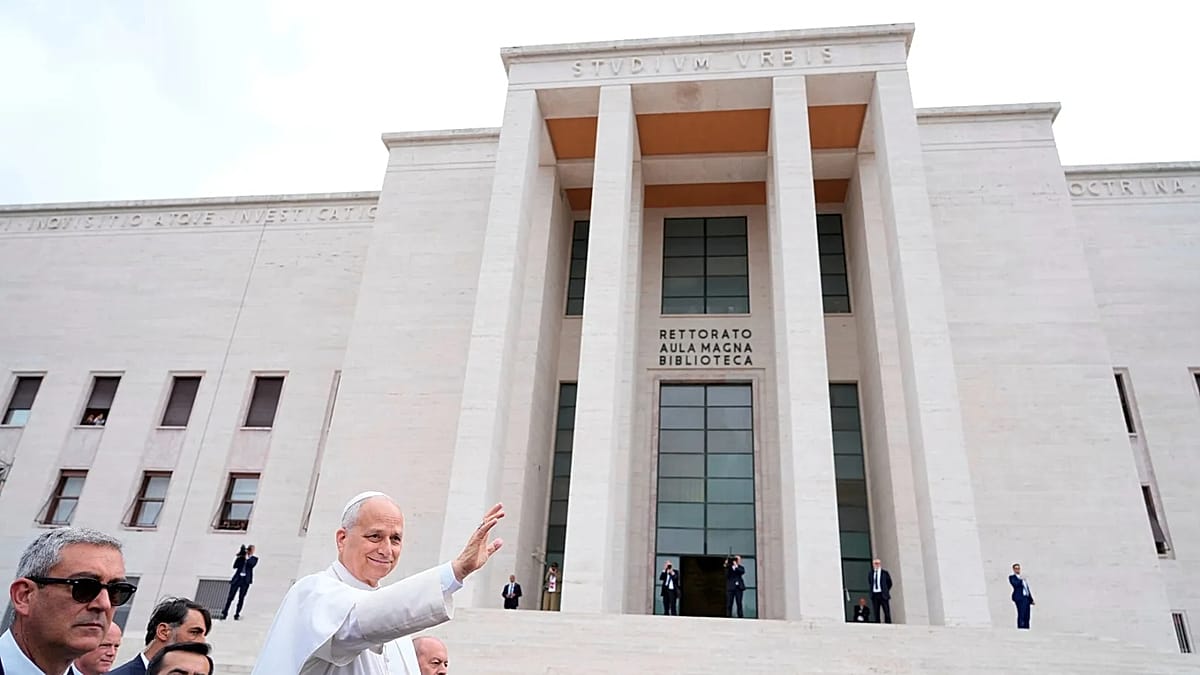
Pope Leo XIV denounced how investments in artificial intelligence and high-tech weaponry were leading the world into a “spiral of annihilation” on Thursday, as he called for peace in the Middle East and Ukraine during a visit to Europe’s largest university.
ADVERTISEMENT

ADVERTISEMENT
The pontiff’s speech at Rome’s La Sapienza University marked the first time a pope has visited the campus since Pope Benedict XVI called off a planned speech there in 2008 in the face of protests from faculty and students.
The American pope was warmly welcomed on Thursday, including by some of Sapienza’s newest students: Young Palestinians who arrived in Italy this week on a “humanitarian corridor” from Gaza to continue their studies at the university.
The Italian government, working with Catholic organisations, has brought hundreds of Palestinians to study and receive medical care in Italy since the Israel-Hamas war in Gaza began in 2023.
The pope met some of the Gaza students during a brief greeting at the campus chapel and again after his speech in the main lecture hall of the university, which was founded by Pope Boniface VIII in 1303.
In his speech, Leo denounced how military spending had increased dramatically this year, especially in Europe, at the expense of education and healthcare, while “enriching elites who care nothing for the common good.”
He called for better monitoring of how AI was being developed and used in military and civilian contexts “so that it does not absolve humans of responsibility for their choices and does not exacerbate the tragedy of conflicts.”
“What is happening in Ukraine, in Gaza and the Palestinian territories, in Lebanon, and in Iran illustrates the inhuman evolution of the relationship between war and new technologies in a spiral of annihilation,” he said.
The pope said education and research must move instead in the opposite direction that values life “the lives of peoples who cry out for peace and justice.”
Pope Leo XIV has identified AI as one of the most critical matters facing humanity, especially its application in warfare and everyday life.
They are themes he’s expected to explore more fully in his first encyclical, due to be released in the coming weeks.
Additional sources • AP
Read the full article here