




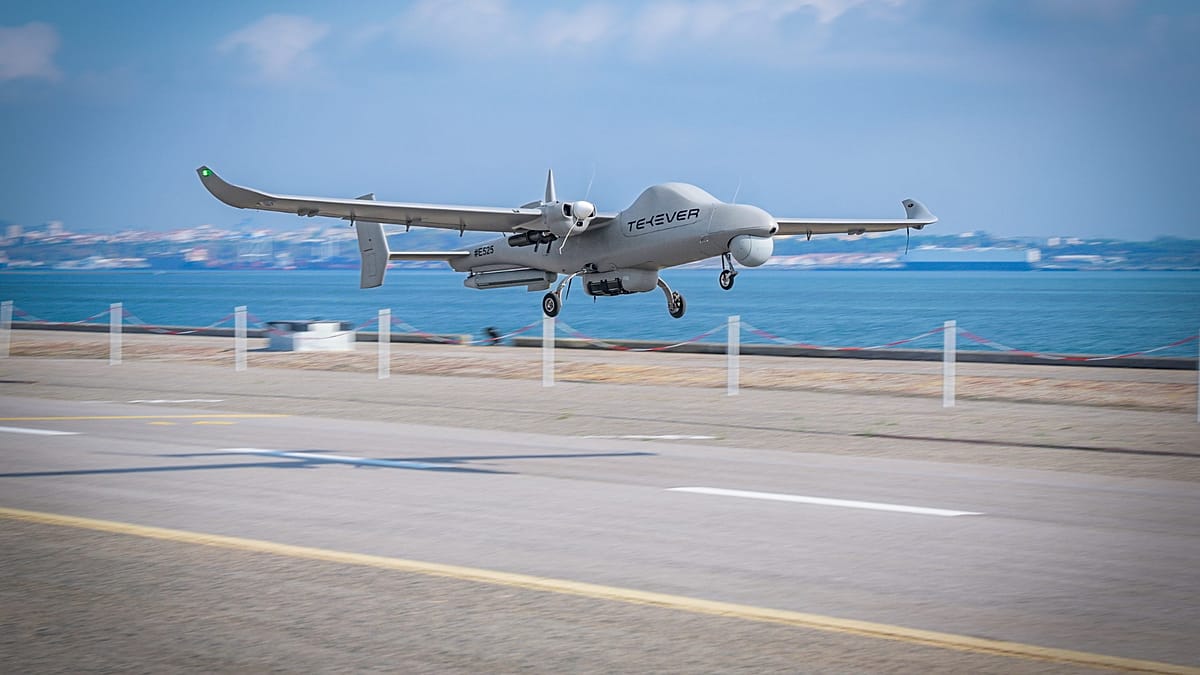
Portuguese technology company Tekever is to supply AR5 drones to the Portuguese Air Force (FAP) for maritime surveillance missions. The autonomous platforms are scheduled for delivery in early September.
ADVERTISEMENT

ADVERTISEMENT
In a statement, the company, which has become an important player in the unmanned systems industry, especially when it comes to exporting drones to Ukraine, announced the signing of a contract with the FAP that also includes “operator training, as well as the supply of the Ground Control Station and the ATLAS mission system”.
With a wingspan of almost 8 metres and weighing close to 200 kilos, purpose-built for maritime missions thanks to its robustness and ability to fly at higher altitudes, the AR5 will enable the FAP “to strengthen its operational autonomy on long-range missions”.
These missions include “maritime surveillance, security and defence, monitoring of the Exclusive Economic Zone (EEZ) and support for missions in the public interest”, which in turn covers “the Special Rural Firefighting Device (DECIR), coastal security and environmental protection”.
Portuguese-made drones
In the statement, Tekever explains that in the first phase, it will train Air Force personnel until September so they can operate the systems as soon as they are delivered. Then, from October, a “second phase of training” will take place to consolidate “full operational readiness and the development of new skills within the operating teams”.
Tekever has not disclosed either the scope of the contract or the amount invested by the FAP. However, an order from the Ministry of Defence (source in Portuguese), dated November last year, authorised the Air Force to purchase an unmanned aerial system for maritime patrol with an overall maximum budget of just over 7.79 million euros, to be financed through the Military Programming Law.
Quoted in the statement, Lieutenant Colonel Luís Henriques, Operational Coordinator of the AR5 Working Group of the Portuguese Air Force, argues that “the integration of the AR5 system represents a significant improvement in the operational capabilities of the Portuguese Air Force.”
“This platform meets current surveillance, security and defence requirements, offering greater range, endurance and operational flexibility,” he says, stressing that its integration “will strengthen the nation’s ability to monitor the Exclusive Economic Zone and support a wide range of missions in the public interest, contributing to an Air Force better prepared to respond to current and future challenges.”
For his part, Pedro Petiz, Director of Strategic Development at Tekever, points out that this contract “puts an autonomous capability developed and produced in Portugal” to work protecting the country’s airspace and maritime territory. “In addition to supplying the aircraft, we will work with the Portuguese Air Force to consolidate and develop its own operational capability, which will strengthen national autonomy, readiness and responsiveness,” he adds.
‘Information-gathering’ missions
The company describes the AR5 as a “fixed-wing unmanned aerial system, medium-altitude and long-endurance, designed for information-gathering missions over large areas”. With a flight endurance of up to 20 hours and able to carry up to 50 kg of payload, the system “incorporates satellite communications (SATCOM), enabling operations beyond radio line-of-sight (BRLOS).”
Tekever systems have been gaining prominence on the market, having logged thousands of flight hours on coastal patrols, persistent surveillance, border protection, detection of suspicious activities, environmental protection and search-and-rescue missions.
The company has been signing contracts with various national and international entities, including the United Kingdom Home Office and the European Maritime Safety Agency (EMSA). Tekever systems are also currently in operation in Ukraine, where they undertake surveillance and reconnaissance missions in an operational environment.
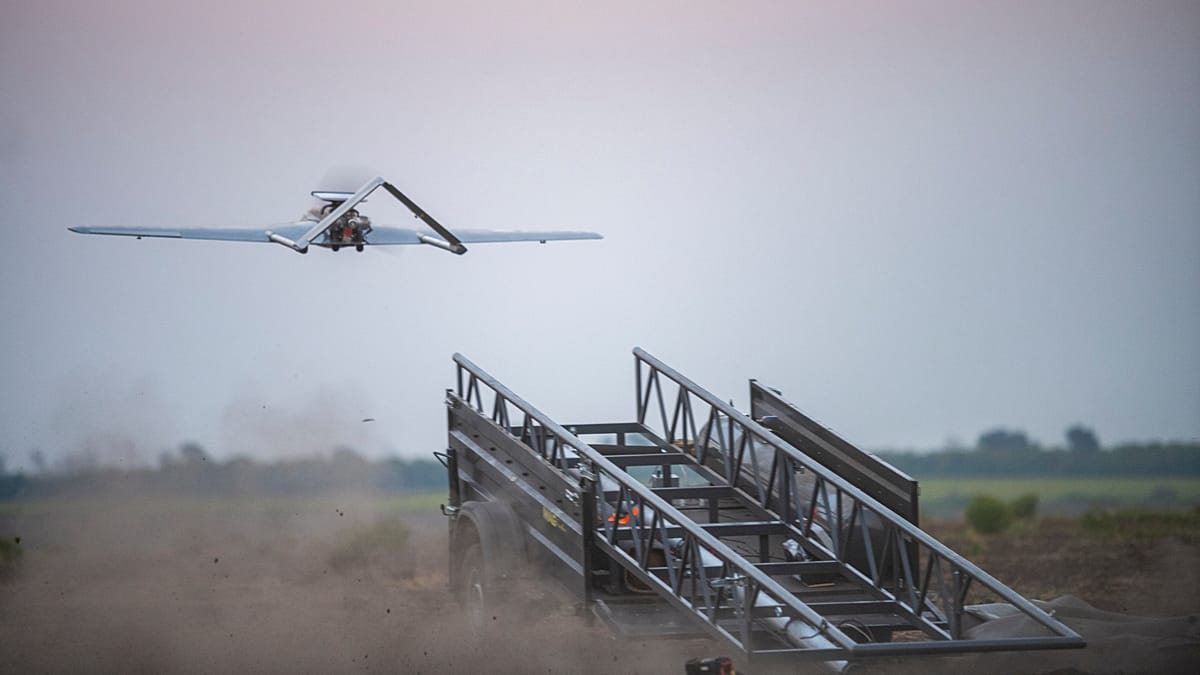
Recently, one of the company’s drones made headlines after managing to catch Russian forces off guard in the border region of Bryansk. The Portuguese-made AR3 reconnaissance drone, operated by the Ukrainian army, was shot down by Russian forces, then recovered and transferred to a research institute, where its technical and engineering features are expected to be studied.
Read the full article here