





Published on •Updated
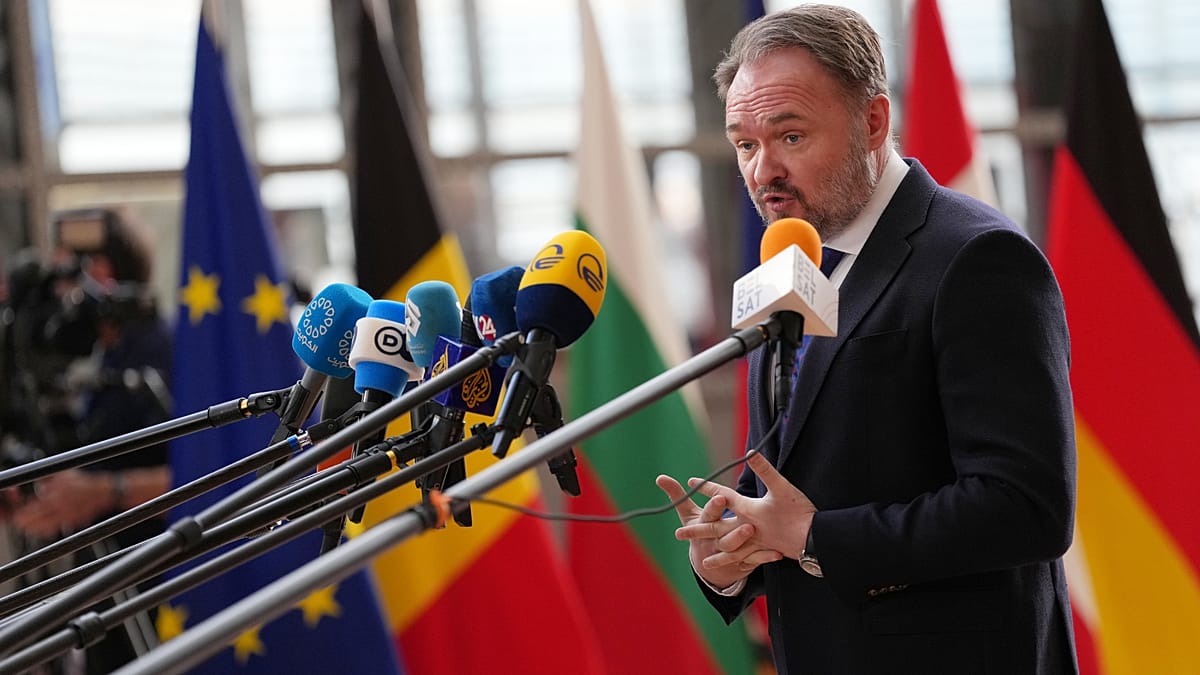
The European Union is contemplating a fresh emergency oil-reserve release, with Energy Commissioner Dan Jørgensen telling Euronews strategic stocks could be drawn down again to bolster supply and ease mounting price pressures.
ADVERTISEMENT


ADVERTISEMENT
The war in Iran and reduced refining capacity have squeezed supply, driving a sharp rise in prices for companies and consumers. Diesel prices at the pump have surged over the past month, prompting the US to pressure EU member states to release emergency stocks in a move that could put an additional 120 million barrels on the market.
“We are discussing with all members of the International Energy Agency (IEA), not only the United States, when the right time is to release, because this is one of the opportunities that we have. We’ve used it before, and we’ll likely use it again,” the Danish commissioner told Euronews on Thursday.
US diesel has surged to $7 a gallon, while Brent crude has traded between $97 and $102 a barrel since late September — up $25 to $30 from pre-war levels.
Jørgensen said EU countries are discussing a coordinated release through the Paris-based IEA, although the decision ultimately rests with individual member states.
“We coordinate via the EU and our positions in the IAE. But this is a decision of each member state; do they want this or not?” he told Euronews.
“And this is something that is being discussed as we speak.”
An EU source told Euronews that the Commission held a call on Thursday with several countries, including the UK, to assess different scenarios.
Releasing reserves can quickly add diesel and other petroleum products to the market, potentially easing tight supplies. But emergency stocks are finite: once drawn down, they must be replenished, and governments may be reluctant to reduce their buffers while the geopolitical crisis remains unresolved.
The IEA said in August that global observed stocks had fallen by about 410 million barrels since the start of the US-Israeli war against Iran on 28 February, while tight diesel and jet-fuel supplies had pushed refining margins to record levels.
EU emergency stocks remain high and are available in the event of market disruption, although diesel and jet-fuel markets remain tight and prices elevated, according to the latest 2026 Eurostat figures.
The EU already participated in a major coordinated release in March, when the IEA oversaw the release of 400 million barrels. EU countries contributed roughly 20% of the total, although a significant portion had yet to reach markets as of last week.
IEA chief Fatih Birol urged EU countries to use the remaining March allocations at an informal meeting of energy ministers in Dublin on 29 September.
Read the full article here