

Just a few social media posts can lead people to form strong, lasting opinions on topics they know nothing about and crucially, those opinions are largely unaffected by whether the information is true or false.
ADVERTISEMENT

ADVERTISEMENT
According to a study published in May by researchers from Trinity Business School in Ireland and NEOMA Business School in France, after seeing as few as three to five consistent social media posts, users formed an initial opinion that stabilised rapidly, with additional information having little further influence.
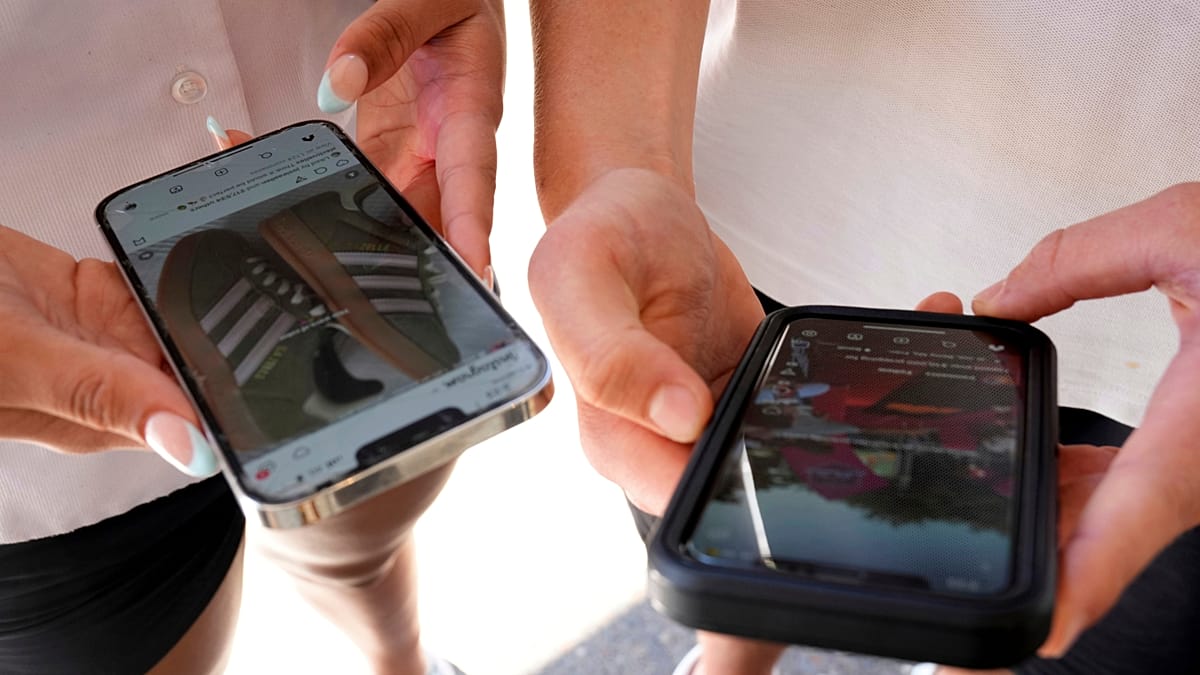
Researchers carried out their experiments on US-based participants, exposing them to Instagram-style posts on news topics with which they were not familiar.
“We found that the most trusted source people have is a celebrity expert, that combination,” Professor Ashish Kumar Jha from Trinity Business School told Euronews’ fact-checking team, The Cube. “So if there’s a celebrity doctor, someone who is a White House advisor and has millions of followers and is a doctor.”
The second most trusted social media sources identified by researchers were celebrities, and finally, people who had professional titles in their biographies, such as “Dr.”
“The thing is, anyone can have any title on Instagram, can call themselves a professor or doctor”, said Kumar Jha. “During the COVID-19 pandemic, no one knew anything about vaccinations in January or February of 2020.”
“By March 2020, you had millions of people who were self-professed experts and fighting for their positions that we think vaccination is good or we think the vaccination is bad,” he added. “So how does it happen? How do people become experts overnight?”
Researchers found that early opinions were largely insensitive to factual accuracy, but instead, they relied on mental shortcuts such as familiarity and coherence when processing information in fast-paced social media environments.
Once formed, these initial opinions persisted with time: even after several days, participants often retained their original stance. The study also found that people were more likely to engage with information that matched their initial views, while contradictory content was less likely to be believed, shared, or engaged with.
Kumar Jha said the threshold for people to start believing they are experts on a topic is “very low”, adding that “this leads to the next phase of information dissemination, which is misinformation and disinformation. People disseminate information when they believe in it.”
“Once you start believing you are an expert and thinking like that, you believe every other piece of information that is fact-checking or questioning your beliefs as an attack on your personality, as an attack on your core health beliefs, and your own beliefs get stronger and stronger, not weaker”, stated Kumar Jha.
As consumption of traditional news sources declines, social media content is plugging this gap. In June, the 2026 Reuters Digital News Report revealed that for the first time, social media and video networks became the single most widely used way of accessing online news worldwide. This developing trend had previously been in individual countries, rather than worldwide.
**”**If you are a news media organisation or fact-checking team and you want to provide the right information, you have to move early”, said Kumar Jha.
Read the full article here