



NEWYou can now listen to Fox News articles!
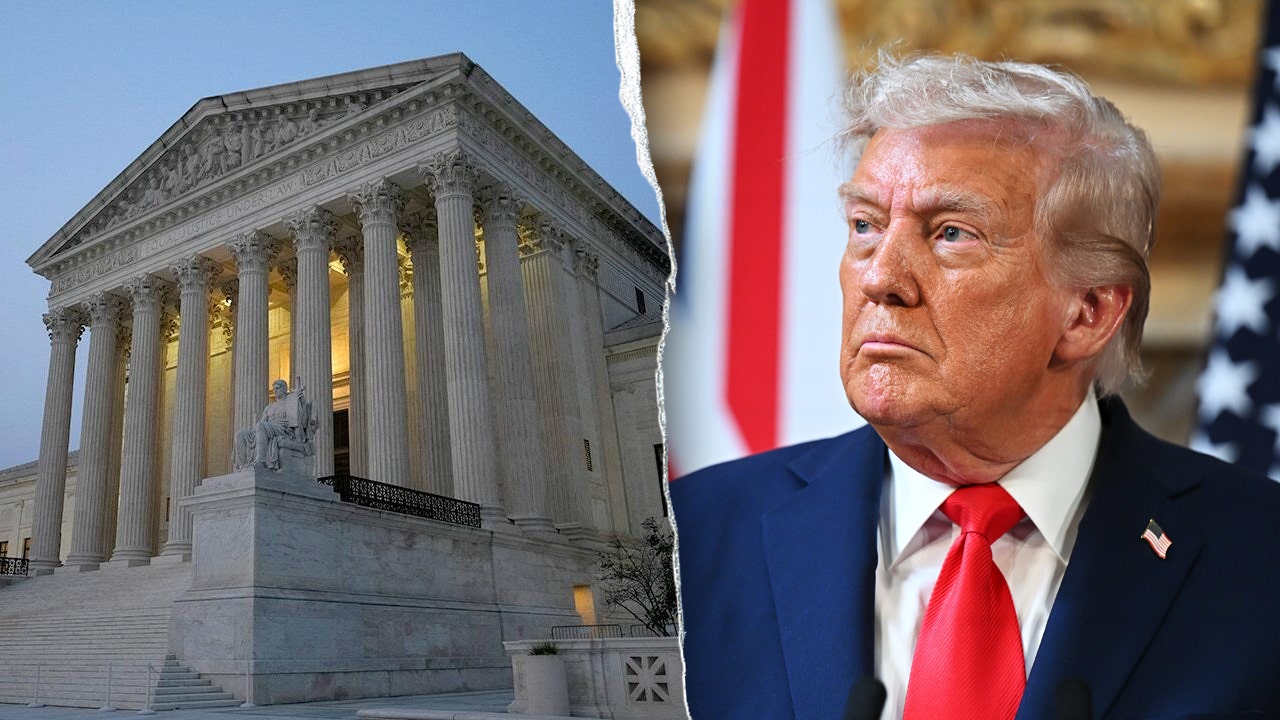
As the Supreme Court enters the final stretch of its term, a flood of closely watched decisions could determine not only the fate of several of President Donald Trump’s key policy priorities but also the scope of presidential authority for years to come.
Around the marbled halls and chambers, the final weeks of June are often known as “flood season,” the annual rush to complete opinions before the justices leave Washington for their summer recess. The nine justices and their law clerks are on tight, self-imposed deadlines to write and circulate final drafts of opinions in cases big and small.
This year, 23 cases remain unresolved after the court heard arguments in nearly 60 disputes during the term. Among them are four appeals involving executive actions by Trump, two election-related disputes and separate questions involving gun rights and transgender rights.
Several of the remaining disputes share a common thread: how much power a president can exercise over federal policy and the executive branch. The rulings could significantly affect Trump’s ability to advance his second-term agenda, particularly on immigration and government oversight, while further defining the boundaries between the White House, Congress and the courts.
TRUMP’S PRESIDENCY FACES CRUCIAL TESTS AS SUPREME COURT BEGINS PIVOTAL TERM
The court’s last day before its traditional summer recess is still unknown, even to its nine members, but they hope to finish up by month’s end. However, given the divided court’s compressed workload, that is no guarantee.
Here are 11 remaining opinions that we are closely watching.
Trump v. Barbara
Arguably the most closely watched Supreme Court case remaining to be decided, this challenge centers on President Trump’s Executive Order 14160, an effort to limit automatic citizenship for children born to parents who entered the country illegally.
The case could define the limits of presidential power by determining whether a president can change a longstanding interpretation of citizenship law without Congress.
Trump made history by personally attending oral arguments in March, becoming the first sitting president to do so — but that did not seem to matter.
The Supreme Court openly pushed back against the administration’s sweeping efforts to restrict who can be called an American, expressing varying levels of skepticism about the claim a citizenship “privilege” has been historically abused and wrongly granted to those whose parents were in the country illegally or temporarily.
A ruling against Trump would affirm the longstanding legal, political and social consensus supporting the idea of granting automatic citizenship to all babies born in the country, regardless of their parents’ immigration or temporary visitor status.
INSIDE SUPREME COURT: HOW TRUMP HEARD BIRTHRIGHT CITIZENSHIP ARGUMENTS
Mullin v. Doe, Dahlia; Trump v. Miot
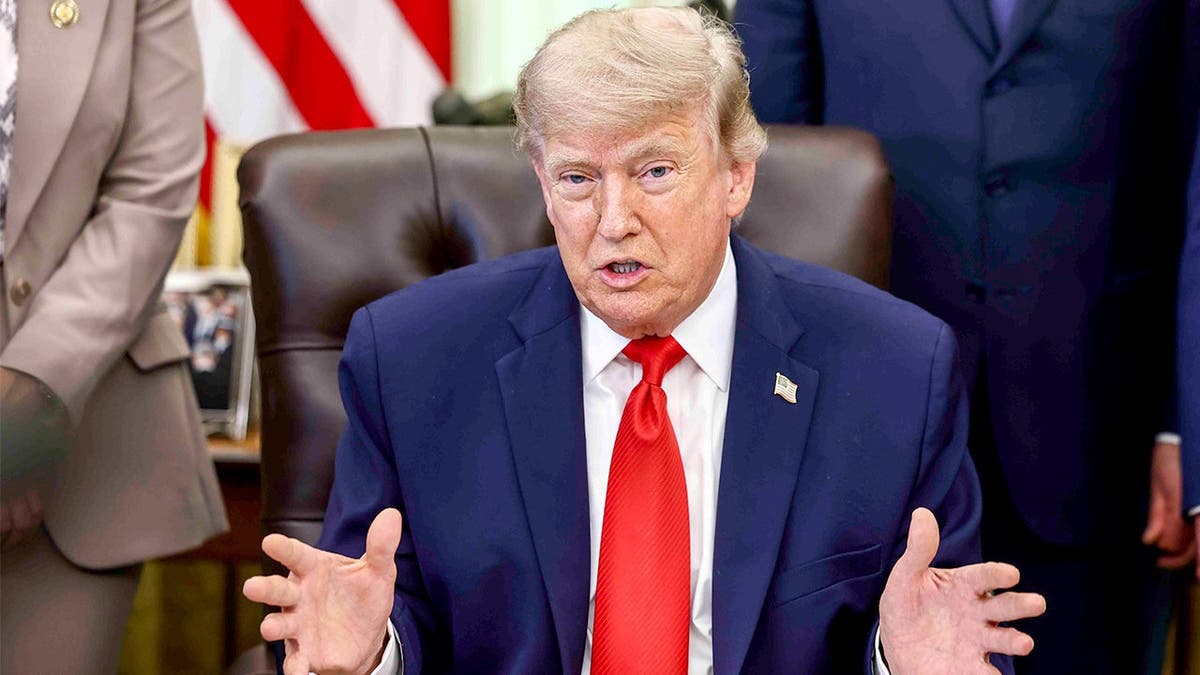
Immigration-related executive power is also at the center of Mullin v. Doe, Dahlia and Trump v. Miot, cases involving the administration’s effort to terminate Temporary Protected Status (TPS) protections from certain Haitian and Syrian migrants living in the U.S.
The TPS program currently covers roughly 1.3 million people fleeing war and natural disasters from 17 countries and allows them to live and work in the country for a limited time.
CHECKS AND BALANCES: TRUMP, SUPPORTERS SEEK TO PUSH BACK AGAINST ‘ACTIVIST’ JUDGES
The administration argues the Department of Homeland Security has broad discretion to end some Temporary Protected Status protections for migrants from certain countries, arguing protections are intended to be temporary. Migrant advocates counter that federal law requires specific procedures and allows courts to review those decisions.
The conservative court majority has signaled its support for the Homeland Security secretary’s discretionary power to revoke deportation protections for 13 countries on the TPS list.
SUPREME COURT PREPARES FOR MAJOR TEST OF PRESIDENTIAL POWER IN TRUMP EFFORTS TO FIRE FEDERAL RESERVE GOVERNOR
Trump v. Cook; Trump v. Slaughter
In Trump v. Cook, the justices are weighing whether Trump can dismiss Federal Reserve Governor Lisa Cook.
Based on January’s oral arguments, the court appears ready to give President Trump one of his biggest legal setbacks in office, offering strong support for Federal Reserve Governor Lisa Cook remaining in her leadership position — at least for now.
The questions of presidential power deal with whether Trump has broad unilateral executive authority to fire someone from the central bank, despite its special status as a stand-alone federal agency.
In arguments, most on the court seemed skeptical of Trump’s actions.
“That’s your position that there’s no judicial review, no process required, no remedy available?” Justice Brett Kavanaugh told the Justice Department’s Solicitor General D. John Sauer. “Very low bar for ’cause’ that the president alone determines? I mean, that would weaken, if not shatter, the independence of the Federal Reserve.”
But a separate case involving presidential firing authority, Trump v. Slaughter, could have even broader implications. Former Federal Trade Commission Commissioner Rebecca Slaughter is challenging her removal from the agency, setting up a direct test of a 1935 Supreme Court precedent set in Humphrey’s Executor v. United States that limits a president’s ability to fire members of independent regulatory commissions except only for “cause.”
A ruling favoring the administration could strengthen presidential control over agencies that regulate everything from communications and consumer safety to labor policy and financial markets, and a ruling in Slaughter’s favor could greatly restrict the president’s powers.
SUPREME COURT SHOWDOWN: TRUMP’S STRATEGY TO TEST LIMITS OF HIS POWER COULD SPELL DOOM FOR ADMINISTRATIVE STATE
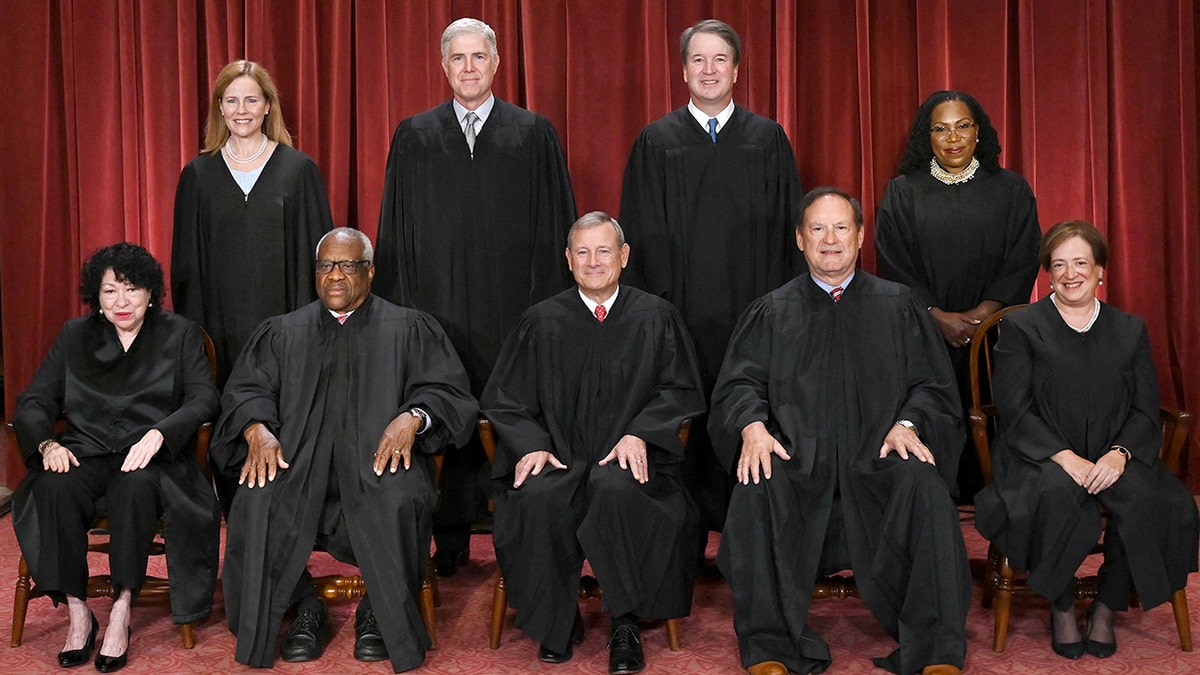
The stakes could be enormous for how the federal government is run. Independent regulatory agencies and boards help manage almost every aspect of American life — from transportation safety, labor relations and the environment to Social Security and finance. Agencies include the Consumer Product Safety Commission, the Federal Communications Commission and the Federal Reserve.
National Republican Senatorial Committee v. Federal Election Commission
At issue is a federal law that caps coordinated spending between political parties and candidates running for Congress and the White House.
The high court in recent years, led by Chief Justice John Roberts, has tossed aside congressionally enacted federal campaign spending limits.
THE BIGGEST SUPREME COURT DECISIONS OF 2024: FROM PRESIDENTIAL IMMUNITY TO OVERTURNING THE CHEVRON DOCTRINE
And the six conservative justices appear ready to do so again, and could upend a nearly quarter-century opinion limiting how the major political parties spend tens of millions of dollars, much of it going to television advertising.
The dispute underscores a divide over whether campaign spending restrictions intended to prevent corruption improperly infringe on free speech rights guaranteed by the First Amendment.
Watson v. Republican National Committee
At issue is a Mississippi law allowing election officials to count mail-in ballots received after Election Day, provided they were mailed on time.
SCOTUS CONSERVATIVES SIGNAL READINESS TO CURB LATE-ARRIVING MAIL BALLOTS
Mississippi is one of about 14 states, the District of Columbia and three territories that permit a grace period ranging from one day to several weeks during which regular ballots can be counted, so long as those ballots are postmarked on or before Election Day.
That is currently the case in California, where final results from the June 2 election may not be known for another couple of weeks or more.
The justices are deciding whether federal Election Day statutes preempt various state laws and may clarify exactly what “the election” means when it comes to the casting and receipt of ballots.
The outcome could rest with Roberts and Justice Amy Coney Barrett, who could cast the deciding votes.
Little v. Hecox and West Virginia v. B.P.J.
The court is also considering a pair of cases involving transgender athletes and school sports. In Little v. Hecox and West Virginia v. B.P.J., the justices are weighing whether state laws that restrict transgender girls and women from competing on female athletic teams violate the Constitution’s Equal Protection Clause or federal protections under Title IX.
Almost 30 states have laws limiting participation for transgender females who were designated male at birth, in both public school and college athletics, and officials say their restrictions are a matter of ensuring a level playing field and student safety.
SUPREME COURT TO REVIEW STATE BANS ON TRANSGENDER ATHLETES’ PARTICIPATION IN SCHOOL SPORTS
But lawyers for a high school sophomore and a college senior counter those prohibitions are clearly discriminatory, and that the issues should be about equality and dignity for every student, free from politics and misinformation.
The high court is examining whether the laws unconstitutionally discriminate on the basis of sex.
Wolford v. Lopez
The challenge targets a Hawaii law that prohibits individuals, including concealed-carry permit holders, from bringing firearms onto private property open to the public unless the owner has expressly granted permission.
This case could come down to whether property rights trump gun rights, and how those rights interact.
GUN RIGHTS ON PRIVATE PROPERTY DEBATED AT SUPREME COURT
A group of gun owners in Maui are challenging those default permission rules, arguing the law improperly makes it a crime to bear arms even where the owner of property accessible to the public is merely silent. They refer to these laws as “vampire rules,” a nod to the legend of Dracula, who could not enter a room without being invited.
But Hawaii officials told the high court the restrictions balance gun and property rights, citing a long tradition in the Aloha State of limiting all kinds of dangerous weapons, dating back to when it was a monarchy.
United States v. Hemani
A separate Second Amendment case still unresolved deals with the federal government’s law banning people with a “habitual” use of marijuana from legally keeping a firearm.
CLICK HERE TO DOWNLOAD THE FOX NEWS APP
The “guns and ganja” dispute centers on whether the widespread use of cannabis in recent decades — legal in some form in 40 states — makes criminalizing “mere possession” contingent on firearm ownership.
The same law was applied to former President Joe Biden’s son Hunter, who was convicted under Section 922(g)(3), which bars any “unlawful user of or addicted to any controlled substance” from possessing a firearm.
Read the full article here