



The Federal Reserve’s decision to raise interest rates last week may mark the first of several hikes aimed at taming stubborn inflation, and one central bank leader weighed in on where inflation may go from here.
Federal Reserve Bank of Richmond President Tom Barkin said in a speech before CFA Society Baltimore Tuesday that the “risks to inflation outweigh the risks to maximum employment. That’s why we raised rates.”
Barkin, who is a non-voting member of the Federal Open Market Committee (FOMC) this year, compared the Fed’s dual mandate between promoting maximum employment and price stability to raising children, saying “inflation is our troublemaker” and noting it’s been above the 2% target for five years, which contributed to the decision to hike.
“Where do we go from here? We are committed to returning inflation sustainably to our 2% target. Last week’s hike will help. Will additional hikes be required and how many? We’ll see,” Barkin said, explaining that inflation could ease as price shocks fade or prove persistent.
FEDERAL RESERVE HIKES INTEREST RATES FOR FIRST TIME SINCE 2023 AMID STUBBORN INFLATION
“I’m open to the possibility that inflation could come back down in short order. Some of these recent shocks could reverse. Consumers could start to reach their limit. The investment boom could slow. Markets could correct. Employment could falter, making the labor market the problem child,” Barkin explained.
“On the other hand, inflation could prove more stubborn. Temporary shocks could drag on. New cost pressures could develop. Firming demand conditions could flow through to prices, as could the impact of today’s inflation,” he said.
Barkin added that the shocks from the Iran war and the AI buildout “aren’t proving to be short-lived or one-off events,” adding that while they “may pass in time, I do expect it will take time. In the interim, there is a risk that current elevated levels of inflation could affect future inflation.”
CONSUMER PRICES REMAINED ELEVATED IN AUGUST AHEAD OF FED’S NEXT MEETING

The market expects the Fed to move forward with at least one more 25 basis point rate hike before the end of the year.
The CME FedWatch tool shows a 48.3% chance of one hike to a target range of 4% to 4.25% after the October and December meetings, along with a 40.7% chance of a second hike before year’s end.
Federal Reserve policymakers also released their economic projections, which reflected one hike before the end of the year, while Fed Chair Kevin Warsh maintained his stance in not offering forward guidance during last week’s post-meeting press conference.
WHAT WARSH’S JACKSON HOLE SPEECH SIGNALS ABOUT WHERE INTEREST RATES ARE HEADED
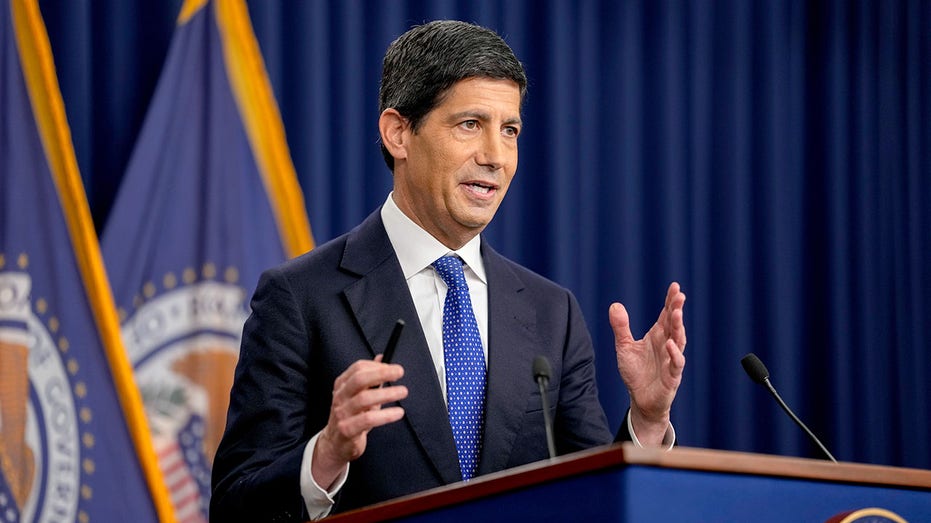
Gregory Daco, chief economist at EY-Parthenon, told FOX Business Barkin’s comments echoed the FOMC’s rate hike decision because while “policymakers had displayed patience in waiting for core inflation to converge toward 2%, that patience has seemingly run out, and most policymakers now favor adopting a modestly more restrictive monetary policy stance.”
“In our view, a Fed hiking cycle, if implemented, could create further strain for already-constrained interest-sensitive sectors while doing little to slow the AI-led investment surge beyond increasing the risk of a stock market correction,” he explained.
Daco added that the “key missing element in Warsh’s narrative was transparency around how tighter policy would address the inflation overshoot,” with policymakers looking to potentially undo some or all of the 75 basis points of rate cuts late last year.
“The objective is tighter financial conditions and disinflationary demand destruction. The risk is substantial for an economy already facing income erosion, supply-driven inflation and persistently elevated rates,” Daco said.
Read the full article here