


Belgium has forcefully pushed back against a new attempt to tap into the Russian Central Bank’s immobilised assets to provide additional support to Ukraine.
ADVERTISEMENT


ADVERTISEMENT
The European Union holds €210 billion in these assets, the bulk of which is kept at Euroclear, a depository in central Brussels.
The hot-button topic was discussed at an informal meeting of EU foreign ministers on Tuesday, with Sweden, the Netherlands, Spain and Poland leading the push following their joint letter sent last week. The Baltic countries also voiced support.
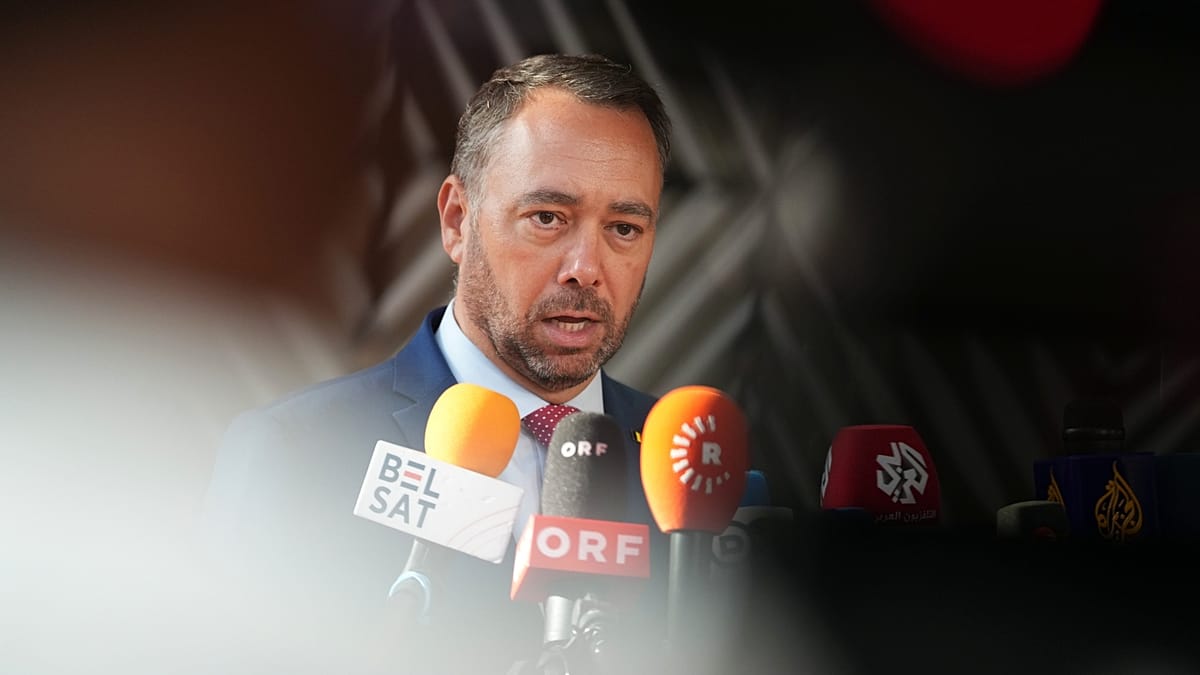
But according to Belgian Foreign Minister Maxime Prévot, the debate “generated little enthusiasm or appetite among colleagues”.
“I made sure to reiterate Belgium’s position, which has remained unchanged for a year. The reasons behind our opposition have not magically disappeared in the meantime,” Prévot said in comments shared with Euronews at the end of talks in Ireland.
“Using these assets through a process amounting to confiscation would entail very significant risks,” he added.
Prévot’s remarks mirrored the arguments voiced by the Belgian government last year to oppose a European Commission proposal that sought to channel the €210 billion into a zero-interest credit line for Ukraine.
Belgium demanded a full mutualisation of risks and uncapped guarantees to protect itself against Russia’s no-holds-barred retaliation. The country also raised the prospect of financial and reputational disaster for the entire eurozone.
The audacious plan eventually fell apart at a contentious summit in December, when leaders opted instead for joint debt to finance a €90 billion loan.
Around the same time, the Russian Central Bank sued Euroclear.
Belgium continues to argue that the sovereign assets should be kept untouched until the peace negotiations to strengthen the bloc’s diplomatic leverage.
“There had previously been broad agreement that it was preferable to keep these amounts immobilised until Russia has compensated Ukraine for all the damage it has caused,” Prévot said on Tuesday.
Rising costs, rising doubts
The renewed debate on the assets comes amid growing doubts on whether the €90 billion loan would last until the end of 2027, as originally intended.
In their joint letter, Sweden, the Netherlands, Spain and Poland warned the loan “will not be enough” due to Russia’s relentless escalation.
“While we should be proud of our achievements, we cannot afford to rest on our laurels,” they wrote. “As each day passes, the cost of the war is rising as Russia’s relentless attacks continue unabated.”
Moscow has launched a new tactic of non-stop drone attacks aimed at disrupting Ukraine’s daily economic activity and sowing terror. At the same time, it has ramped up strikes on the Black Sea to prevent Ukraine from trading grain.
With revenues falling and costs mounting, Kyiv has asked allies to plug a €23 billion gap in the Ministry of Defence to cover salaries and weapons purchases.
As a solution, it has suggested the EU front-load a share of the €45 billion earmarked under the loan for next year, which would mean having less funds available in 2027.
The European Commission has not formally received the request.
“Public opinion is growing weary of this support, yet it remains more essential than ever. The security outlook for the European continent is bleak for the years ahead,” Prévot said.
“International solidarity with Ukraine is therefore more necessary than ever.”
The money crunch has emboldened proponents of using the Russian assets, who never abandoned the idea despite last year’s defeat. For them, the assets would equip the bloc with a massive financial firepower while sparing taxpayers and national budgets.
Ukraine has also backed the initiative.
“This is a fair approach to start a serious discussion on how we can use the immobilised assets,” Ukrainian Foreign Minister Andrii Sybiha said on Tuesday.
Italy’s Antonio Tajani, whose country backed Belgium last year, said the outstanding legal objections needed to be properly addressed before moving forward.
“We’re not opposed in principle, but we need to see whether there is a legal basis for doing so,” Tajani said.
Officials in the Commission are closely following the trajectory of the discussions but remain hesitant to draft a new proposal without a guarantee of success. Capitals are already ensnared in fraught negotiations over the next EU budget.
Read the full article here