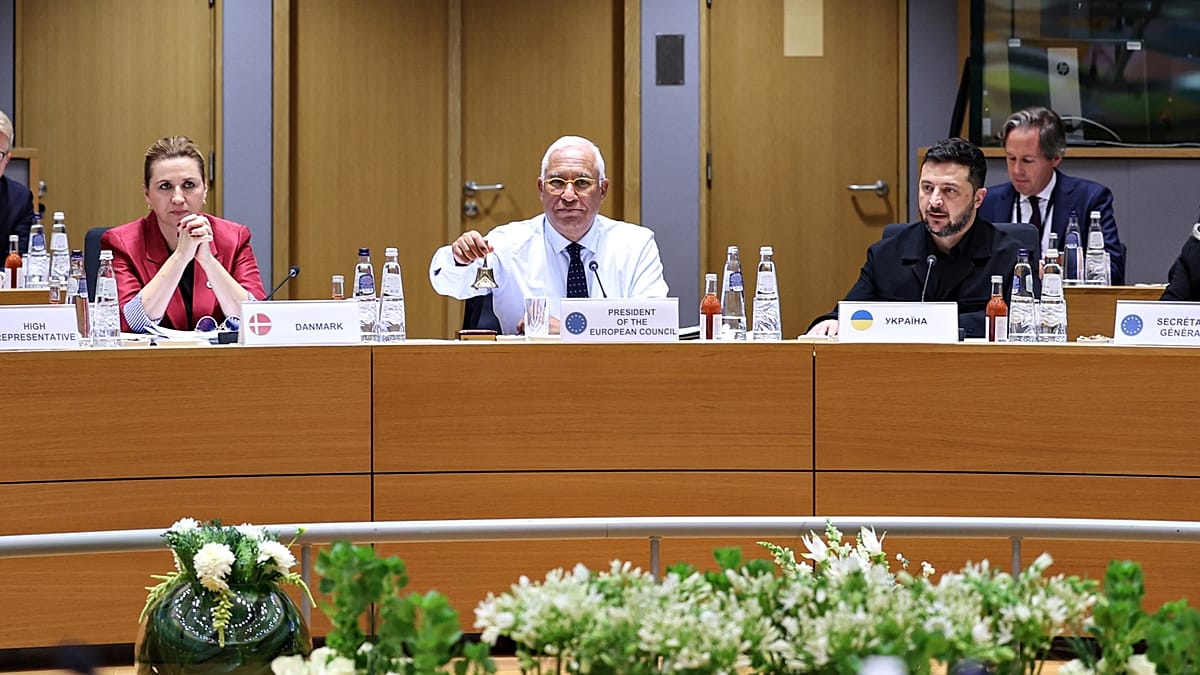
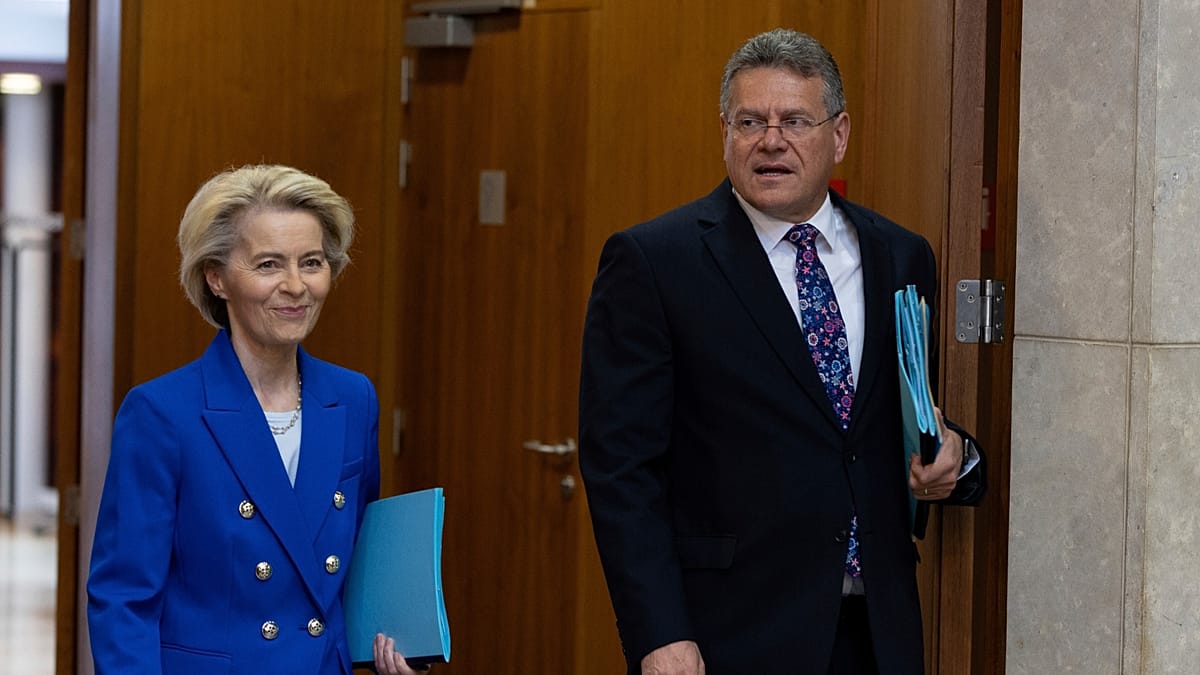


EU Commissioners met on Friday, May 29, to debate how to shield European industries from surging Chinese imports. They recognised that “the current state of the trade and investment relationship is not sustainable” and agreed on the need for a de-risking strategy rather than decoupling.
ADVERTISEMENT

ADVERTISEMENT
Earlier last week, the Commission floated measures that could force firms to diversify their supply chains and restrict Beijing’s access to EU markets for chemicals, metals, and clean energy.
Concrete proposals are expected in the third quarter of the year, following the EU leaders’ June summit. This meeting, though, marks a pivotal shift because Europe treated its growing dependence on China as a simple trade concern. Now, it recognises this dependence as a competitiveness and security issue.
Europe’s over-dependency problem
Europe realises it chose efficiency over resilience, while China slowly built control over critical industrial bottlenecks.
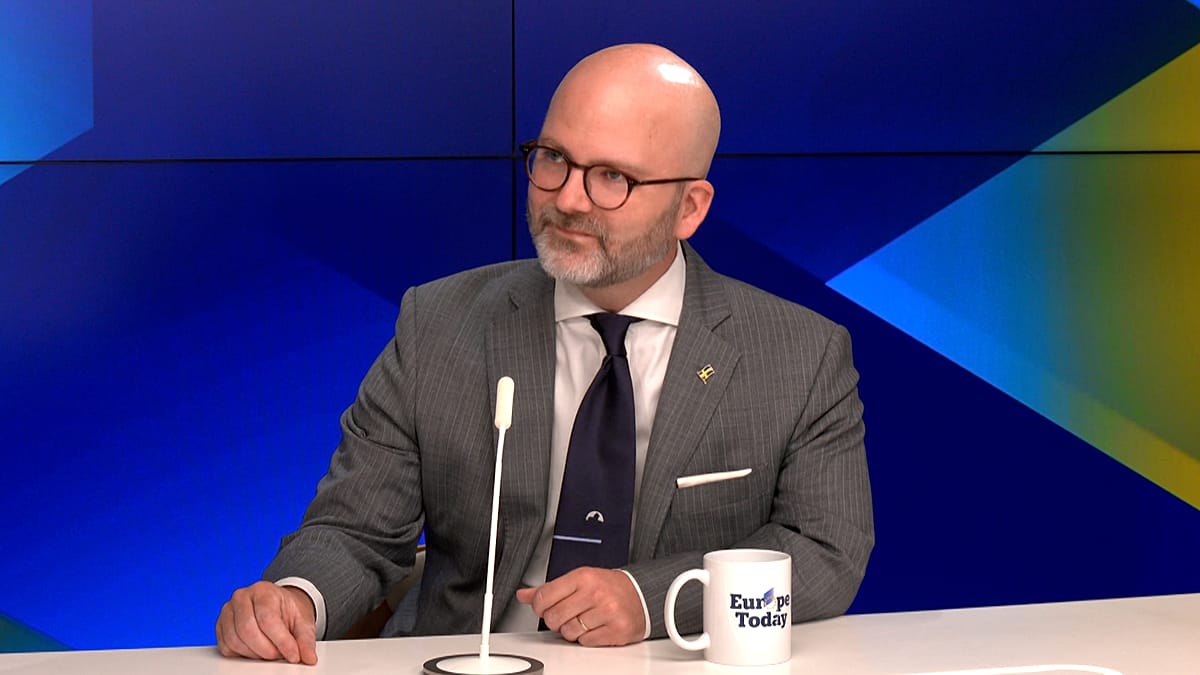
“This was a long-term strategy of China’s”, said Andrew Small, Director of the Asia Programme at the European Council on Foreign Relations. “China has deliberately made sure that any other attempts to build alternative sources of supply would be squashed”.
Through its influence on availability, pricing and supply, Beijing can “weaponise” trade, making the EU vulnerable to disruptions, price shocks, and export restrictions. In 2025, the EU’s trade deficit with China amounted to €359.9 billion, up 2.7 percent from 2024.
A 2024 study from the European Commission reveals that 64 of 204 goods on which the EU is dependent, one-third came from China. Today, China supplies Europe with 98 per cent of solar panels, 54.4 percent of machinery and vehicles, and 9.8 percent of chemicals, according to Commission data.
Europe’s over-reliance goes beyond finished products. Beijing exercises strong leverage in the middle of supply chains, where production, refining, and processing of raw materials and critical parts occur.
Currently, the EU imports 97 percent of magnesium for next-generation batteries and aluminium alloys. 100 percent of rare earths used for permanent magnets are refined in China, according to Commission data.
Beijing processes around 60-70 percent of the world’s lithium. It controls 86 percent of the world’s polysilicon production and aims to reach 88 percent in 2030, making it harder for the EU to build a fully domestic solar industry, according to the International Energy Agency.
“We’re very happy to benefit from lower cost of labour or lower cost of living, but the cheap intermediate goods and components that we get from China increased the competitiveness of our finished products”, warned Jacob Gunter, Head of Program of “Economy and Industry” at MERICS.
Europe chose deliberately not to act on many of its dependencies. “It was a series of reasonable democratic choices that were made, I think in large part, because most people are unaware of what the Chinese economic model is”, said Gunter.
De-risk, not decouple
The Commission announced on 29 May that it plans to de-risk from China rather than decouple. Europe wants to maintain trade relations with Beijing while reducing its exposure to risk in areas such as raw materials, batteries, chips, solar, and other strategic supply chains.
While complete autonomy might be hard to reach, the aim should be to be in a position where economic efficiency does not become a security issue. This happens “when reliance on a single supplier creates leverage for geopolitical coercion in critical areas like supply chains, raw materials, or technology”, said Alicia Garcia Herrero, adjunct Professor Hong Kong University of Science and Technology.
Europe has the technologies to build its own capacity and is even prepared for the massive capital expenditure that de-risking implies, according to Gunter. “It is not a matter of “do we have the money to do it”, but rather “do we have the political will to do it”, and I don’t think we have that yet”, Gunter told Euronews.
Europe lacks the infrastructure and skills to duplicate the Chinese manufacturing ecosystems or rare-earth processing in a short time, stressed Garcia Herrero. Yet, “dependencies that can realistically be reduced in the next five years include partial diversification of components and critical inputs through new procurement rules”, she explained.
Europe’s de-risking strategy is based on a legal framework, mostly introduced after President von der Leyen called for more realistic and assertive policies in 2019. The EU’s 2023 Economic Security Strategy protects European supply chains and infrastructures through three pillars: promote, protect, and partner.
The 2024 Critical Raw Materials Act sets 2030 domestic targets to ensure that EU companies have long-term access to raw materials. The Chips Act (2023) reshores Europe’s semiconductor industry by focusing on capability building, supply security, and crisis monitoring. Through the Net-Zero Industry Act (2024), the EU aims to reduce clean-tech imports, such as batteries and solar cells.
The Commission has also implemented the Foreign Direct Investment (2025), the International Procurement Instrument (2012), and the Anti-Coercion Instrument (2023) to shield the EU from unfair competition, including from China.
The key is whether the EU’s de-risking plan is solid enough and whether member states cooperate. “I don’t think that most of the European leaders are really seriously thinking about all of those dependency risks. I think they’re all thinking in the short term […] and so in that sense, I do worry about the credibility of a de-risking agenda.
The cost of resilience
Last year, European factory managers called government officials with an urgent message: “We have days of supplies left.” China had curtailed exports of rare earth materials, essential for building EV motors, wind turbines, defence equipment, and semiconductors. Plants were days from shutting down.
It was the moment that turned de-risking from Brussels jargon into a factory-floor emergency. “It became clear quickly that China was not going to provide reliable supplies to Europe anymore,” says Andrew Small, transatlantic fellow at the German Marshall Fund. “Significant swathes of European industry could be shut down by a decision on the Chinese side.”
The sectors most exposed span the industrial economy: electric vehicles, batteries, solar panels, wind turbines, defence, pharmaceuticals, semiconductors, and robotics.
They share a vulnerability deeper than most assume, not at the finished-product level, but at the component and refining stages. Rare earth processing, battery-grade chemicals, pharmaceutical precursors, and legacy chips are chokepoints where China’s dominance is near-total.
The list is growing. “The more Europe industrialises, the more sectors become dependent on China for their inputs,” Small warns. If the chemical sector contracts under pressure from cheap Chinese imports, European manufacturers across dozens of industries lose another domestic input. Dependency breeds more dependency.
The response will be costly. A manufacturer that previously sourced 70 percent of its critical sub-assemblies from China now faces splitting orders across Eastern Europe and Southeast Asia, paying 5-10 percent more per unit. Reshoring requires capital expenditure, energy permits, qualified labour, and years of supplier qualification.
There are no shortcuts says Small. If supply shocks keep hitting as regularly as Europe has experienced this decade, “the macroeconomic implications clearly point to a steady de-risking, even at a marginally higher cost.” Europe is no longer optimising for the cheapest production model. It is optimising for the one it can rely on.
Who pays?
The strategic rationale is hard to argue with. The bill, however, will land somewhere, and the question of who bears the cost is becoming politically explosive.
Higher production costs ultimately reach consumers through the supply chain. Europeans purchasing EVs, solar panels, or new electronics may pay more for supply chain security that is not visible to them.
Green technologies, already costly for many households, risk becoming even less affordable just as Europe needs widespread adoption to meet climate goals. While de-risking and the energy transition share strategic objectives, they have opposing effects on price.
The burden will not fall evenly. Large manufacturers can adjust their supplier networks and access EU subsidies, such as those provided by the Net-Zero Industry Act. Smaller firms, including precision-parts makers, chemical processors, and component suppliers, face similar pressures with far fewer resources.
Many may not survive the transition, squeezed by rising costs, increased compliance demands, and competition from subsidised Chinese rivals. However, firms that invest early in traceability and resilience may become preferred partners.
Then there is the deeper dilemma. European companies are increasingly caught between Brussels and Beijing. The EU urges firms to diversify away from China, while Beijing may respond with export controls, market restrictions, or subtle pressure on European businesses in China.
German carmakers, among the most exposed, must choose between aligning with EU policy and risking their key growth market or protecting Chinese revenues and facing political scrutiny at home.
“It ceases to be economically rational to keep going through this cycle,” Small says. Europe seeks economic security without provoking a full confrontation with China, and Beijing is aware of this.
Read the full article here