




The European Union will need significantly higher imports of liquefied natural gas (LNG) this summer to replenish depleted gas storage before the winter, according to the latest assessment by the bloc’s agency for the cooperation of energy regulators (ACER).
ADVERTISEMENT

ADVERTISEMENT
While the bloc is still reeling from gas markets volatility due to the conflict in the Middle East and the on-off closure of the critical Strait of Hormuz, ACER’s summer supply outlook warns that EU gas storage was only 28 percent full at the start of the summer injection season on 1 April, its lowest level in four years.
That figure has raised concerns that the EU may struggle to meet its target of 90 percent storage by 1 November, a legal minimum set by a law put in place after Russia’s invasion of Ukraine. The European Commission told capitals this spring to keep their stored reserves at 80 percent “in case of difficult conditions”, but allowed some leeway to avoid panic buying. Certain member states will be permitted to refill to as low as 70 percent.
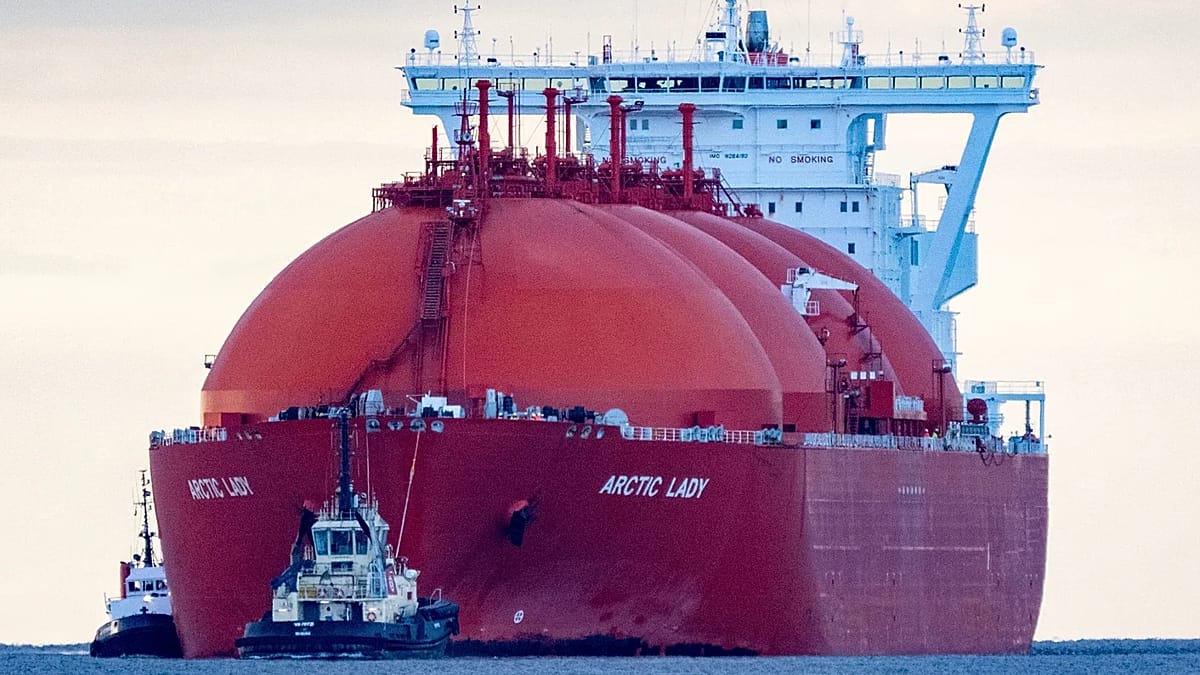
ACER said that achieving the storage target will require LNG imports to increase by around 13 percent compared with 2025 levels. While the EU could still reach an 80 percent storage level with last year’s import volumes, filling storage to 90 percent will demand substantially more shipments.
Higher gas prices
Market conditions are complicating the task, as price rises driven in part by the war on Iran reduce the financial incentive for traders to inject gas into storage.
“For the EU, the direct supply impact is relatively limited – Qatari LNG accounted for around 8 percent of imports in 2025, although some member states remain more exposed than others – but the market remains highly exposed to global price dynamics and competition for cargoes, particularly with Asia,” reads ACER’s report.
Ronald Pinto, an energy analyst at the market intelligence firm Kpler, said that due to the Middle East conflict, Asian buyers imported the highest volumes of LNG from the Atlantic basin in May and June to partly offset the loss of LNG supply from the Strait of Hormuz.
This recent increase in demand has been driven by growing LNG restocking requirements in China and resilient demand across South Asia, particularly in India, Pinto told Euronews.
“Stronger LNG demand in Asia has translated into lower LNG imports into the EU 27,” he added. “Despite European underground gas storage levels remaining around 10 percentage points below last year’s levels, European buyers have not aggressively bid for additional LNG supply.”
EU LNG imports during May and June 2025 were 2.37 million tonnes higher than in the same period this year, according to Kpler data.
“Our view is that market participants are holding onto the expectation of a gradual resumption of LNG exports from the Middle East over the summer. This would ease prices and free up additional global LNG supply, allowing Europe to secure cargoes at lower prices in September and October, and potentially even during the winter,” Pinto said.
The planned phase-out of short-term Russian LNG and pipeline gas contracts under EU law is also expected to tighten supply.
Imports of Russian pipeline gas under existing short-term contracts have been prohibited in the EU since June following the halt of imports under new contracts and of Russian LNG under short-term contracts – though LNG imports from Moscow into the EU have increased this year compared to last year.
“One step at a time, we are phasing out all remaining imports of Russian gas from our energy system,” energy Commissioner Dan Jørgensen said a few weeks ago. “And the goal is clear: getting to zero. This is key for our energy security and independence, for the resilience of our markets and to keep supporting Ukraine in its quest for freedom.”
Gas system remains resilient
Despite these challenges, ACER concludes that Europe’s gas system remains resilient, citing expanded LNG regasification capacity that should enable the EU to offset lower storage levels and meet winter demand – provided sufficient LNG supplies are available on global markets.
“Existing European gas infrastructure, including newly commissioned LNG terminals, is enhancing import capacity and system flexibility, enabling higher LNG inflows and improved cooperation among member states,” reads the report.
However, Europe’s energy regulators noted that current storage injections remain below both the 10-year seasonal average and last year’s pace, with storage now at around 49 percent capacity – similar to levels seen in 2021.
The regulators urged EU member states to closely monitor progress in refilling storage and take action where necessary to safeguard energy security ahead of winter.
Methane rules
However, energy producers and EU countries are anxiously awaiting a looming declaration by the Commission to national authorities on the application of emissions rules to methane – a highly potent greenhouse gas, with a global warming potential more than 80 times that of carbon dioxide over a 20-year period.
Critics argue that a three-year penalty waiver, which is mentioned in a draft text seen by Euronews, will jeopardise the bloc’s energy supply. Supporters dismiss those claims, citing climate benefits amid growing heatwaves and regulatory certainty.
At least 12 EU countries have called on the Commission to scrap the methane rules, while major EU exporters, such as the US, Qatar, Algeria and Nigeria have threatened to cut or reduce supply if the bloc’s methane rules increase exporters’ costs.
The industry lobby group, the International Association of Oil & Gas Producers (IOGP), said its advocacy focused primarily on importer requirements for monitoring, reporting and verification to be introduced on 1 January 2027.
“Our industry is expected to comply with an administrative compliance framework where key elements, such as scalable certification solutions, agreed verification protocols, functioning accreditation bodies and procedures, are still missing less than six months before the compliance deadline,” an IOGP spokesperson told Euronews.
The Commission did not respond to Euronews’ request for comment before publication.
Read the full article here