


Published on •Updated
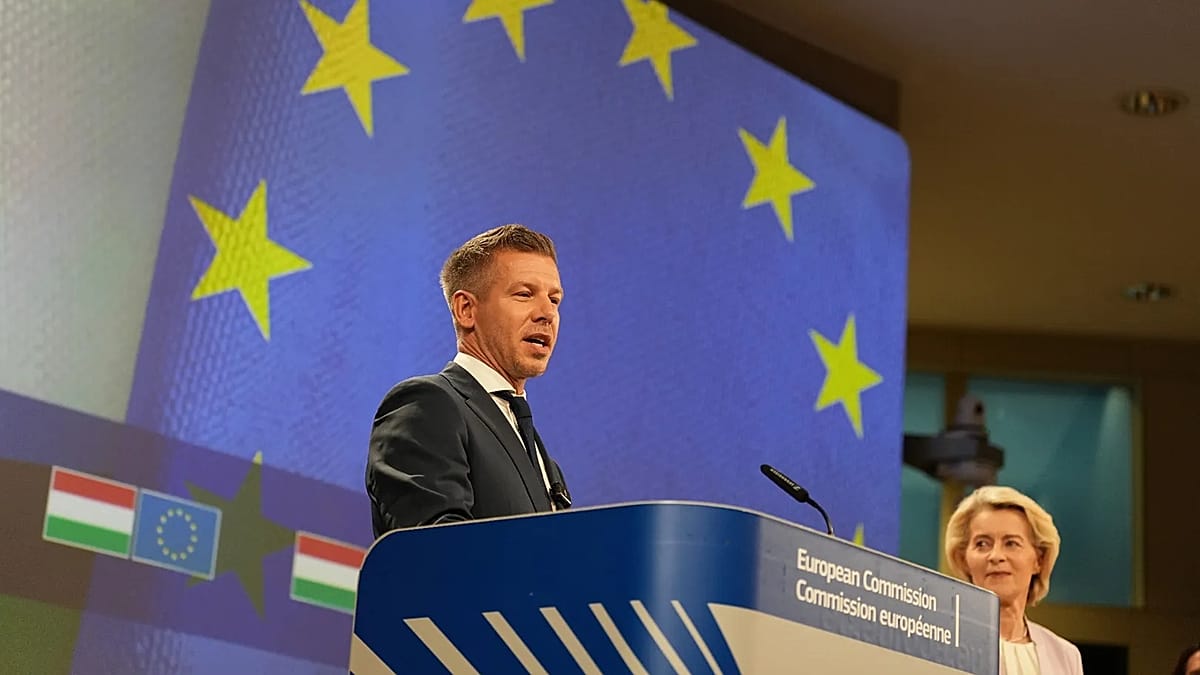
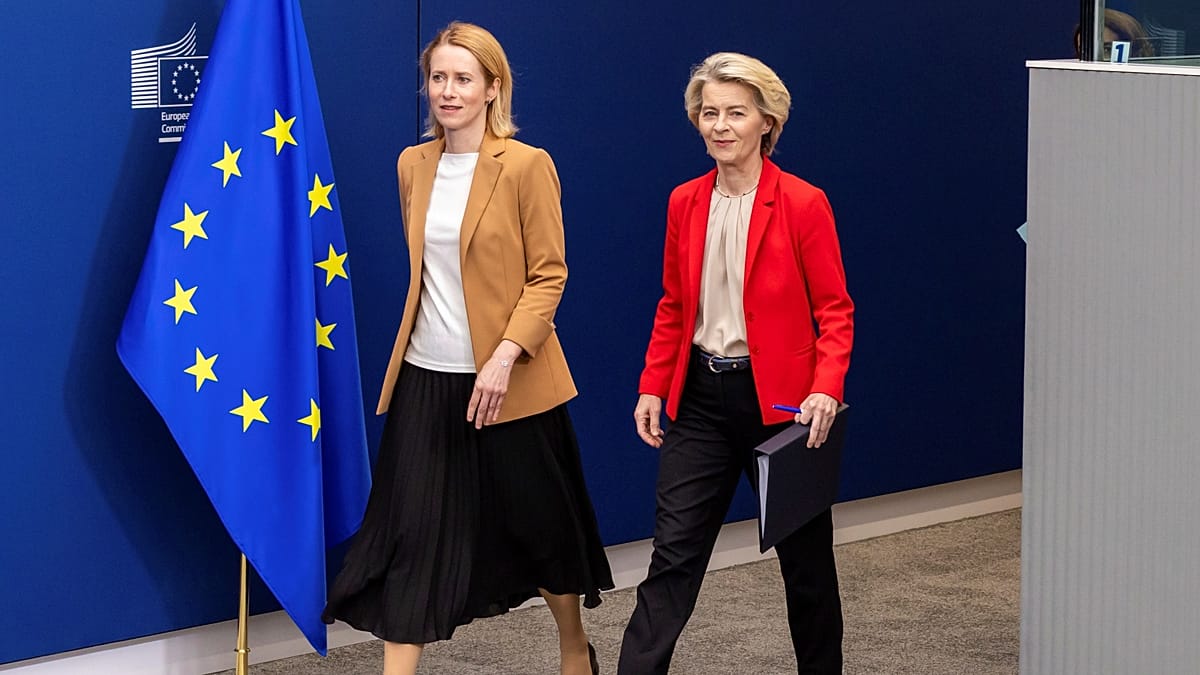
Germany and France have floated a joint plan to bring High Representative Kaja Kallas under the direct supervision of European Commission President Ursula von der Leyen as part of an overhaul of the European Union’s foreign policy.
ADVERTISEMENT


ADVERTISEMENT
The plan is set to be discussed on Wednesday during an informal meeting of EU foreign ministers in Wicklow, Ireland. Kallas will chair the session.
The Franco-German project aims to address one of the bloc’s most persistent weaknesses in external action: institutional cacophony.
Under the complex design of the Treaty of Lisbon, the High Representative leads the European External Action Service (EEAS) and designs, coordinates and implements foreign policy on behalf of the 27 member states.
She simultaneously serves as one of the European Commission’s vice-presidents.
However, the hefty portfolios that set the pace of international politics, such as trade, energy, climate and migration, largely fall within the Commission’s remit, depriving the EEAS of material leverage to bring to the table. Enlargement, another field with a marked geopolitical dimension, is also firmly in the Commission’s hands.
This division of powers has allowed Ursula von der Leyen to significantly expand her foreign policy role, as demonstrated by her response to Russia’s full-scale invasion of Ukraine. She has also travelled extensively to sign a variety of headline-making deals.
Von der Leyen’s expansive clout has raised eyebrows across capitals, prompting occasional rebukes of “overreach” and “power grab”, even though she has often been encouraged by EU leaders to take the lead on global crises.
The German-Franco plan envisions giving Kallas a hands-on role in the coordination of foreign-related areas operated by the Commission’s director generals (DGs), such as development aid (DG INTPA), humanitarian relief (DG ECHO), defence industry (DG DEFIS) and relations with neighbouring countries, which are split between DG ENEST (Eastern Europe) and DG MENA (the Middle East, North Africa and the Gulf).
Trade, a high-stakes portfolio, could also be considered.
A department dedicated to foreign policy would be formed to reinforce the new structure. The Commission used to operate a DG for external relations (DG RELEX) until it was absorbed into the EEAS in 2010.
In practice, Kallas would have broader hands-on responsibilities inside the Commission.
But the upgrade would ultimately benefit von der Leyen because she would remain the highest authority as Commission president, mirroring the hierarchical arrangement between a prime minister and a foreign minister at the national level.
The EEAS, which Kallas currently leads independently of von der Leyen, would be weakened to reduce the risk of an institutional clash.
At the same time, the German-Franco proposal seeks to strengthen the voice of member states in setting up foreign policy.
The reform would require amending the 2010 decision that established the EEAS, rather than the Treaty of Lisbon. A unanimous agreement would be needed.
The plan comes at a time of global turbulence that has laid bare the vulnerabilities of the bloc’s foreign policy. Although member states agree that a comprehensive reform is in order, they are yet to agree on a common path forward.
In June, a French paper pitched three options to overhaul the role of the High Representative: expand her powers, shift them to the Commission or shift them to the member states. The last two options would effectively hollow out the position.
The document forced Kallas to send a message of reassurance to the EEAS staff. She then called on capitals to present ideas on how to improve the external action.
Read the full article here