



The Commission put forth on Tuesday a comprehensive proposal that includes institutional “safeguards” that could strip new member states of voting rights up to 15 years after they joined the EU.
ADVERTISEMENT

ADVERTISEMENT
The proposed measure is meant to avoid that regime change in a new EU country disrupts the EU decision-making process, and is accompanied by new suggestions on how to bring candidate countries closer to the Union.
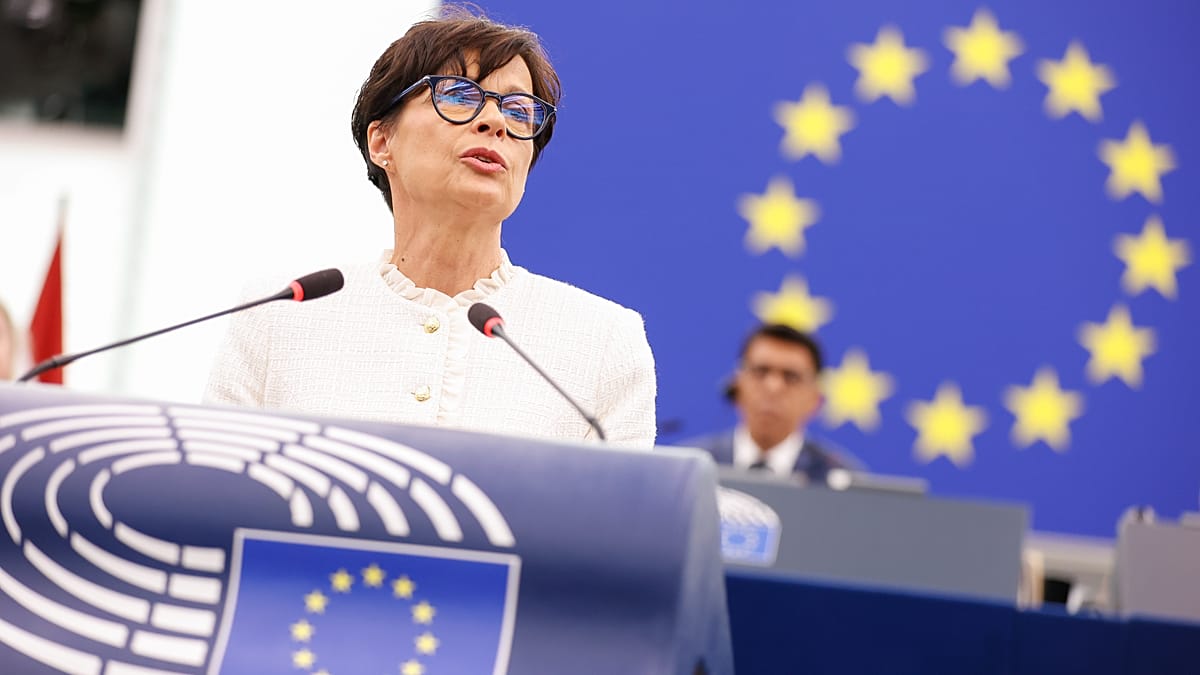
“I was criticised heavily when I first mentioned that I don’t want to see new Trojan horses in the European Union. This was still before the elections in Hungary. Today I can say no more Viktor Orbán,” said Enlargement Commissioner Marta Kos.
Safeguards
In June, five EU founding members pushed for enhancing safeguards in EU accession treaties to more swiftly address cases of democratic backsliding and breaches, as part of the lessons learned from Viktor Orbán’s Hungary.
The Commission is now formally following up on this suggestion, considering that Hungary’s recent experience shows that Article 7 — the treaty provision that allows the EU to strip a member state of certain rights for violating EU values — takes too long and does not always work.
The proposal therefore adds a new procedure to complement Article 7. It would cut EU funding and even voting rights for newcomers that start acting against the rule of law, the bloc’s values and the principle of sincere cooperation.
The Commission sees Hungary’s handling of Ukraine as the clearest example: Budapest agreed to give Ukraine candidate status, then blocked the process. “Once we agree on one goal, we all have to work for this goal,” Kos continued.
The procedure would be available for 15 years after accession and triggered by serious breaches that affect the EU’s functioning. Consequences would be proportionate, with suspension of voting rights reserved for the most serious offences.
The Commission or several member states could start the procedure for a Council decision. The proposal does not indicate which decision-making process should be used, leaving it up to the member states to decide.
Safeguards are not new. Past accession treaties included them, notably for serious shortcomings in implementing the EU’s internal market, justice and economic rules.
The Commission wants these traditional safeguards to last longer than the previous three years, but does not say how much longer.
Drawing again on Orbán’s record, the EU executive also wants future accession treaties to include a statement that the new member will refrain from using unanimity in the enlargement process over bilateral issues.
The most recent example is Bulgaria, which keeps blocking North Macedonia’s accession bid over unresolved bilateral issues, notably Sofia’s demand for constitutional amendments.
Several proposals in this package, particularly internal reforms, will need member states’ approval. But the Commission intends to build the safeguards into the EU’s draft position on Montenegro’s last negotiating chapter in early November.
Gradual integration
The Commission has also picked up the idea of gradual integration put forward by France and Germany, to show candidate countries the early benefits of full membership.
“It is not a substitute for the full membership. It is only enabling those countries who are delivering well that, in the areas where they are delivering, they could integrate earlier in the subsystems or policies of the European Union,” Kos said.
She said gradual integration would apply where member states and candidates both stand to gain, citing supply chain and energy security as examples.
Other examples include participation in EU programmes such as Erasmus+ and Horizon Europe, support from agencies such as Frontex, single market integration, connectivity projects and observer status in expert groups and bodies.
The plan also envisages an “enhanced” form for candidates that align with Brussels on strategic areas and meet the rule of law criteria. How that strategic alignment will be assessed remains to be defined.
Some forms of early integration already exist. The Commission says this approach is far more systematic and would allow tailor-made benefits to be developed in a structured dialogue with each candidate, backed by dedicated financing.
Governance
On governance, the Commission wants to extend its annual rule of law reports to more candidate countries and sharpen its recommendations on aligning with the EU’s democratic standards.
The aim is to strengthen independent rights-enforcement bodies and prepare candidates to take part in the European Public Prosecutor’s Office from the moment they join.
Appropriate measures could be taken in case of arising issues, including postponing the accession of the candidate countries to a later date in the most serious cases.
Brussels would also work with candidates to test their enforcement capacity before accession in priority areas such as border management, single market supervision, food safety standards, transport networks and cohesion funding.
Tailor-made transitional arrangements would be negotiated, particularly in areas such as agriculture and labour mobility.
Public procurement procedures, independent audits and anti-fraud capacity would also be tested before accession.
Read the full article here