




European Commissioner for Defence Andrius Kubilius said the EU executive’s military mobility package, which enters trilogues in the European Parliament on Thursday, is necessary and should be implemented “as soon as we can be ready” – but MEPs want it implemented two years ahead of the originally envisaged deadline.
ADVERTISEMENT

ADVERTISEMENT
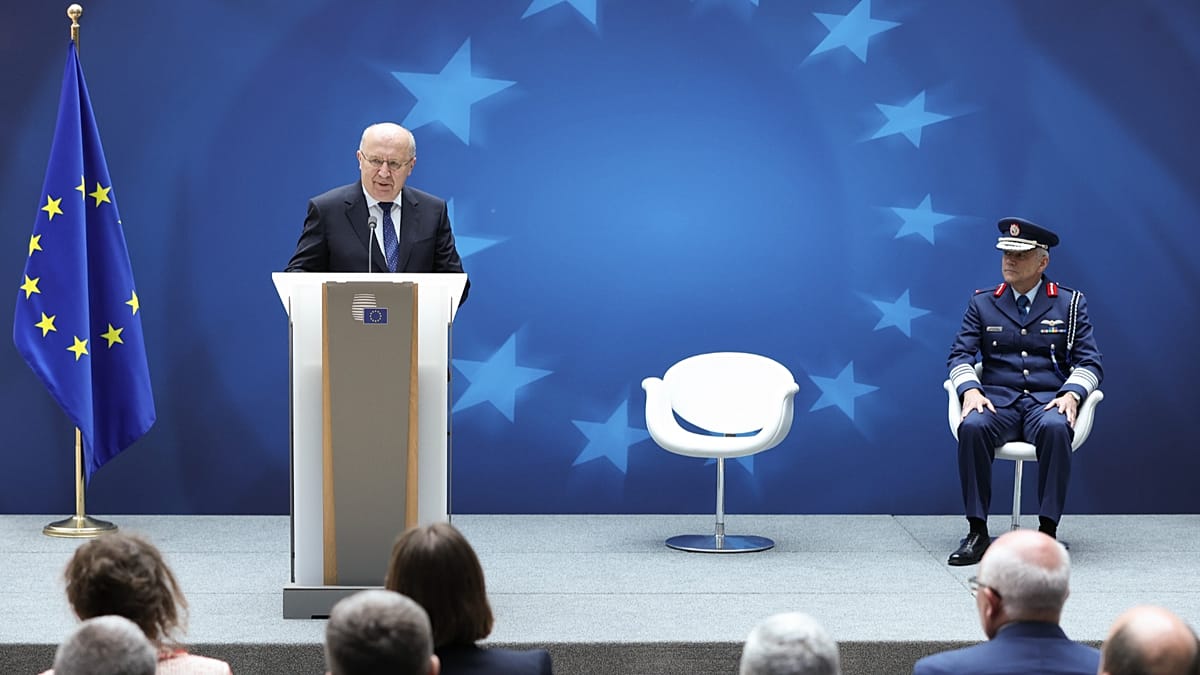
“The big problem for us is that we have 27 member states and they have 27 regimes of military mobility,” Kubilius told Euronews. “For example, to bring troops from Spain to the Baltic states, it can take something like 45 days. We are changing that very radically.”
Asked by Euronews about the proposed 2028 deadline and whether he endorses it, Kubilius said that was the point of the trilogues: to discuss proposals.
“We need to agree not only with the Parliament, we need to agree with the (European) Council. But as Commission we are really ambitious,” he said.
Military mobility is the ability for tanks, troops and other military convoys to swiftly move from one side of the European continent to another in wartime, and the proposal under discussion forms part of the EU’s broader Readiness 2030 defence agenda.
The year 2030 has been highlighted by various national security agencies and defence officials as the date when the continent’s defences could be tested by foreign aggression, particularly from Russia.
The European Commission unveiled the military mobility proposal in November setting a 2030 date for implementation. The package aims to cut red tape and upgrade infrastructure to expedite the movement of military personnel and equipment across Europe.
Any proposal by the EU executive must be negotiated upon by MEPs, the European Commission and the European Council, which is represented by Ireland as it holds the rotating EU Council Presidency.
The rapporteurs of the military mobility package – Polish MEP Michał Szczerba from the European People’s Party (EPP) and Latvian MEP Roberts Zīle from the European Conservatives and Reformists (ECR) – both confirmed to Euronews they want the proposals implemented by 2028 instead of 2030 as originally envisaged by the Commission.
“Time’s of the essence, and we cannot wait,” Szczerba told Euronews.
“This regulation is not about money. It’s about rules, and speed and scale. It is about investments and eliminating critical bottlenecks such as bridges, rail sections, or logistic terminals.”
Zīle said the new timeline is “very important” as “we cannot wait until 2030”.
He said Russia’s invasion of Ukraine shows that Europe must update its infrastructure – railways, roads and bridges – for the “safety and security” of the continent.
Some of the funds to ensure the work is completed could be sourced from the EU’s coffers, such as the proposed €131 billion defence allocation in the 2028–2034 Multiannual Financial Framework.
Four major military mobility corridors were identified by the European Commission in consultation with NATO and are confidential to the public due to their sensitive nature.
These projects include identified bottlenecks as well as500 “hotspot projects” with increased support under the next MFF.
But Zīle said it is also incumbent on national governments to tap into their own budgets to finance the works.
“All countries, NATO member states, agreed to allocate 5 percent (of GDP on defence), and 1.5 percent of this could be done for logistics needs,” Zīle said.
The Irish Defence Minister and Foreign Affairs Minister, Helen McEntee, said the military mobility package aims to streamline transport regulations and respond quickly in times of crisis.
“In the current challenging international security context, Ireland recognises the importance of this file for deterrence, for resilience, but also for readiness,” she said in the European Parliament on Wednesday at the Security and Defence Committee.
McEntee added that she sees the progression of this file “as a priority for our EU presidency.” She did not mention the revised date.
Read the full article here