



Published on
After the crash, Russia’s deputy Security Council chairman, Dmitry Medvedev, issued a chilling threat. He warned that because European governments supply weapons to Kyiv, “the citizens of EU states… will not be able to sleep peacefully”.
ADVERTISEMENT

ADVERTISEMENT
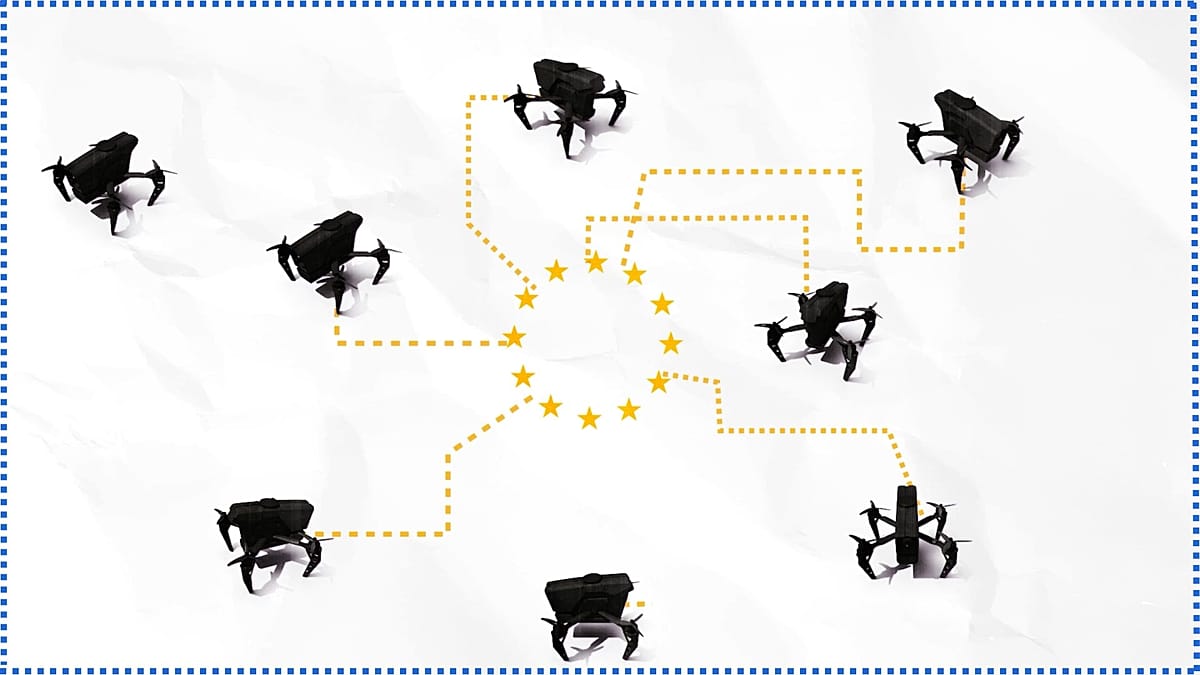
The EU has an Action Plan on Drone Security, but a leaked document from last week reveals how member states actually plan to put it into practice, focusing on three key areas.
Number one is stricter identification. The bloc wants tighter registration rules so authorities can instantly tell a harmless civilian drone from a hostile threat.
Second, smarter detection. Member states want to use advanced sensors and artificial intelligence to spot incoming drones near critical infrastructure.
Lastly, intelligence sharing. Brussels wants to act as a central hub for coordinating data across the continent.
However, there is a problem. National governments insist this sharing must remain strictly voluntary to protect classified information and avoid duplicating NATO’s efforts.
As for the drone case in Romania—the ministry of defence acknowledged it could not shoot down the drone due to its proximity to people’s homes, and authorities had just four minutes to act.
As long as drone security remains primarily a national competence, European governments will operate in silos, and citizens will see the consequences.
The Baltic region was rattled by at least six suspected incursions in May alone. One incident in Lithuania even forced the president to take shelter underground.
Although the EU is trying to work together on securing its skies, one thing is certain: with threats from Russia, it must build a truly unified defence before it is too late.
Additional reporting by Luca Bertuzzi.
Watch the Euronews video in the player above for the full story.
Read the full article here